
 AI-generated
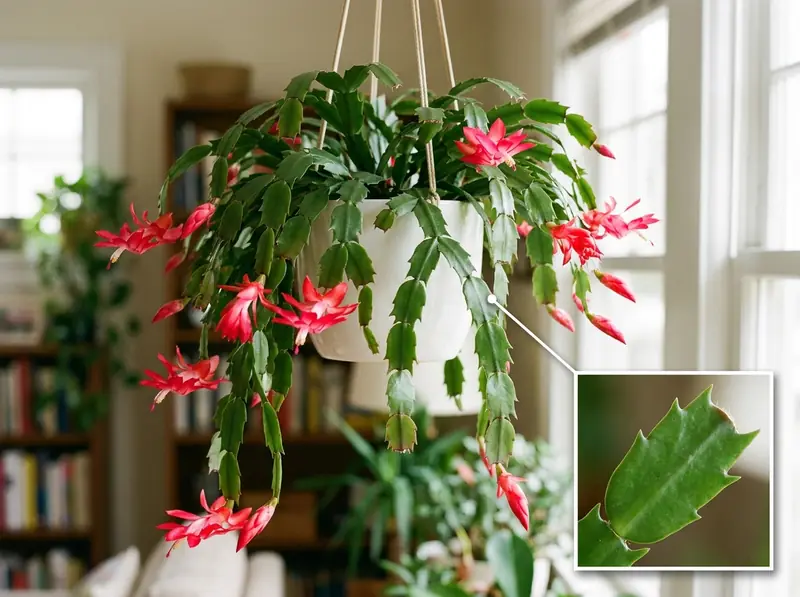
Thanksgiving Cactus
Schlumbergera truncata
Thanksgiving cactus is a forest-dwelling, non-spiny cactus with pointed-toothed, flat segments that bloom in pink, red, white or orange in late fall. It prefers bright indirect light and moderate watering, unlike desert cacti. With a cool, dark period in autumn it reliably flowers year after year and can live for decades.
Saving is free with a KinClub account, and it works here and in the KinClub app. Sign up free
Care profile
- Light
- Bright, indirect lightLow → direct sun
- Water
- Moderate wateringAbout every 10 days
- Difficulty
- EasyTricky → easy
- Coldest it tolerates
- 50°F
- Humidity
- Medium
- Mature size
- SmallSmall → tree-size
- Growth rate
- Moderate
- How common
- CommonRare → everywhere
- Plant family
- Cactaceae
Pets and toxicity
Cats and dogs: not yet checked
Not yet checked against ASPCA — don't assume it's safe for pets.
No toxicity source on record for this plant yet. If a pet eats any houseplant, call your vet or an animal poison helpline.
How to care for Thanksgiving Cactus
Light
Give it bright, indirect light, such as an east window or a spot a few feet back from a south or west window. Protect it from hot direct afternoon sun, which scorches and reddens the segments.
Watering
Water when the top inch of soil is dry, roughly every 7-14 days while growing, until water runs from the drainage holes. Empty the saucer afterward, and water a little less in late winter after flowering.
Soil
Use a well-draining mix, such as regular potting soil blended about 2:1 with perlite or coarse bark or sand. Pots must have drainage holes.
Feeding
Feed every 2-4 weeks from spring through summer with a balanced houseplant fertilizer at half strength. Stop feeding in early fall so the plant can set buds, and resume after flowering.
Repotting
Repot only every 2-3 years, in spring after flowering, since it blooms best slightly root-bound. Move up just one pot size, about 1-2 inches wider.
Propagation
Twist off a piece of 2-3 segments, let the cut end dry for a day or two, then push it about half an inch into moist mix. Roots usually form in 3-6 weeks.
Common problems
- Buds drop before opening: usually caused by moving the plant, drafts, sudden temperature change or dry soil. Keep it in one spot with steady temperatures and even moisture once buds form.
- No blooms: it needs long nights and cool temperatures in fall. Give 12-14 hours of darkness nightly at 50-60°F for about 6 weeks.
- Soft, blackened stems at the base: root or stem rot from overwatering. Let the soil dry, cut away healthy segments and re-root them in fresh mix if the base is mushy.
- Wrinkled, limp segments with dry soil: underwatering. Water thoroughly and keep to a regular schedule.
- White cottony bits in segment joints: mealybugs. Dab with cotton swab dipped in rubbing alcohol and repeat weekly until gone.
Similar plants
Same light needs and difficulty.
 AI-generated
Chinese Money Plant
Pilea peperomioides
- Bright, indirect light
- Dry to moderate watering
Pets: not yet checked AI-generated
Christmas Cactus
Schlumbergera × buckleyi
- Bright, indirect light
- Moderate watering
Pets: not yet checked AI-generated
 AI-generated