
 AI-generated
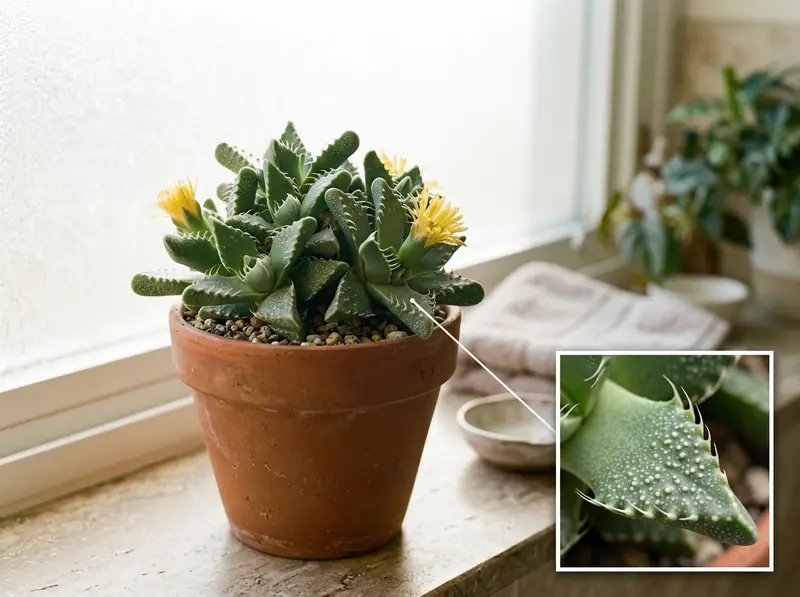
Tiger Jaws
Faucaria tigrina
Tiger jaws is a tiny succulent with plump, triangular leaves edged with soft white teeth, like a row of jaws. It is easy to grow on a sunny sill and produces yellow flowers in fall.
Saving is free with a KinClub account, and it works here and in the KinClub app. Sign up free
Care profile
- Light
- Direct sunLow → direct sun
- Water
- Let it dry outAbout every 21 days
- Difficulty
- EasyTricky → easy
- Coldest it tolerates
- 40°F
- Humidity
- Low
- Mature size
- SmallSmall → tree-size
- Growth rate
- Slow
- How common
- EnthusiastRare → everywhere
- Plant family
- Aizoaceae
Pets and toxicity
Cats and dogs: not yet checked
Not yet checked against ASPCA — don't assume it's safe for pets.
No toxicity source on record for this plant yet. If a pet eats any houseplant, call your vet or an animal poison helpline.
How to care for Tiger Jaws
Light
Provide bright light with some direct sun, like an east or south window. Good light keeps the rosette compact and the teeth sharp-looking.
Watering
Water when the soil is completely dry, about every 3 weeks in spring and summer. In winter give just a few sips.
Soil
Use a gritty cactus mix with extra grit, in a shallow pot with drainage holes.
Feeding
Feed once or twice in spring and summer with a diluted cactus fertilizer.
Repotting
Repot every 2 to 3 years in spring when the clump outgrows the pot, using a shallow pot.
Propagation
Divide offsets or twist off a pair of leaves with a bit of stem, let the end dry, and plant in dry gritty mix.
Common problems
- Rot from wet soil: let the pot dry fully between waterings and empty the saucer.
- Mealybugs between leaf pairs: dab with alcohol on a swab and repeat weekly.
- Few flowers usually means too little light or no cool, dry winter rest.
Similar plants
Same light needs and difficulty.
 AI-generated
 AI-generated
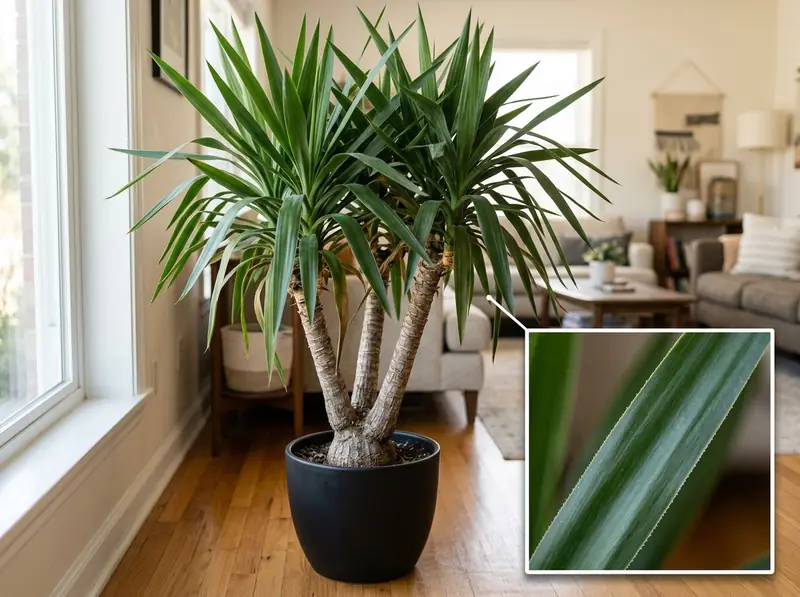
Spineless Yucca
Yucca elephantipes
- Bright, indirect to direct sun
- Let it dry out
Toxic to cats and dogs AI-generated
 AI-generated