
 AI-generated
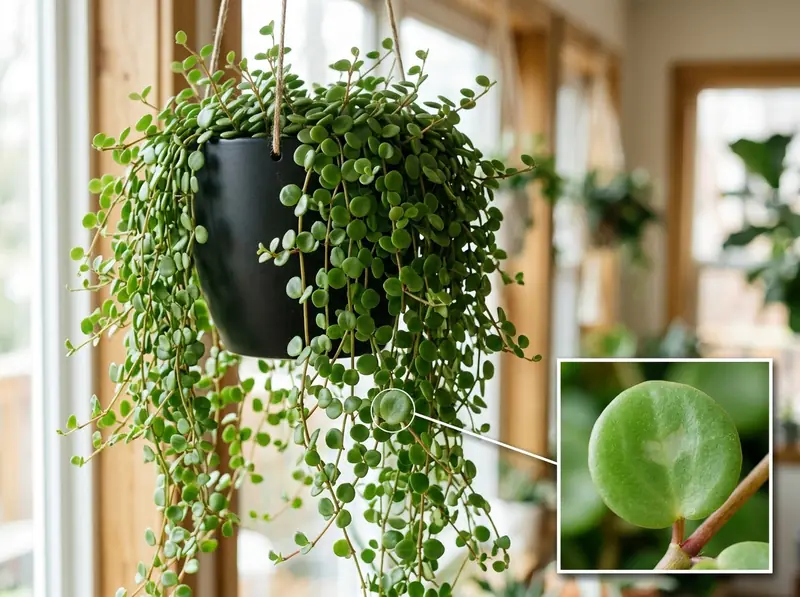
Trailing Jade
Peperomia rotundifolia
Also known as Yorba Linda
Trailing Jade is a compact, easygoing plant with chains of tiny, round, fleshy leaves on trailing stems. It looks good in a hanging basket or on a shelf edge. Give it bright, indirect light and let the soil dry between waterings, and it will stay full and healthy.
Saving is free with a KinClub account, and it works here and in the KinClub app. Sign up free
Care profile
- Light
- Bright, indirect lightLow → direct sun
- Water
- Let it dry outAbout every 10 days
- Difficulty
- EasyTricky → easy
- Coldest it tolerates
- 50°F
- Humidity
- Medium
- Mature size
- SmallSmall → tree-size
- Growth rate
- Moderate
- How common
- CommonRare → everywhere
- Plant family
- Piperaceae
Pets and toxicity
Non-toxic to cats
Listed as non-toxic to cats by the ASPCA.
Non-toxic to dogs
Listed as non-toxic to dogs by the ASPCA.
Source: ASPCA toxic and non-toxic plants. If a pet eats any houseplant, call your vet or an animal poison helpline.
How to care for Trailing Jade
Light
Give bright, indirect light, such as a spot near an east or shaded south window. It tolerates medium light but grows more slowly and leggier, and harsh midday sun can scorch the leaves.
Watering
Water thoroughly when the top 1 to 2 inches of soil are dry, about every 10 days in summer and every 2 to 3 weeks in winter. Empty the saucer after watering so the roots never sit in water.
Soil
Use a light, airy, well-draining mix, such as standard houseplant potting mix with about one-third perlite or orchid bark added. Always use a pot with drainage holes.
Feeding
Feed monthly in spring and summer with a balanced houseplant fertilizer diluted to half strength. Do not feed in fall and winter.
Repotting
Repot only every 2 to 3 years, in spring, when roots fill the pot. Go up just one pot size (1 to 2 inches wider), since it has a small root system and dislikes excess soil.
Propagation
Take 3 to 4 inch stem cuttings with a few leaves, remove the lowest leaves, and root them in water or moist perlite mix. Roots usually form in 2 to 4 weeks; several cuttings per pot give a fuller plant.
Common problems
- Yellow, mushy leaves and stems: overwatering. Let the soil dry out, trim rotten stems, and repot in fresh mix if the roots are brown and soft.
- Wrinkled, shriveled leaves: underwatering. Water thoroughly and check that water drains through the pot.
- Leggy, sparse growth: too little light. Move to a brighter spot and pinch back stems to encourage branching.
- White cottony clusters in leaf joints: mealybugs. Dab with cotton swabs dipped in rubbing alcohol and repeat weekly until gone.
- Fine webbing and stippled leaves: spider mites. Rinse the plant and use insecticidal soap, and raise the humidity a little.
Similar plants
Same light needs and difficulty.
 AI-generated
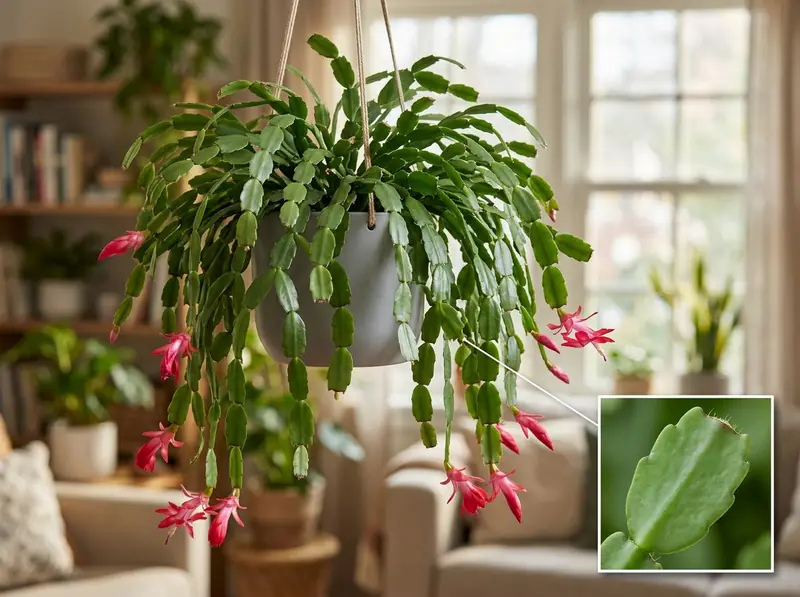
Spring Cactus
Schlumbergera russelliana
- Bright, indirect light
- Moderate watering
Non-toxic to cats and dogs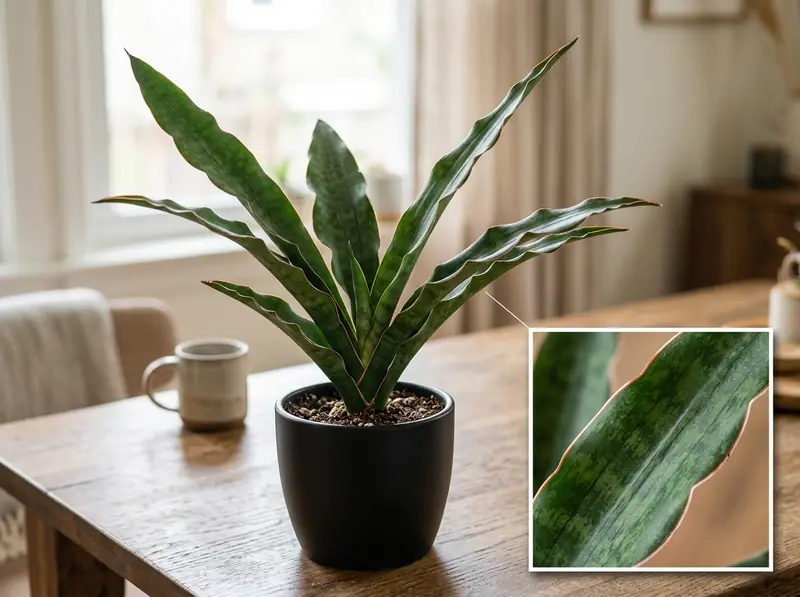 AI-generated
 AI-generated
Chinese Money Plant
Pilea peperomioides
- Bright, indirect light
- Dry to moderate watering
Pets: not yet checked AI-generated
Christmas Cactus
Schlumbergera × buckleyi
- Bright, indirect light
- Moderate watering
Pets: not yet checked