
 AI-generated
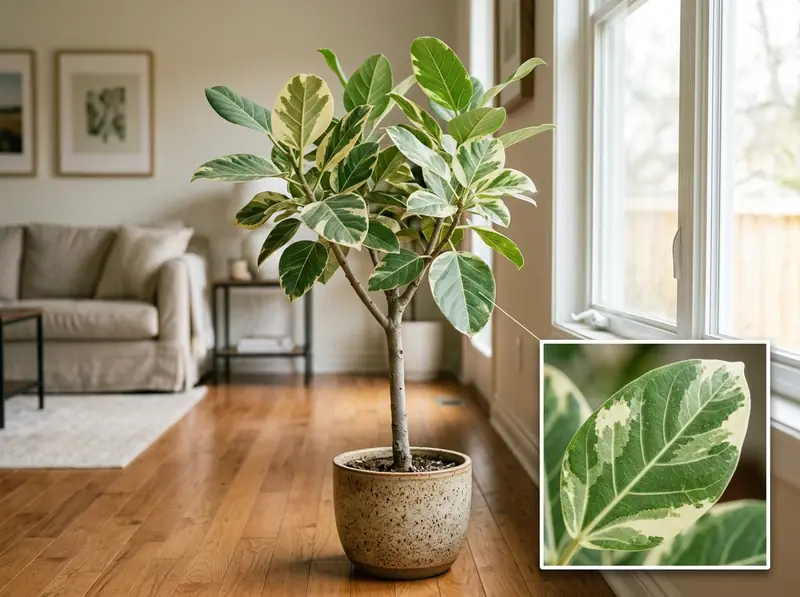
Variegated Audrey Fig
Ficus benghalensis 'Variegata'
Variegated Audrey fig has large, velvety leaves splashed with cream and white. It is a striking statement plant, but it is slower and fussier than the plain green form, so give it steady bright light.
Saving is free with a KinClub account, and it works here and in the KinClub app. Sign up free
Care profile
- Light
- Bright, indirect lightLow → direct sun
- Water
- Moderate wateringAbout every 10 days
- Difficulty
- Moderate to challengingTricky → easy
- Coldest it tolerates
- 55°F
- Humidity
- Medium
- Mature size
- Tree-sizeSmall → tree-size
- Growth rate
- Moderate
- How common
- EnthusiastRare → everywhere
- Plant family
- Moraceae
Pets and toxicity
Toxic to cats
Keep away from cats. Call your vet or a pet poison helpline if a cat chews it.
Toxic to dogs
Keep away from dogs. Call your vet or a pet poison helpline if a dog chews it.
Source: ASPCA toxic and non-toxic plants. If a pet eats any houseplant, call your vet or an animal poison helpline.
How to care for Variegated Audrey Fig
Light
Provide bright, indirect light such as a spot just back from an east or south window. Variegated leaves need more light than plain green ones but burn more easily in direct sun.
Watering
Water when the top 1 to 2 inches of soil is dry, about every 10 days in summer, less in winter. Never leave it in a wet saucer.
Soil
Use a well-draining mix of potting soil, perlite, and bark, in a pot with drainage holes.
Feeding
Feed with a diluted balanced fertilizer every 4 weeks in spring and summer.
Repotting
Repot every 2 years in spring, and only one pot size up. Wear gloves because the milky sap irritates skin.
Propagation
Take stem cuttings with a leaf and node in spring. Variegated cuttings root slower than plain green ones, so be patient.
Common problems
- Leaf drop from moves or drafts: keep it in one stable bright spot.
- Brown scorched patches on pale leaf areas: shift it out of direct afternoon sun.
- Variegation reverting to green: prune back to the best variegated node and give it more light.
Similar plants
Same light needs and difficulty.
 AI-generated
 AI-generated
Calathea Orbifolia
Goeppertia orbifolia
- Medium to bright, indirect light
- Keep moist
Pets: not yet checked AI-generated
 AI-generated