
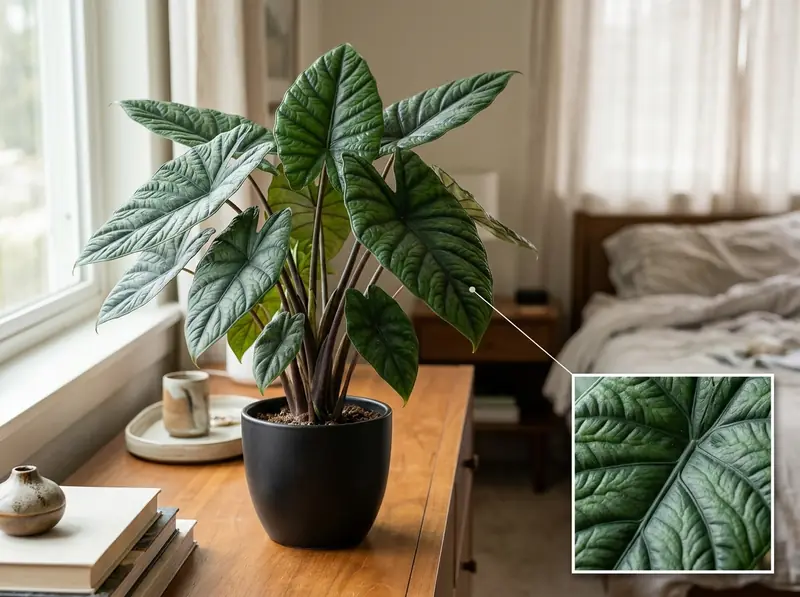
 AI-generated
Yucatan Princess Alocasia
Alocasia 'Yucatan Princess'
A compact Alocasia hybrid with dark, textured, deeply veined leaves and a neat upright form. It suits a bright tabletop and enjoys warmth and humidity, but is less fussy than rarer Alocasias.
Saving is free with a KinClub account, and it works here and in the KinClub app. Sign up free
Care profile
- Light
- Bright, indirect lightLow → direct sun
- Water
- Moderate wateringAbout every 7 days
- Difficulty
- ModerateTricky → easy
- Coldest it tolerates
- 60°F
- Humidity
- High
- Mature size
- Medium to largeSmall → tree-size
- Growth rate
- Moderate to fast
- How common
- EnthusiastRare → everywhere
Pets and toxicity
Toxic to cats
Keep away from cats. Call your vet or a pet poison helpline if a cat chews it.
Toxic to dogs
Keep away from dogs. Call your vet or a pet poison helpline if a dog chews it.
Source: ASPCA toxic and non-toxic plants. If a pet eats any houseplant, call your vet or an animal poison helpline.
How to care for Yucatan Princess Alocasia
Light
Grows best in bright indirect light, such as near an east window or a few feet back from a south window. Direct sun burns the dark leaves, while dim spots cause stretched stems.
Watering
Water when the top inch of soil dries, about every 7 days in the growing season, and cut back in winter. Never leave the pot sitting in water.
Soil
Use a loose, airy mix with potting soil, perlite, and orchid bark for drainage. Use a pot with drainage holes.
Feeding
Feed every 2-4 weeks in spring and summer with a half-strength balanced fertilizer. None in winter.
Repotting
Repot every year or two in spring into a pot only slightly larger; a snug pot keeps the corm from sitting wet.
Propagation
Separate small corms or offsets at repotting and root them in moist sphagnum or perlite in a warm, humid spot.
Common problems
- Spider mites in dry air: look for stippled leaves and webbing. Rinse leaves and use insecticidal soap weekly.
- Brown leaf edges: low humidity or inconsistent watering. Keep humidity near 50-60% and water regularly.
- Winter dormancy: leaves may yellow and drop in cooler months. Water sparingly and wait for new growth in spring.
Similar plants
Same light needs and difficulty.
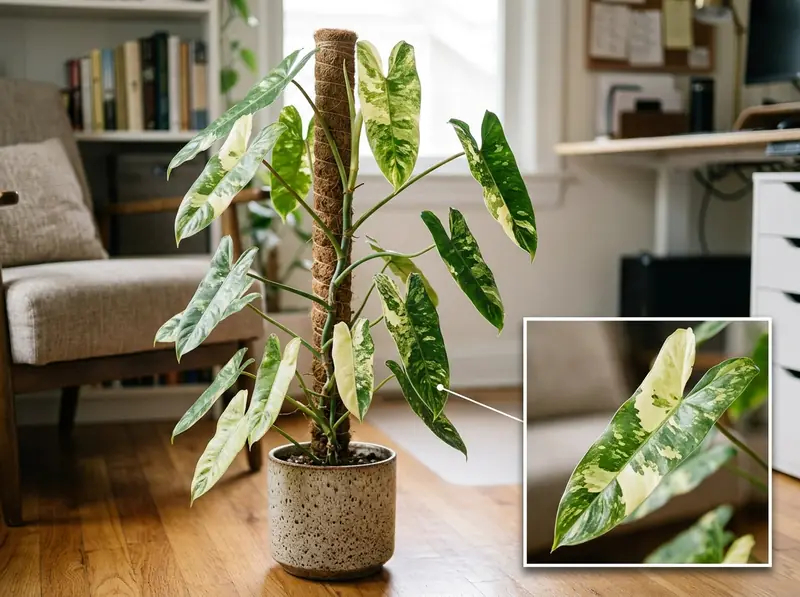 AI-generated
Ilsemanii Philodendron
Philodendron ilsemanii
- Bright, indirect light
- Moderate watering
Toxic to cats and dogs AI-generated
 AI-generated
 AI-generated