
 AI-generated
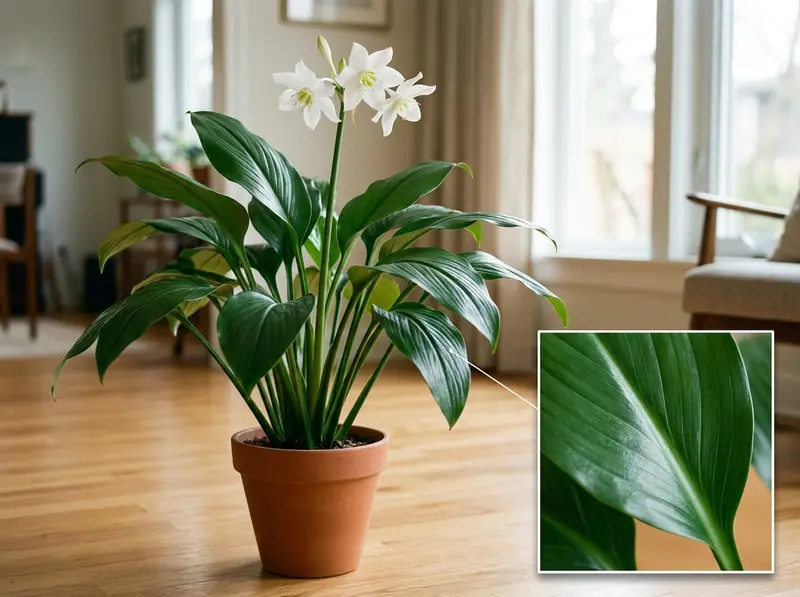
Amazon Lily
Eucharis × grandiflora
Amazon lily is a bulb grown for its glossy, broad, dark green leaves and fragrant, white, daffodil-like flowers, which can appear two or three times a year. It likes bright, indirect light, even moisture, and warm rooms. It blooms best when its pot is snug and it gets a short drier rest after flowering.
Saving is free with a KinClub account, and it works here and in the KinClub app. Sign up free
Care profile
- Light
- Bright, indirect lightLow → direct sun
- Water
- Moderate to moist wateringAbout every 7 days
- Difficulty
- ModerateTricky → easy
- Coldest it tolerates
- 55°F
- Humidity
- Medium to high
- Mature size
- MediumSmall → tree-size
- Growth rate
- Moderate
- How common
- CommonRare → everywhere
- Plant family
- Amaryllidaceae
Pets and toxicity
Cats and dogs: not yet checked
Not yet checked against ASPCA — don't assume it's safe for pets.
No toxicity source on record for this plant yet. If a pet eats any houseplant, call your vet or an animal poison helpline.
How to care for Amazon Lily
Light
Give it bright, indirect light, such as a few feet from an east or lightly shaded south window. It tolerates some gentle morning sun but not harsh midday sun.
Watering
Water when the top inch of soil feels dry, about once a week in the growing season, and let excess drain away. After flowering, water less for 4-6 weeks so the soil is only barely damp, then resume normal watering.
Soil
Use a well-draining, peat- or coco-based potting mix with some perlite or bark added. The pot must have drainage holes, since the bulbs rot in waterlogged soil.
Feeding
Feed every 2-4 weeks in spring and summer, and during active growth, with a balanced liquid fertilizer at half strength. Stop or reduce feeding during the post-bloom rest.
Repotting
Repot only every 3-4 years, because it flowers best when crowded. Choose a pot just 1-2 inches wider and keep the top of the bulb at or just above the soil surface.
Propagation
Divide offset bulbs from the parent when repotting, leaving 3-4 bulbs per pot. Newly divided plants may take a year or two to bloom.
Common problems
- Leaves yellow and bulbs go soft: overwatering or poor drainage. Let soil dry, cut off rotted tissue and repot in fresh, gritty mix.
- No flowers: usually too little light, too-large pot, or no rest period. Move to brighter light, keep it snug in the pot and give a dry rest after blooming.
- Brown leaf tips: dry air, inconsistent watering or fertilizer salt build-up. Water evenly and flush the soil with plain water every few months.
- Red or brown spots on leaves or bulbs, or scarring: may be fungal or pest damage. Remove affected tissue, improve airflow and avoid watering into the crown.
- White cottony bugs near the bulb neck: mealybugs. Dab with rubbing alcohol on a cotton swab and repeat weekly until gone.
Similar plants
Same light needs and difficulty.
 AI-generated
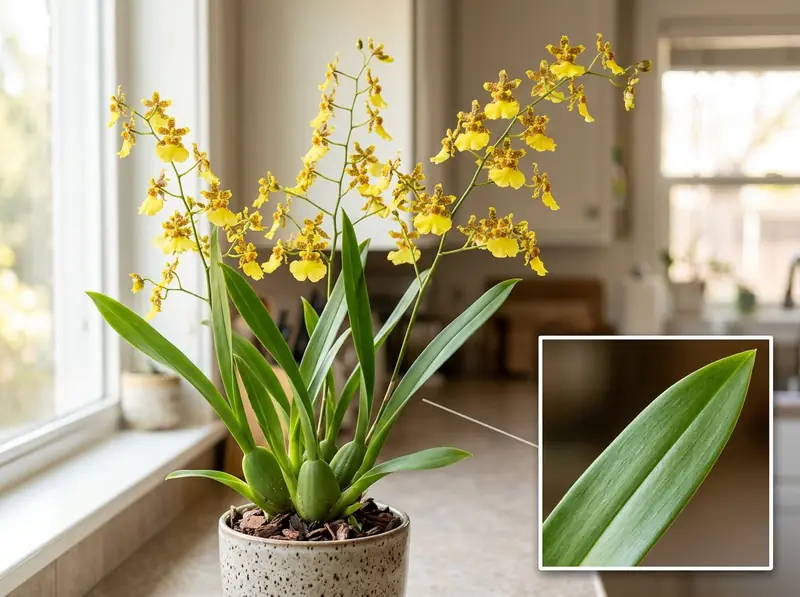
Dancing Lady Orchid
Oncidium hybrids
- Bright, indirect light
- Moderate watering
Non-toxic to cats and dogs AI-generated
 AI-generated
 AI-generated