
 AI-generated
Andreana Air Plant
Tillandsia andreana
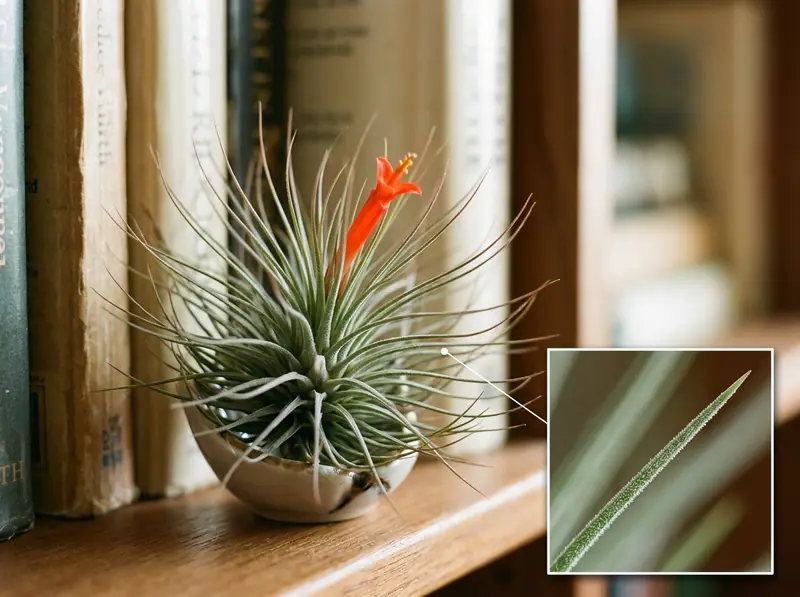
The Andreana air plant is a tiny, slow-growing Tillandsia with thin, wiry leaves. It blooms with a bright orange-red flower. It needs bright, filtered light and weekly soaking, and it must dry fully within a few hours afterward. It is a bit fussier than larger air plants because its small size means it dries out quickly.
Saving is free with a KinClub account, and it works here and in the KinClub app. Sign up free
Care profile
- Light
- Bright, indirect lightLow → direct sun
- Water
- Dry to moderate wateringAbout every 7 days
- Difficulty
- ModerateTricky → easy
- Coldest it tolerates
- 45°F
- Humidity
- Medium to high
- Mature size
- SmallSmall → tree-size
- Growth rate
- Slow
- How common
- EnthusiastRare → everywhere
- Plant family
- Bromeliaceae
Pets and toxicity
Cats and dogs: not yet checked
Not yet checked against ASPCA — don't assume it's safe for pets.
No toxicity source on record for this plant yet. If a pet eats any houseplant, call your vet or an animal poison helpline.
How to care for Andreana Air Plant
Light
Give bright, filtered light, such as a spot near an east or south window with a sheer curtain. A few hours of gentle morning sun is fine, but avoid hot midday sun.
Watering
Soak in room-temperature water for 15-30 minutes about once a week, or mist lightly 2-3 times a week. This species is small and fine-leaved, so it dries fast and dislikes long dry spells. Shake off excess water and dry it in open air.
Soil
No soil is needed because it is an epiphyte. Mount it on bark, driftwood or a shelf, or set it loosely in an open holder. Avoid gluing or wiring tightly around the base.
Feeding
Feed once a month in the growing season with a bromeliad or air-plant fertilizer at quarter strength. Add it to the soaking water or mist.
Repotting
It does not need repotting. Move it to a bigger mount only if you want to, and keep the base exposed and free of moist material.
Propagation
Separate pups when they are about one-third to half the size of the parent, gently twisting them off. You can also leave pups to form a clump. Growth is slow, and flowering is a sign that pups are coming.
Common problems
- Brown, crispy leaf tips: the plant is too dry or the air is too dry, so soak it longer and more often.
- Rotting base: water sat in the center, so dry it upside down after soaking and improve air flow.
- Faded color and no growth: the light is too dim, so move it to a brighter spot.
- White cottony patches or bumps: mealybugs or scale, so dab with alcohol on a cotton swab and isolate the plant.
Similar plants
Same light needs and difficulty.
 AI-generated
Dancing Lady Orchid
Oncidium hybrids
- Bright, indirect light
- Moderate watering
Non-toxic to cats and dogs AI-generated
 AI-generated
 AI-generated