
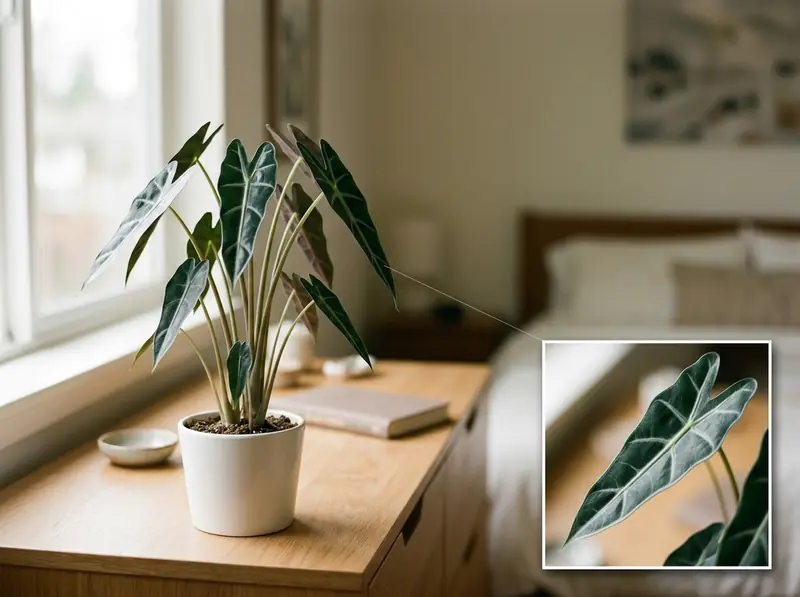
 AI-generated
Bambino Alocasia
Alocasia 'Bambino'
Bambino is a compact, slow Alocasia with narrow dark green arrow-shaped leaves marked with pale veins, topping out around a foot. It suits a tabletop or shelf that gets bright light and some humidity.
Saving is free with a KinClub account, and it works here and in the KinClub app. Sign up free
Care profile
- Light
- Bright, indirect lightLow → direct sun
- Water
- Moderate wateringAbout every 7 days
- Difficulty
- ModerateTricky → easy
- Coldest it tolerates
- 60°F
- Humidity
- High
- Mature size
- SmallSmall → tree-size
- Growth rate
- Slow to moderate
- How common
- RareRare → everywhere
Pets and toxicity
Toxic to cats
Keep away from cats. Call your vet or a pet poison helpline if a cat chews it.
Toxic to dogs
Keep away from dogs. Call your vet or a pet poison helpline if a dog chews it.
Source: ASPCA toxic and non-toxic plants. If a pet eats any houseplant, call your vet or an animal poison helpline.
How to care for Bambino Alocasia
Light
Bright, indirect light near an east window or a few feet back from a south or west one. Avoid hours of direct sun, which scorches the small arrow-shaped leaves.
Watering
Water when the top inch of soil is dry, roughly every 7 days in summer and every 10 to 14 in winter. Water thoroughly, then empty the saucer so roots never sit wet.
Soil
Chunky, fast-draining aroid mix: about 2 parts potting soil, 1 part orchid bark, and 1 part perlite. Soil should never stay waterlogged.
Feeding
Feed every 2 to 3 weeks in spring and summer with a balanced fertilizer at half strength. Skip it in fall and winter.
Repotting
Repot every 1 to 2 years in spring, going up just one pot size, since it likes to be snug. Divide offset corms at the same time.
Propagation
Separate the small offset corms that form at the base and pot them in damp mix. Keep warm and humid until a new leaf unfurls.
Common problems
- Spider mites cause fine stippling and webbing on the leaves. Rinse the plant and wipe leaves, then treat with insecticidal soap weekly for 3 weeks.
- Yellowing lower leaves usually mean overwatering. Let the pot dry further between drinks and make sure it drains freely.
- Brown crispy edges point to dry air or skipped waterings. Group it with other plants or run a small humidifier nearby.
Similar plants
Same light needs and difficulty.
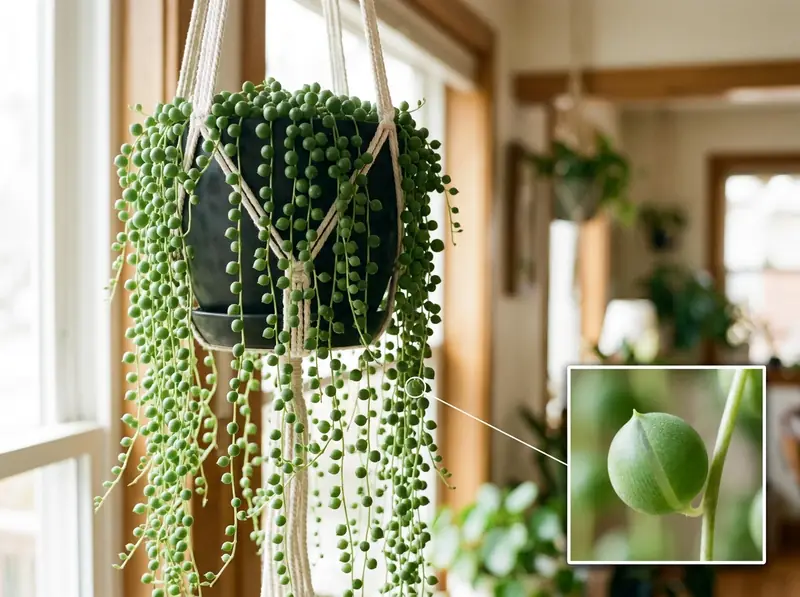 AI-generated
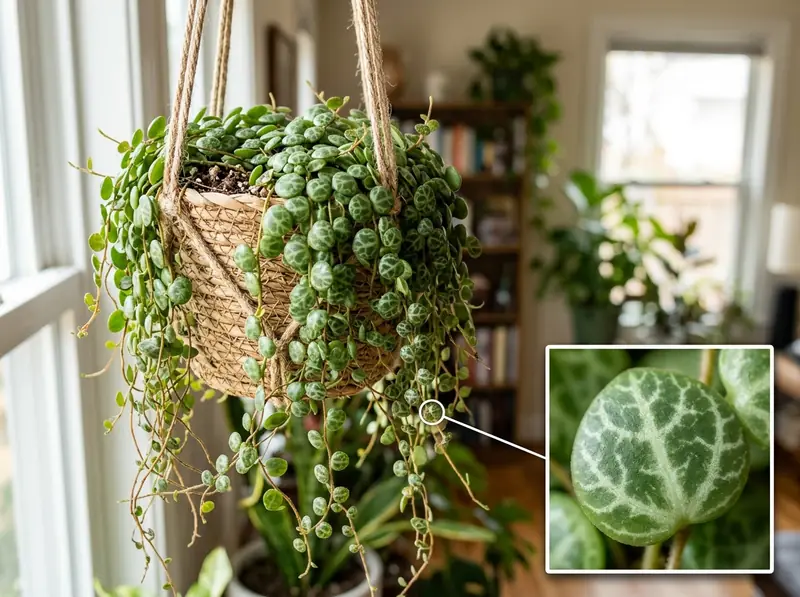 AI-generated
 AI-generated
 AI-generated