
 AI-generated
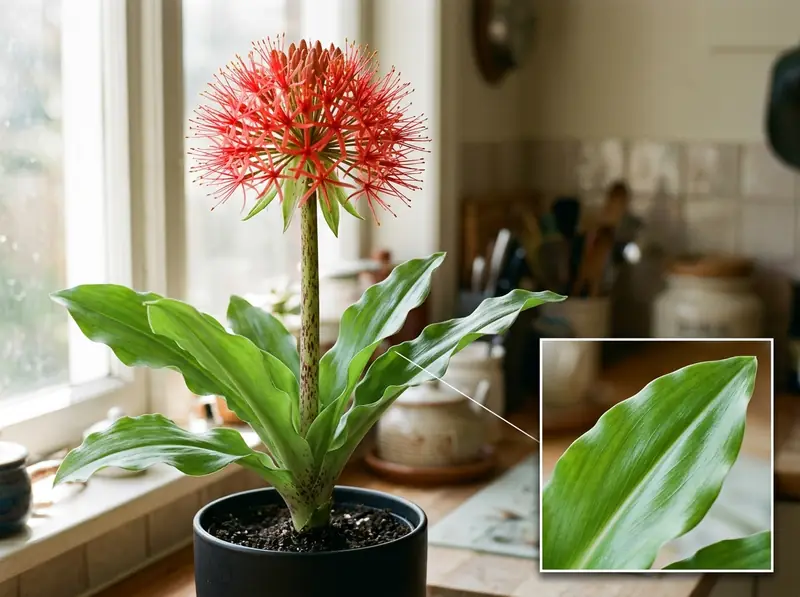
Blood Lily
Scadoxus multiflorus
Also known as Amaryllis multiflora
Blood lily is a bulb-forming plant from tropical Africa that produces a spectacular ball of small red flowers on a spotted stalk, usually in late spring or summer, followed by broad, glossy leaves. It needs bright indirect light, moderate watering, and a dry, cool rest of a couple of months each winter to bloom again.
Saving is free with a KinClub account, and it works here and in the KinClub app. Sign up free
Care profile
- Light
- Bright, indirect lightLow → direct sun
- Water
- Moderate wateringAbout every 7 days
- Difficulty
- ModerateTricky → easy
- Coldest it tolerates
- 50°F
- Humidity
- Medium
- Mature size
- Small to mediumSmall → tree-size
- Growth rate
- Moderate
- How common
- CommonRare → everywhere
- Plant family
- Amaryllidaceae
Pets and toxicity
Toxic to cats
Keep away from cats. Call your vet or a pet poison helpline if a cat chews it.
Toxic to dogs
Keep away from dogs. Call your vet or a pet poison helpline if a dog chews it.
Source: ASPCA toxic and non-toxic plants. If a pet eats any houseplant, call your vet or an animal poison helpline.
How to care for Blood Lily
Light
Give bright, indirect light, such as an east window or a few feet back from a south or west window. Protect it from hot midday sun, which scorches the broad leaves.
Watering
During growth, water when the top inch of soil is dry, about once a week, and let excess drain away. When leaves yellow in fall, reduce watering and then stop for the 2-3 month dormancy.
Soil
Use a well-draining, peat- or coir-based potting mix with some perlite or coarse sand added. Plant the bulb with its top third to half above the soil surface.
Feeding
Feed every 2-4 weeks with a balanced liquid fertilizer at half strength while leaves are actively growing. Stop feeding when the plant goes dormant.
Repotting
Repot only every 3-4 years, since it blooms best when snug. Use a pot just 1-2 inches wider than the bulb, and repot at the end of dormancy as new growth starts.
Propagation
Separate offset bulbs from the parent when repotting and pot them individually. Offsets take a few years to bloom. Seed from the red berries also works but takes 4-7 years to flower.
Common problems
- Leaves yellowing in fall is normal dormancy: let them die back, stop watering, and keep the bulb dry and cool until new growth appears.
- No flowers usually means too little light, no dormancy rest, or a recently repotted bulb; give brighter light and a dry winter rest.
- Soft, mushy bulb from soggy soil: unpot, cut away rotted tissue, let it dry a few days, then repot in fresh mix and water sparingly.
- Mealybugs in the leaf bases: dab with cotton swabs dipped in rubbing alcohol and repeat weekly until clear.
- Brown leaf tips from dry soil or dry air: water more regularly during growth and keep away from heaters.
Similar plants
Same light needs and difficulty.
 AI-generated
 AI-generated
 AI-generated
 AI-generated