
 AI-generated
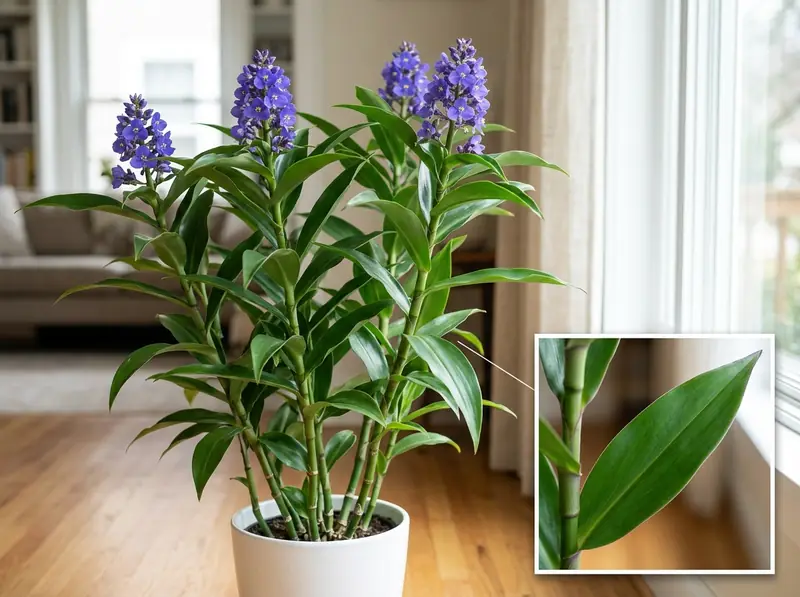
Blue Ginger
Dichorisandra thyrsiflora
Blue ginger is a fast-growing, upright plant with tall canes of glossy green leaves that sometimes have a purple underside. It is not a true ginger, and it can reach 3 to 5 feet indoors. It likes warmth, humidity, and evenly moist soil, and it may produce blue-purple flowers in strong light.
Saving is free with a KinClub account, and it works here and in the KinClub app. Sign up free
Care profile
- Light
- Bright, indirect lightLow → direct sun
- Water
- Keep moistAbout every 7 days
- Difficulty
- ModerateTricky → easy
- Coldest it tolerates
- 50°F
- Humidity
- High
- Mature size
- LargeSmall → tree-size
- Growth rate
- Fast
- How common
- CommonRare → everywhere
- Plant family
- Commelinaceae
Pets and toxicity
Cats and dogs: not yet checked
Not yet checked against ASPCA — don't assume it's safe for pets.
No toxicity source on record for this plant yet. If a pet eats any houseplant, call your vet or an animal poison helpline.
How to care for Blue Ginger
Light
Give bright, indirect light, such as a spot a few feet from an east or south window or right beside a west window behind a sheer curtain. Gentle morning sun is fine, but hot midday sun scorches the leaves.
Watering
Keep the soil evenly moist but not soggy; water when the top half inch feels barely dry, about once a week in summer. Water less in winter, letting the top inch or two dry between drinks.
Soil
Use a rich, peat- or coir-based potting mix with some perlite or bark (about 2 parts mix to 1 part perlite) for moisture retention with good drainage. Make sure the pot has drainage holes.
Feeding
Feed every 2 to 4 weeks in spring and summer with a balanced liquid fertilizer at half the label strength. Stop or reduce feeding in fall and winter.
Repotting
Repot every 1 to 2 years in spring when roots fill the pot, moving up 2 inches in pot diameter. The plant grows quickly and can get top-heavy, so use a sturdy pot.
Propagation
Take 4 to 6 inch stem cuttings with at least two nodes in spring or summer and root them in water or moist mix in 2 to 4 weeks. Clumps can also be divided when repotting.
Common problems
- Brown leaf tips and edges: usually dry air or irregular watering; raise humidity and keep the soil evenly moist.
- Leggy, floppy canes: too little light or no pruning; move to brighter light and cut back in spring.
- Yellowing lower leaves: often overwatering or poor drainage; let the top inch dry and check the drainage holes.
- Fine webbing and stippled leaves: spider mites in dry air; rinse the leaves and wipe with insecticidal soap weekly.
- Leaf drop in winter: cold drafts or temperatures below about 55°F; move to a warm, draft-free spot.
Similar plants
Same light needs and difficulty.
 AI-generated
 AI-generated
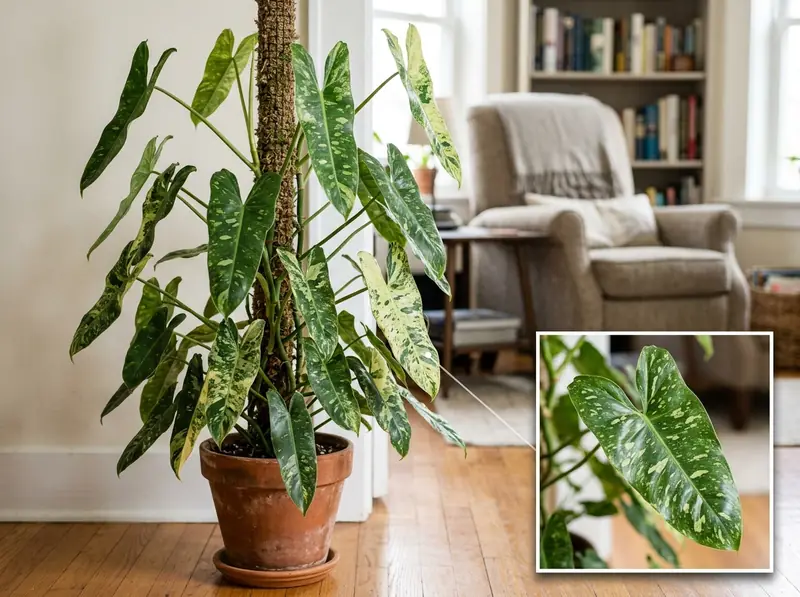
Paraiso Verde Philodendron
Philodendron 'Paraiso Verde'
- Bright, indirect light
- Moderate watering
Toxic to cats and dogs AI-generated
 AI-generated