
 AI-generated
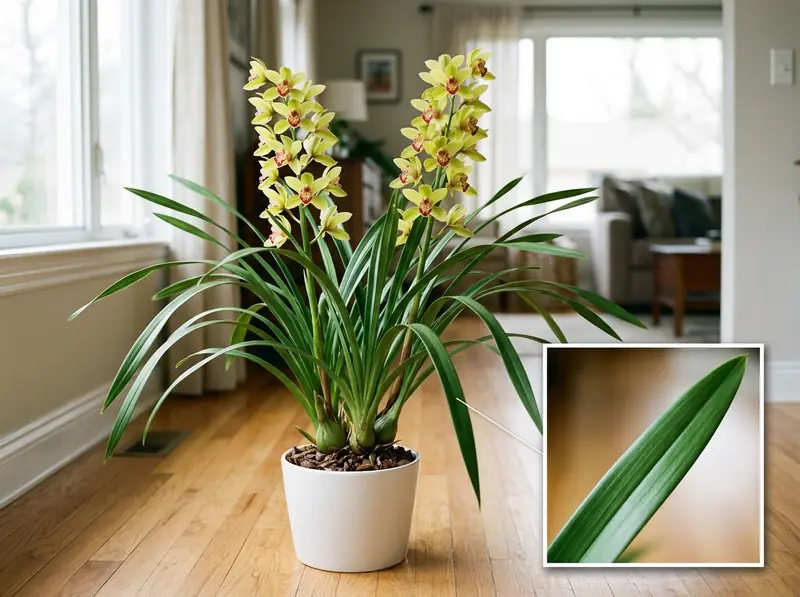
Boat Orchid
Cymbidium hybrids
Boat orchids (Cymbidium hybrids) are grassy, clumping orchids grown for long spikes of waxy flowers in winter or spring that last for weeks. They like bright light and cool fall nights, and they bloom best when kept cooler than most houseplants. Miniature types suit indoor shelves while standard types are bigger floor plants.
Saving is free with a KinClub account, and it works here and in the KinClub app. Sign up free
Care profile
- Light
- Bright, indirect lightLow → direct sun
- Water
- Moderate wateringAbout every 7 days
- Difficulty
- ModerateTricky → easy
- Coldest it tolerates
- 40°F
- Humidity
- Medium
- Mature size
- MediumSmall → tree-size
- Growth rate
- Moderate
- How common
- Very commonRare → everywhere
- Plant family
- Orchidaceae
Pets and toxicity
Cats and dogs: not yet checked
Not yet checked against ASPCA — don't assume it's safe for pets.
No toxicity source on record for this plant yet. If a pet eats any houseplant, call your vet or an animal poison helpline.
How to care for Boat Orchid
Light
Give bright light with gentle morning sun, such as an east or lightly shaded south or west window. Good leaves are light, yellowish-green rather than dark green; dark leaves mean too little light for blooming.
Watering
Water thoroughly when the top inch of mix is dry, about once a week in spring and summer, and let excess drain away. Cut back to every 10-14 days in winter, but never let the mix dry out completely.
Soil
Use a coarse orchid bark mix or a cymbidium mix with bark, perlite and a little peat. The pot must have drainage holes, as soggy mix rots the thick roots.
Feeding
Feed every 2 weeks in spring and summer with a balanced fertilizer at half strength, then switch to a high-phosphorus bloom formula from late summer. Stop or reduce feeding in winter.
Repotting
Repot every 2-3 years after flowering, when bulbs crowd over the pot rim or the mix has broken down. Move up only one pot size and trim off dead, mushy roots.
Propagation
Divide large clumps when repotting, keeping at least 3 healthy bulbs with leaves in each piece. Leafless back bulbs can also be potted up, but they are slower to grow.
Common problems
- No flowers: usually too little light or no cool nights in fall. Move to brighter light and give 50-55°F nights for several weeks.
- Buds dry up and drop: caused by dry mix, sudden temperature swings or heat. Keep the mix evenly moist and the plant in a cool, stable spot.
- Yellow streaked or stippled leaves: spider mites or scale. Wipe leaves with soapy water or use insecticidal soap, and repeat weekly.
- Soft, brown roots and yellowing: overwatering. Unpot, cut off rotted roots, and repot in fresh bark mix and water less often.
- Sunburn patches on leaves: move back from the glass or add a sheer curtain in strong afternoon sun.
Similar plants
Same light needs and difficulty.
 AI-generated
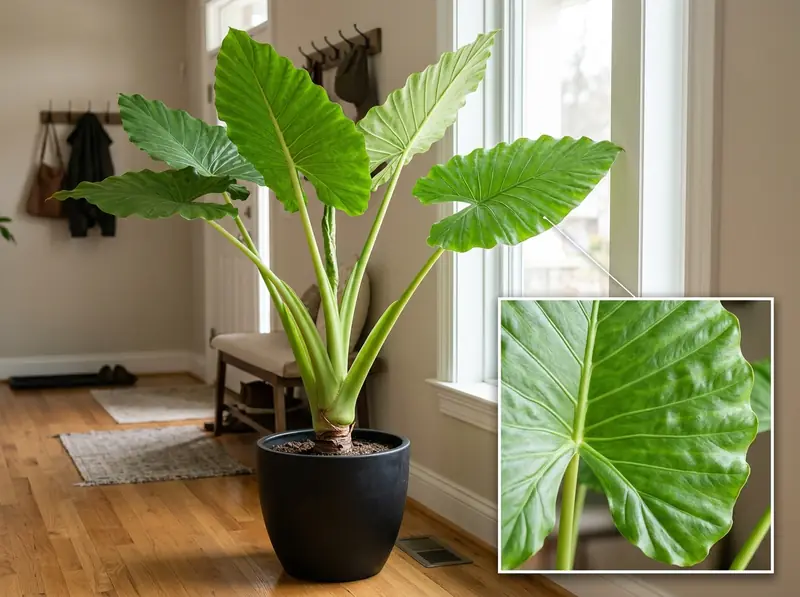
Giant Taro
Alocasia macrorrhizos
- Bright, indirect light
- Moderate to moist watering
Toxic to cats and dogs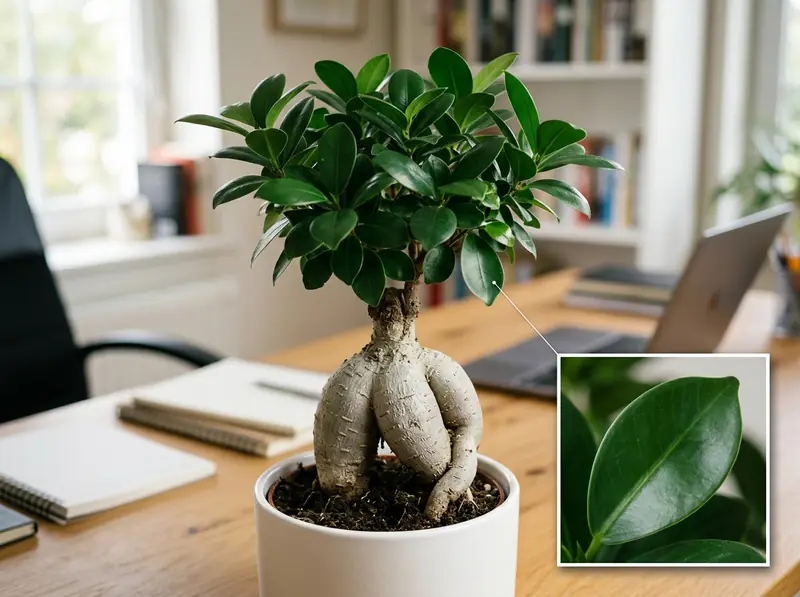 AI-generated
Ginseng Ficus
Ficus microcarpa 'Ginseng'
- Bright, indirect light
- Moderate watering
Toxic to cats and dogs AI-generated
 AI-generated