
 AI-generated
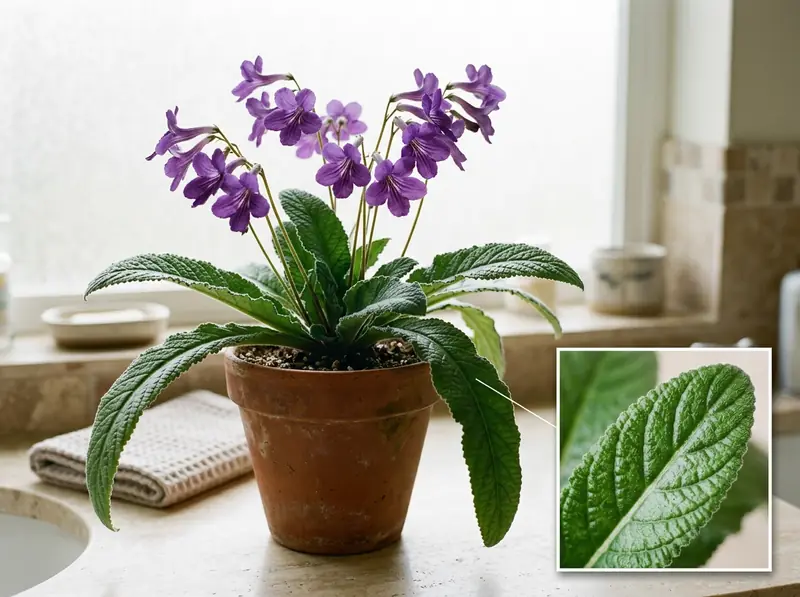
Cape Primrose
Streptocarpus × hybridus
Cape primrose is a compact rosette plant with soft, rough leaves that bloom in purple, pink, blue, red or white for much of the year when well lit. It likes bright, indirect light, a light airy mix and steady but not soggy moisture. It is moderately easy and suits a windowsill or shelf.
Saving is free with a KinClub account, and it works here and in the KinClub app. Sign up free
Care profile
- Light
- Bright, indirect lightLow → direct sun
- Water
- Moderate wateringAbout every 7 days
- Difficulty
- ModerateTricky → easy
- Coldest it tolerates
- 50°F
- Humidity
- Medium
- Mature size
- SmallSmall → tree-size
- Growth rate
- Moderate
- How common
- Very commonRare → everywhere
- Plant family
- Gesneriaceae
Pets and toxicity
Cats and dogs: not yet checked
Not yet checked against ASPCA — don't assume it's safe for pets.
Source: ASPCA toxic and non-toxic plants. If a pet eats any houseplant, call your vet or an animal poison helpline.
How to care for Cape Primrose
Light
Give bright, indirect light, such as an east window or a few feet back from a south or west window. Shield from hot midday sun, which scorches the leaves. Under grow lights, 12 to 14 hours a day works well.
Watering
Water when the top inch of mix feels dry, about every 7 days in the growing season, less in winter. Use room-temperature water, avoid wetting the crown, and empty any saucer after 15 minutes.
Soil
Use a light, airy mix such as African violet potting mix, or regular potting mix cut with about one-third perlite. Choose a pot with drainage holes.
Feeding
During active growth and blooming, feed every 2 to 4 weeks with a balanced or bloom-type fertilizer at quarter to half the label strength. Reduce feeding in winter.
Repotting
Repot every year or so in spring, going up only one pot size; they bloom best when slightly root-bound. Use a shallow pot about 5 to 6 inches wide.
Propagation
Cut a healthy leaf into sections along the midrib, or cut the leaf in half lengthwise and remove the midrib. Insert the cut edge 1 inch deep in damp perlite-rich mix; plantlets appear in 4 to 8 weeks. Division of large plants also works.
Common problems
- No flowers: usually too little light or no feeding; move to a brighter spot and feed lightly every few weeks.
- Crown or leaf bases rot: caused by soggy soil or water on the crown; let the mix dry slightly and water at the soil edge.
- Brown, distorted buds or flecked petals: likely thrips; remove affected flowers and treat with insecticidal soap.
- Brown leaf tips and edges: dry air, underwatering or fertilizer buildup; flush the pot with plain water and keep humidity around 40 to 50 percent.
- Old leaves yellow and die back: normal for aging outer leaves; trim them at the base with clean scissors.
Similar plants
Same light needs and difficulty.
 AI-generated
 AI-generated
 AI-generated
 AI-generated