
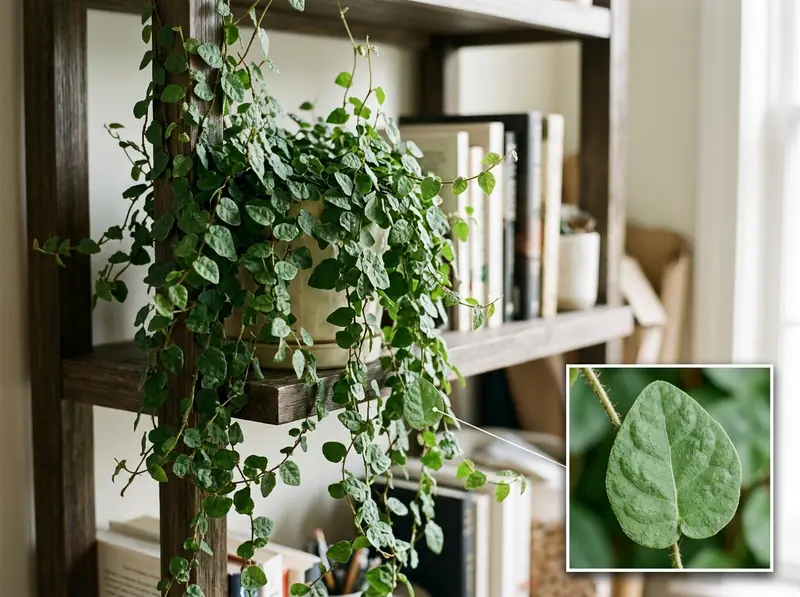
 AI-generated
Creeping Fig
Ficus pumila
Also known as Ficus hanceana, Ficus longipedicellata, Ficus repens, Ficus scandens, Ficus stipulacea, Ficus stipulata, Ficus vestita
Creeping fig is a fast-growing vine with small, heart-shaped leaves that clings to surfaces and works well in hanging baskets, terrariums, or on a moss pole. It likes bright indirect light, steady moisture, and humid air. Keep it from drying out and it will fill in quickly.
Saving is free with a KinClub account, and it works here and in the KinClub app. Sign up free
Care profile
- Light
- Bright, indirect lightLow → direct sun
- Water
- Keep moistAbout every 5 days
- Difficulty
- ModerateTricky → easy
- Coldest it tolerates
- 50°F
- Humidity
- High
- Mature size
- Medium to largeSmall → tree-size
- Growth rate
- Fast
- How common
- Very commonRare → everywhere
- Plant family
- Moraceae
Pets and toxicity
Toxic to cats
Keep away from cats. Call your vet or a pet poison helpline if a cat chews it.
Toxic to dogs
Keep away from dogs. Call your vet or a pet poison helpline if a dog chews it.
Source: ASPCA toxic and non-toxic plants. If a pet eats any houseplant, call your vet or an animal poison helpline.
How to care for Creeping Fig
Light
Give it bright, indirect light, such as near an east window or a few feet back from a south or west one. Gentle morning sun is fine, but hot midday sun scorches the thin leaves.
Watering
Keep the soil evenly damp like a wrung-out sponge, watering when the top half inch feels just barely dry, usually every 4 to 7 days. Never let it dry out completely, since the small leaves crisp fast. Reduce watering a little in winter.
Soil
Use a peat- or coco-based potting mix with some perlite for drainage, so it holds moisture but is never waterlogged. Use a pot with drainage holes.
Feeding
Feed every 2 to 4 weeks in spring and summer with a balanced liquid fertilizer diluted to half strength. Stop or cut back to once every 6 to 8 weeks in winter.
Repotting
Repot every 1 to 2 years in spring when roots fill the pot, moving up only 1 to 2 inches in pot diameter. Plants can also be cut back hard at repotting to stay compact.
Propagation
Take 3 to 4 inch stem cuttings with a few leaves in spring or summer. Root them in water or moist mix under humid conditions, and they usually root in 2 to 4 weeks.
Common problems
- Crispy brown leaf edges: usually dry air or missed watering, so raise humidity with a pebble tray or humidifier and keep the soil evenly damp.
- Leaf drop after moving: it dislikes drafts and sudden changes, so pick a stable spot away from vents and cold windows.
- Spider mites cause fine webbing and speckled leaves: rinse the plant in the shower and treat with insecticidal soap weekly.
- Leggy, straggly growth: prune stems back by a third and move it to brighter light to encourage bushier growth.
Similar plants
Same light needs and difficulty.
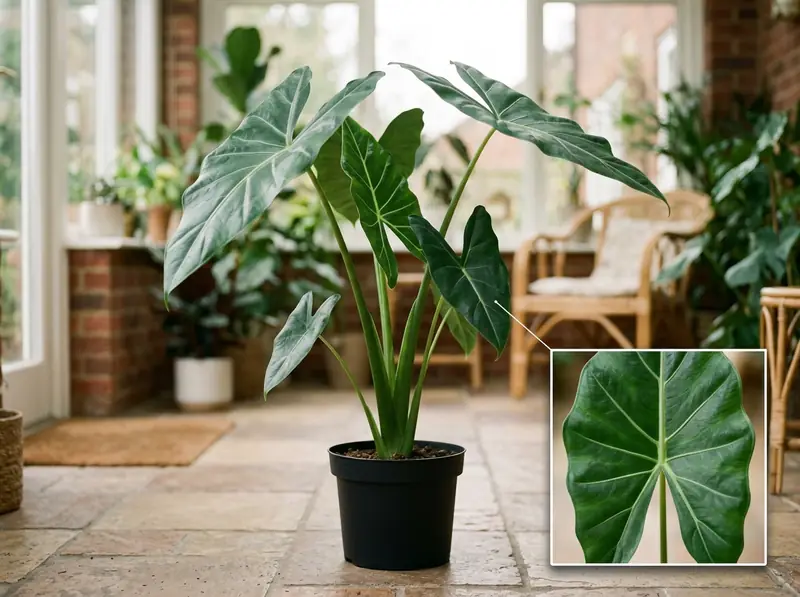 AI-generated
Sarawakensis Alocasia
Alocasia sarawakensis
- Bright, indirect light
- Moderate watering
Toxic to cats and dogs AI-generated
 AI-generated
 AI-generated