
 AI-generated
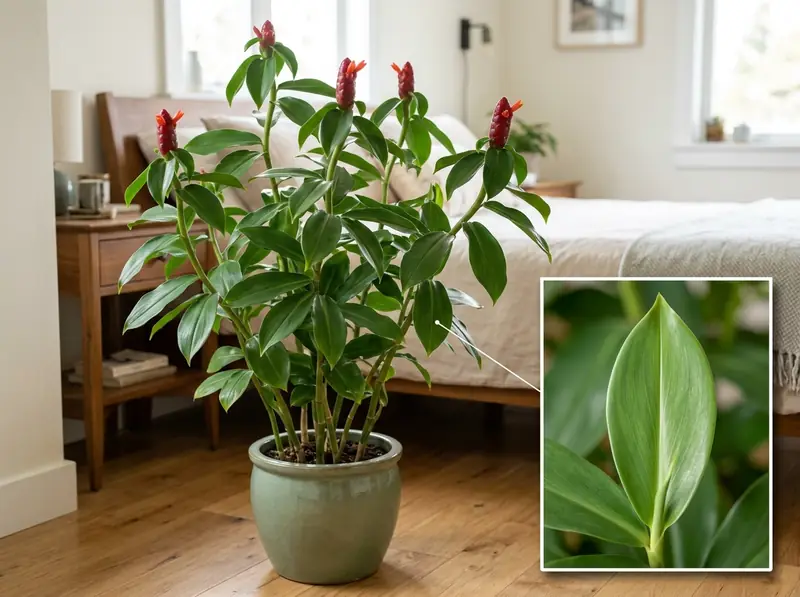
Dwarf Spiral Ginger
Costus woodsonii
Dwarf Spiral Ginger is a fast-growing tropical with unbranched canes that carry glossy green leaves in a spiral pattern. Mature plants can produce red cone-shaped flower heads with orange-red blooms when given bright light. It likes warmth, steady moisture and humidity, and may rest in winter before regrowing in spring.
Saving is free with a KinClub account, and it works here and in the KinClub app. Sign up free
Care profile
- Light
- Bright, indirect lightLow → direct sun
- Water
- Keep moistAbout every 5 days
- Difficulty
- ModerateTricky → easy
- Coldest it tolerates
- 50°F
- Humidity
- High
- Mature size
- Medium to largeSmall → tree-size
- Growth rate
- Fast
- How common
- CommonRare → everywhere
- Plant family
- Costaceae
Pets and toxicity
Cats and dogs: not yet checked
Not yet checked against ASPCA — don't assume it's safe for pets.
No toxicity source on record for this plant yet. If a pet eats any houseplant, call your vet or an animal poison helpline.
How to care for Dwarf Spiral Ginger
Light
Give it bright light, including a few hours of gentle morning or late-afternoon sun from an east or west window. Filter strong midday sun with a sheer curtain to avoid scorching the leaves.
Watering
Keep the soil evenly damp during spring and summer, watering when the top half inch feels barely dry, about every 4 to 6 days. Cut back in winter so the top 1 to 2 inches dry out between waterings, and never leave the pot standing in water.
Soil
Use a rich, loose, well-draining potting mix that holds some moisture, such as standard potting soil with about 20 percent perlite or bark added. Make sure the pot has drainage holes.
Feeding
Feed every 2 to 4 weeks in spring and summer with a balanced liquid fertilizer at half the label strength. Stop feeding in late fall and winter.
Repotting
Repot every 1 to 2 years in spring when rhizomes crowd the pot or roots circle the drainage holes. Move up only 2 inches in pot diameter, or divide the clump instead.
Propagation
Divide the rhizomes in spring, making sure each piece has at least one growing shoot and some roots. Cane sections with a node can also root in moist soil or water in warm conditions.
Common problems
- Brown, crispy leaf edges: air is too dry or watering is irregular. Raise humidity with a pebble tray or humidifier and keep the soil evenly moist.
- Webbing and fine yellow speckles on leaves mean spider mites. Rinse the leaves, wipe undersides, and use insecticidal soap weekly for 3 weeks.
- Leaf drop and bare canes in winter: the plant is going dormant in cool, dim conditions. Water less, keep it above 60°F, and wait for spring regrowth.
- No flowers: usually too little light or a young plant. Move it to brighter light and feed regularly through the growing season.
Similar plants
Same light needs and difficulty.
 AI-generated
 AI-generated
 AI-generated
 AI-generated