
 AI-generated
Elephant Ear
Colocasia esculenta
Also known as Caladium, Malanga, Elephant's Ears
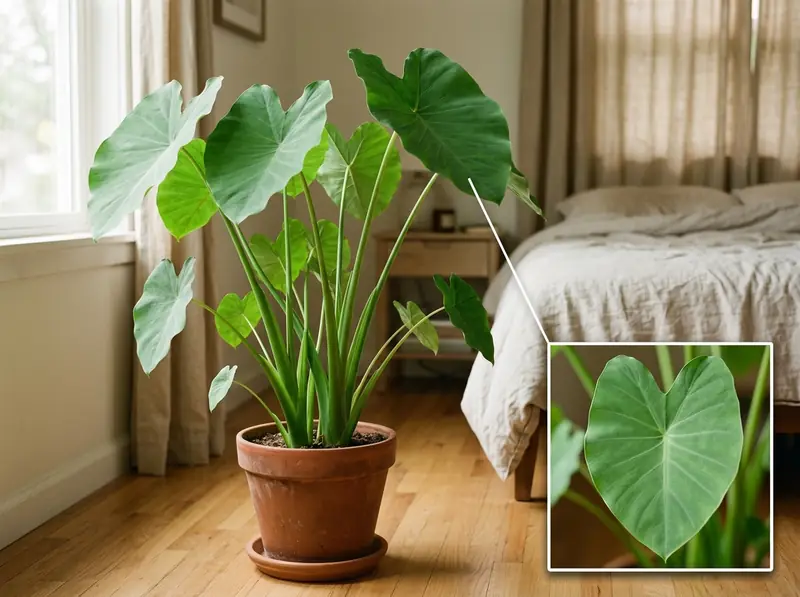
Elephant Ear is a fast-growing tropical plant with huge, heart-shaped leaves that can make a dramatic statement indoors. It likes bright light, warmth, steady moisture, and high humidity. It may go dormant in winter, so don't panic if it loses leaves.
Saving is free with a KinClub account, and it works here and in the KinClub app. Sign up free
Care profile
- Light
- Bright, indirect lightLow → direct sun
- Water
- Keep moistAbout every 4 days
- Difficulty
- ModerateTricky → easy
- Coldest it tolerates
- 50°F
- Humidity
- High
- Mature size
- LargeSmall → tree-size
- Growth rate
- Fast
- How common
- CommonRare → everywhere
- Plant family
- Araceae
Pets and toxicity
Toxic to cats
Keep away from cats. Call your vet or a pet poison helpline if a cat chews it.
Toxic to dogs
Keep away from dogs. Call your vet or a pet poison helpline if a dog chews it.
Source: ASPCA toxic and non-toxic plants. If a pet eats any houseplant, call your vet or an animal poison helpline.
How to care for Elephant Ear
Light
Give it bright light, including a few hours of gentle morning sun from an east window or a spot near a south or west window with a sheer curtain. Harsh afternoon sun can scorch the large leaves.
Watering
Keep the soil evenly moist through spring and summer, typically watering every 3 to 5 days when it is actively growing. Never let it dry out fully, and cut back to barely damp in winter when growth slows.
Soil
Use a rich, moisture-retentive potting mix with added peat or coco coir and a little perlite for drainage. Use a pot with drainage holes.
Feeding
Feed every 2 weeks in spring and summer with a balanced liquid fertilizer at half strength, since it is a heavy feeder. Stop feeding in fall and winter.
Repotting
Repot every year in spring, or when roots fill the pot, moving up 2 inches in diameter. Fresh soil supports its fast growth.
Propagation
Divide the tubers or separate offset pups in spring, each with a bit of root and a growing point. Pot them in moist mix and keep warm until new leaves appear.
Common problems
- Yellow lower leaves: often normal aging or winter dormancy, but can mean overwatering or low light; adjust watering and move to a brighter spot.
- Brown, crispy leaf edges: usually dry air or soil that dried out; keep the soil evenly moist and raise humidity with a pebble tray or humidifier.
- Webbing and stippled leaves: spider mites in dry air; rinse leaves, wipe undersides, and treat with insecticidal soap weekly.
- Drooping leaves: usually thirst, so water thoroughly; if soil is wet, check the tuber for rot.
- Leaves drip water from the tips: this is normal (guttation) when soil is very moist and humid; no fix needed.
Similar plants
Same light needs and difficulty.
 AI-generated
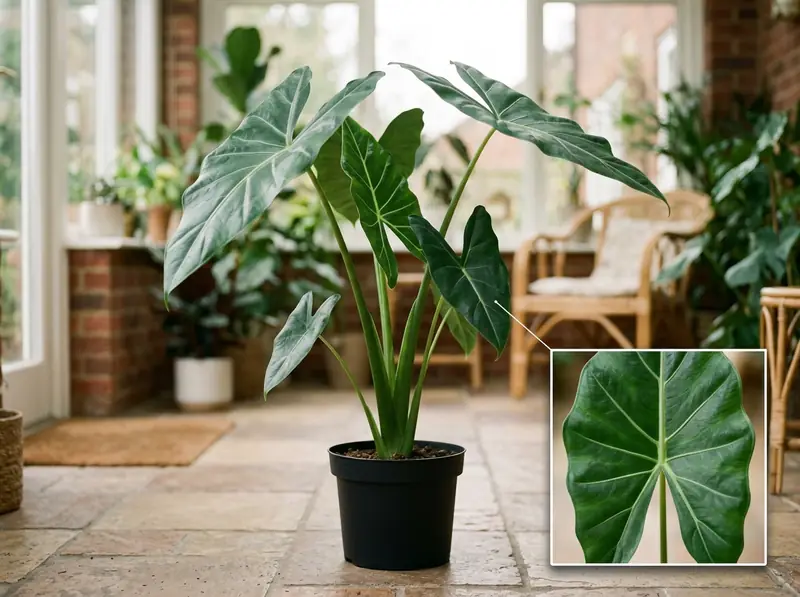
Sarawakensis Alocasia
Alocasia sarawakensis
- Bright, indirect light
- Moderate watering
Toxic to cats and dogs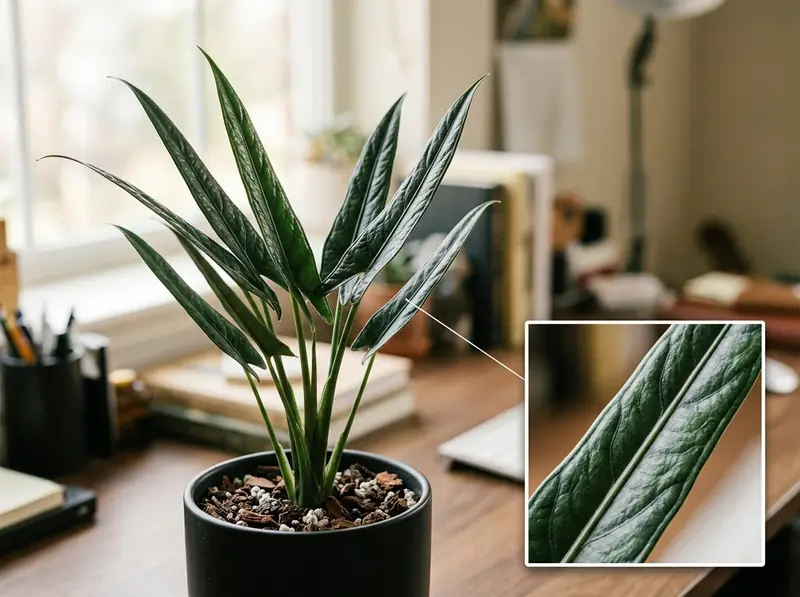 AI-generated
 AI-generated
 AI-generated