
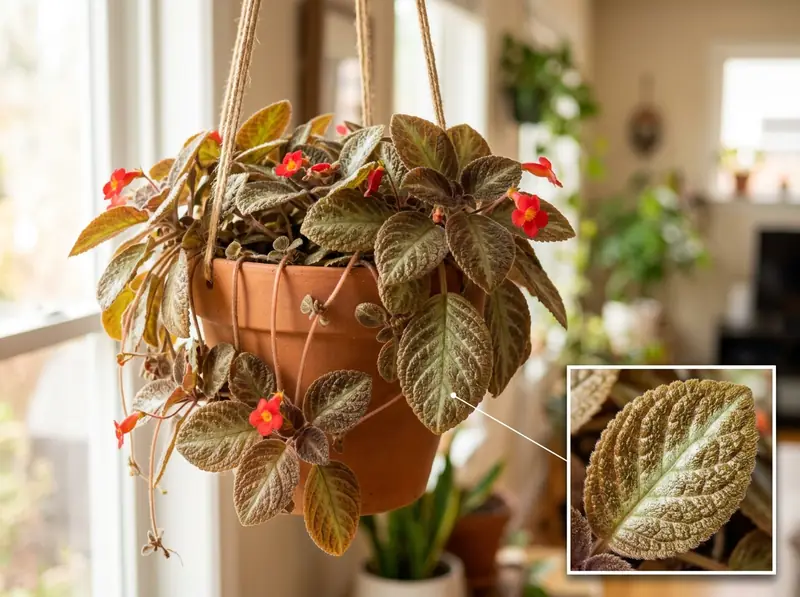
 AI-generated
Flame Violet
Episcia cupreata
Also known as Episcia splendens
Flame violet is a low, spreading plant with quilted, coppery-bronze leaves and small bright red-orange flowers. It sends out runners that trail over the pot edge, making it good for baskets and shelves. It likes warmth, high humidity, and evenly moist soil, so it suits a bright spot without direct sun and away from drafts.
Saving is free with a KinClub account, and it works here and in the KinClub app. Sign up free
Care profile
- Light
- Bright, indirect lightLow → direct sun
- Water
- Keep moistAbout every 5 days
- Difficulty
- ModerateTricky → easy
- Coldest it tolerates
- 60°F
- Humidity
- High
- Mature size
- SmallSmall → tree-size
- Growth rate
- Fast
- How common
- CommonRare → everywhere
- Plant family
- Gesneriaceae
Pets and toxicity
Cats and dogs: not yet checked
Not yet checked against ASPCA — don't assume it's safe for pets.
Source: ASPCA toxic and non-toxic plants. If a pet eats any houseplant, call your vet or an animal poison helpline.
How to care for Flame Violet
Light
Give bright, indirect light, such as a spot a few feet from an east or lightly shaded south window. Avoid direct midday sun, which scorches the leaves.
Watering
Keep the soil lightly and evenly moist, watering when the top half inch feels dry, about every 4 to 7 days in the growing season. Use room-temperature water and avoid wetting the leaves.
Soil
Use a light, airy, peat-based African violet mix, or add about a quarter perlite to regular potting mix. The pot must have drainage holes.
Feeding
Feed every 2 to 4 weeks in spring and summer with a balanced or bloom-type fertilizer at quarter to half strength. Stop or reduce in winter.
Repotting
Repot every year or two in spring, only into a slightly larger shallow pot, since it has fine shallow roots. Wide, shallow pots or hanging baskets suit its spreading habit.
Propagation
Pin a plantlet on a runner (stolon) onto moist mix, or snip it off and root it in a humid spot. Stem cuttings and leaf cuttings also root readily in warm, humid conditions.
Common problems
- Brown or tan spots on leaves come from cold or wet leaf splashes: water at the soil level with room-temperature water.
- Brown crispy leaf edges mean air is too dry: raise humidity with a pebble tray, a humidifier, or a terrarium-style setup.
- Stems rot or go mushy from soggy soil: let the top dry slightly, improve drainage, and take cuttings from healthy stems.
- No flowers usually means too little light or feeding: move to brighter indirect light and feed lightly.
- Leaf loss or stalled growth below about 60°F: keep it in a warm spot away from cold windows and drafts.
Similar plants
Same light needs and difficulty.
 AI-generated
 AI-generated
 AI-generated
 AI-generated