
 AI-generated
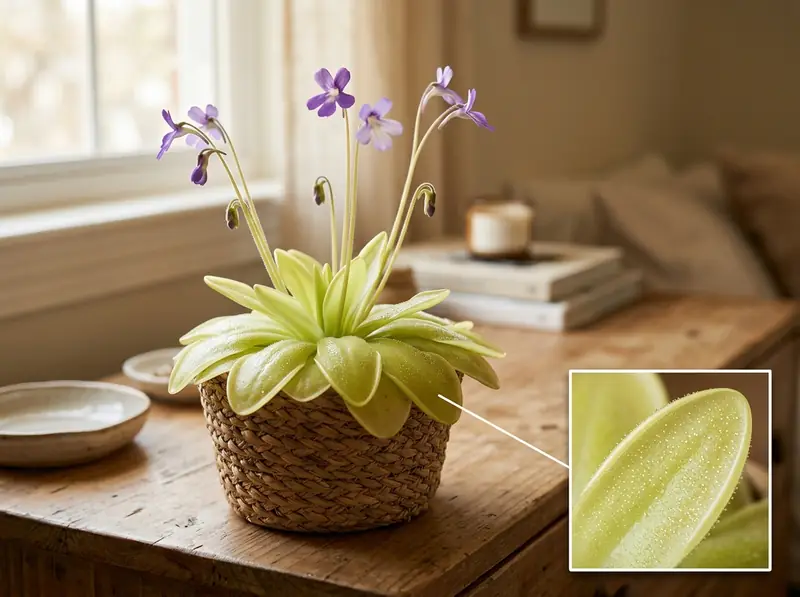
Giant Butterwort
Pinguicula gigantea
Giant butterwort (Pinguicula gigantea) is a large Mexican butterwort with a rosette of glossy sticky leaves up to 6 inches long and purple flowers. It needs bright light and soft water.
Saving is free with a KinClub account, and it works here and in the KinClub app. Sign up free
Care profile
- Light
- Bright, indirect lightLow → direct sun
- Water
- Keep moistAbout every 5 days
- Difficulty
- ModerateTricky → easy
- Coldest it tolerates
- 40°F
- Humidity
- Medium
- Mature size
- SmallSmall → tree-size
- Growth rate
- Moderate
- How common
- RareRare → everywhere
- Plant family
- Lentibulariaceae
Pets and toxicity
Cats and dogs: not yet checked
Not yet checked against ASPCA — don't assume it's safe for pets.
No toxicity source on record for this plant yet. If a pet eats any houseplant, call your vet or an animal poison helpline.
How to care for Giant Butterwort
Light
A bright south or east window is best, with 4 to 6 hours of direct sun if possible. Under a grow light, 12 hours at close range works well. Dim rooms make the rosette flatten, lose its glossy dew, and stop catching gnats.
Watering
Water from a tray using distilled water, rainwater or reverse-osmosis water only; keep about half an inch in the tray in summer. Tap water minerals build up and kill the roots. Let it stay barely damp in winter.
Soil
Use a lean mix of equal parts peat moss and perlite or coarse sand with no added fertilizer. Do not use regular potting soil.
Feeding
Do not fertilize the soil. Catching a few gnats is enough; fertilizer burns the roots. Feed leaves very rarely if at all.
Repotting
Repot every 1 to 2 years in spring into fresh peat and perlite in a pot about 3 inches wide. Handle the roots gently.
Propagation
Pull a healthy outer leaf in spring and lay it on damp peat. Plantlets form at the base in 4 to 8 weeks.
Common problems
- Black, rotting center means too much water or poor air flow; cut away the rot and let the tray dry out.
- Fungus gnats appear in constantly wet peat; the plant eats them, but dry the surface a little.
- Aphids cluster on flower stalks; rinse with water or use insecticidal soap sparingly.
- Brown leaf edges come from mineral-rich water; switch to distilled or rainwater.
Similar plants
Same light needs and difficulty.
 AI-generated
 AI-generated
 AI-generated
 AI-generated