
 AI-generated
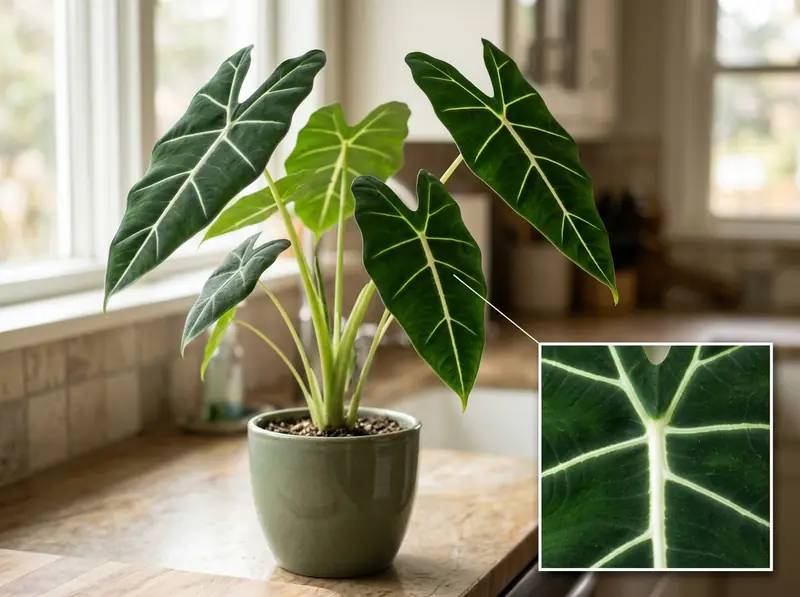
Green Velvet Alocasia
Alocasia micholitziana 'Frydek'
Green Velvet Alocasia ('Frydek') is prized for its dark, velvety, arrow-shaped leaves with bold white veins. Indoors it usually stays around 2 to 3 feet tall, more compact than the species. It likes bright, indirect light, warmth, and humidity, and it may die back in winter and regrow in spring.
Saving is free with a KinClub account, and it works here and in the KinClub app. Sign up free
Care profile
- Light
- Bright, indirect lightLow → direct sun
- Water
- Moderate wateringAbout every 7 days
- Difficulty
- ModerateTricky → easy
- Coldest it tolerates
- 60°F
- Humidity
- High
- Mature size
- MediumSmall → tree-size
- Growth rate
- Moderate to fast
- How common
- CommonRare → everywhere
- Plant family
- Araceae
Pets and toxicity
Toxic to cats
Keep away from cats. Call your vet or a pet poison helpline if a cat chews it.
Toxic to dogs
Keep away from dogs. Call your vet or a pet poison helpline if a dog chews it.
Source: ASPCA toxic and non-toxic plants. If a pet eats any houseplant, call your vet or an animal poison helpline.
How to care for Green Velvet Alocasia
Light
Give bright, indirect light, such as a spot a few feet from an east or lightly shaded south window. Direct midday sun scorches the leaves, and dim rooms lead to leggy growth.
Watering
Water thoroughly when the top inch of soil has dried, usually about every 7 days in the growing season. Empty the saucer after watering. Water much less in winter, when the plant grows slowly or goes dormant.
Soil
Use a chunky, airy, well-draining mix. A good blend is 2 parts aroid or potting mix, 1 part perlite, and 1 part orchid bark. Use a pot with drainage holes.
Feeding
Feed every 2 to 4 weeks from spring to early autumn with a balanced liquid fertilizer at half the label strength. Stop feeding in winter.
Repotting
Repot in spring about every 1 to 2 years, when roots fill the pot, moving up only 1 to 2 inches in pot diameter. Handle the roots gently, as they are fleshy and easily damaged.
Propagation
Divide offsets or separate small corms (bulbs) from the roots at repotting. Pot each with a few roots attached in a moist, airy mix, and keep it warm and humid until new growth appears.
Common problems
- Spider mites cause fine stippling and webbing on dry air; wipe leaves, rinse the plant, and raise humidity. Repeat treatment weekly with insecticidal soap.
- Leaves yellow and drop in cold or overly wet soil; keep it above 60°F and let the top inch dry before watering.
- Brown crispy leaf edges come from dry air or missed waterings; raise humidity and water more consistently.
- Whole plant dies back in winter; keep the soil barely moist and the pot warm, and new growth usually returns in spring.
- Mealybugs or thrips hide in the leaf bases and new growth; dab with rubbing alcohol on a cotton swab or spray with insecticidal soap.
Similar plants
Same light needs and difficulty.
 AI-generated
 AI-generated
 AI-generated
 AI-generated