
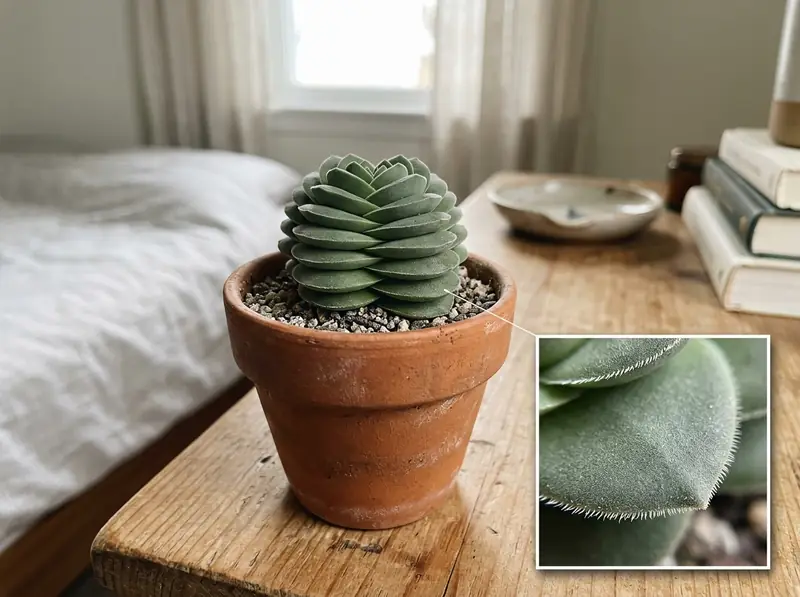
 AI-generated
Hemisphere Crassula
Crassula hemisphaerica
A tiny, tightly stacked rosette of gray-green leaves with fine hairs along the edges, native to South Africa. It looks like a small layered dome and stays under about 4 inches. It prefers watering in the cool months and a dry summer.
Saving is free with a KinClub account, and it works here and in the KinClub app. Sign up free
Care profile
- Light
- Bright, indirect to direct sunLow → direct sun
- Water
- Let it dry outAbout every 21 days
- Difficulty
- Easy to moderateTricky → easy
- Coldest it tolerates
- 40°F
- Humidity
- Low
- Mature size
- SmallSmall → tree-size
- Growth rate
- Slow
- How common
- EnthusiastRare → everywhere
- Plant family
- Crassulaceae
Pets and toxicity
Cats and dogs: not yet checked
Not yet checked against ASPCA — don't assume it's safe for pets.
No toxicity source on record for this plant yet. If a pet eats any houseplant, call your vet or an animal poison helpline.
How to care for Hemisphere Crassula
Light
Needs bright light with some direct morning sun to keep its tight, hemispherical shape. Dim rooms make the rosette stretch and lose its compact stacking.
Watering
This is a winter-growing species: water when the soil is bone dry, roughly every 3 weeks in fall through spring, and only lightly or barely at all in summer. Water at the soil level and keep the crown dry.
Soil
Use a very gritty mix, at least half pumice or coarse sand, in a small clay pot so the soil dries quickly.
Feeding
Give a quarter-strength cactus fertilizer once or twice in the fall-to-spring growing season; none in summer.
Repotting
Repot only every 2 to 3 years or when the clump fills the pot, ideally in early fall as growth restarts.
Propagation
Separate small offsets with a bit of root and set them in dry gritty mix. Leaf or seed propagation is slow and less reliable.
Common problems
- A soft, dark rosette center is rot from water sitting between the leaves. Water only at the soil and let the plant dry fully between drinks.
- Summer shriveling or browning of lower leaves is normal rest; cut back watering rather than adding more.
- White fluff between the leaf stacks is mealybugs. Treat with alcohol on a swab and check it again in a week.
Similar plants
Same light needs and difficulty.
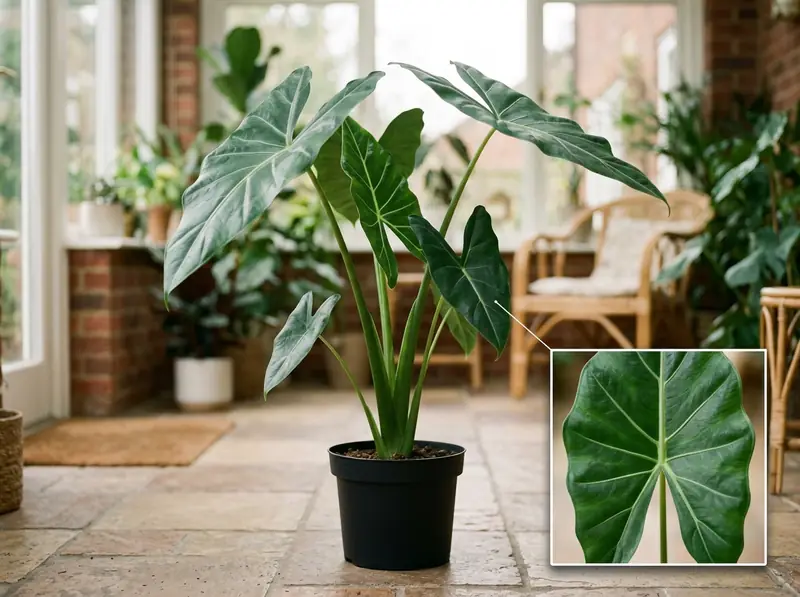 AI-generated
Sarawakensis Alocasia
Alocasia sarawakensis
- Bright, indirect light
- Moderate watering
Toxic to cats and dogs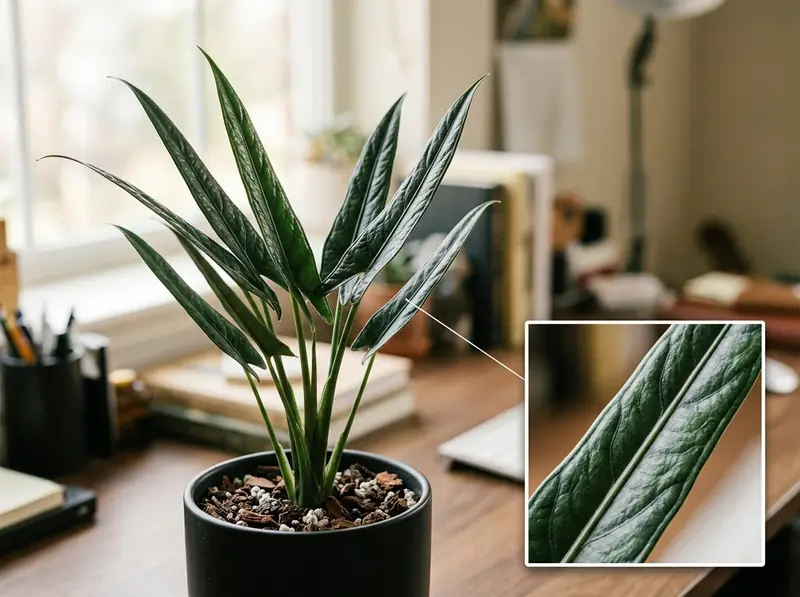 AI-generated
 AI-generated
 AI-generated