
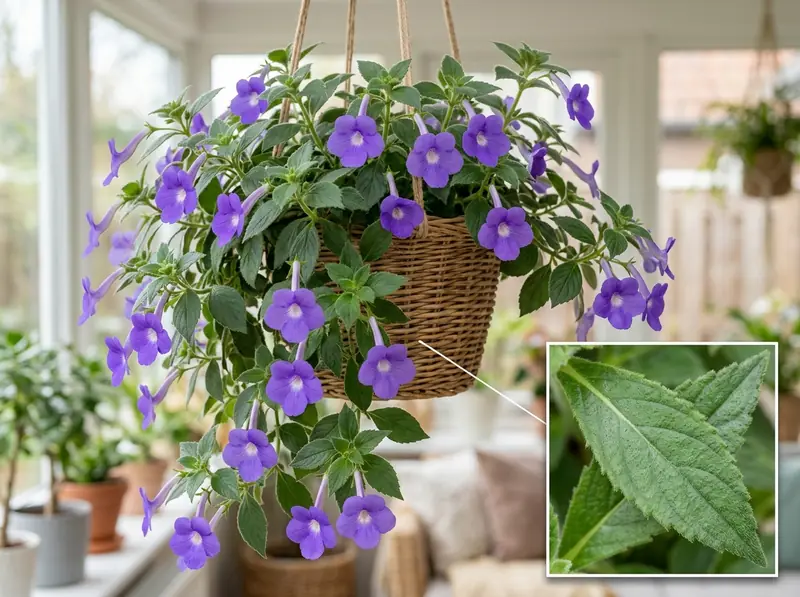
 AI-generated
Hot Water Plant
Achimenes longiflora
Achimenes longiflora is a trailing, fast-growing gesneriad that produces many large purple-blue, trumpet-shaped flowers from early summer into autumn. It grows from small scaly rhizomes and goes dormant in winter, so it is a seasonal plant best suited to a shelf or hanging basket in bright indirect light.
Saving is free with a KinClub account, and it works here and in the KinClub app. Sign up free
Care profile
- Light
- Bright, indirect lightLow → direct sun
- Water
- Keep moistAbout every 5 days
- Difficulty
- ModerateTricky → easy
- Coldest it tolerates
- 55°F
- Humidity
- Medium to high
- Mature size
- SmallSmall → tree-size
- Growth rate
- Fast
- How common
- CommonRare → everywhere
- Plant family
- Gesneriaceae
Pets and toxicity
Cats and dogs: not yet checked
Not yet checked against ASPCA — don't assume it's safe for pets.
No toxicity source on record for this plant yet. If a pet eats any houseplant, call your vet or an animal poison helpline.
How to care for Hot Water Plant
Light
Give bright, indirect light, such as an east window or a spot a few feet back from a south or west window. Shield it from hot midday sun, which scorches the leaves.
Watering
During growth, water when the top half inch of soil feels dry, about every 4-6 days, using lukewarm water. Keep the soil evenly damp but never soggy, and avoid wetting the leaves with cold water, which can spot them.
Soil
Use a light, airy, well-draining potting mix, such as African violet mix with about a quarter perlite added. Use a pot with drainage holes.
Feeding
Feed every 2 weeks with a half-strength high-phosphorus or balanced liquid fertilizer from when shoots are a few inches tall until flowering ends. Stop feeding when the plant begins to die back.
Repotting
Repot the rhizomes each spring in fresh mix. Plant several about 1 inch deep, spaced 1-2 inches apart in a 6-inch pot or basket, and water lightly until shoots appear.
Propagation
Separate the small scaly rhizomes in spring and plant them 1 inch deep. Stem tip cuttings in summer also root readily in moist mix.
Common problems
- Leggy stems with few flowers: move to brighter indirect light and pinch tips when young to encourage branching.
- Leaves spotted or blotchy: water was too cold or splashed on foliage; use lukewarm water and water at the soil level.
- Plant dies back in autumn: this is normal dormancy; stop watering and store the rhizomes dry until spring.
- Fine webbing and stippled leaves: spider mites; rinse the plant and treat with insecticidal soap, and raise humidity.
- Rotting stems at the base: soil is too wet or cold; let it dry slightly and improve drainage.
Similar plants
Same light needs and difficulty.
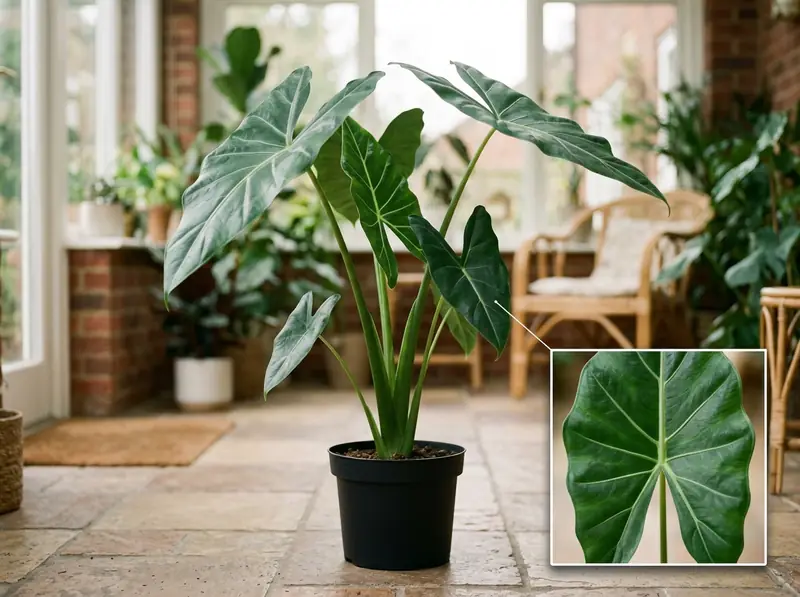 AI-generated
Sarawakensis Alocasia
Alocasia sarawakensis
- Bright, indirect light
- Moderate watering
Toxic to cats and dogs AI-generated
 AI-generated
 AI-generated