
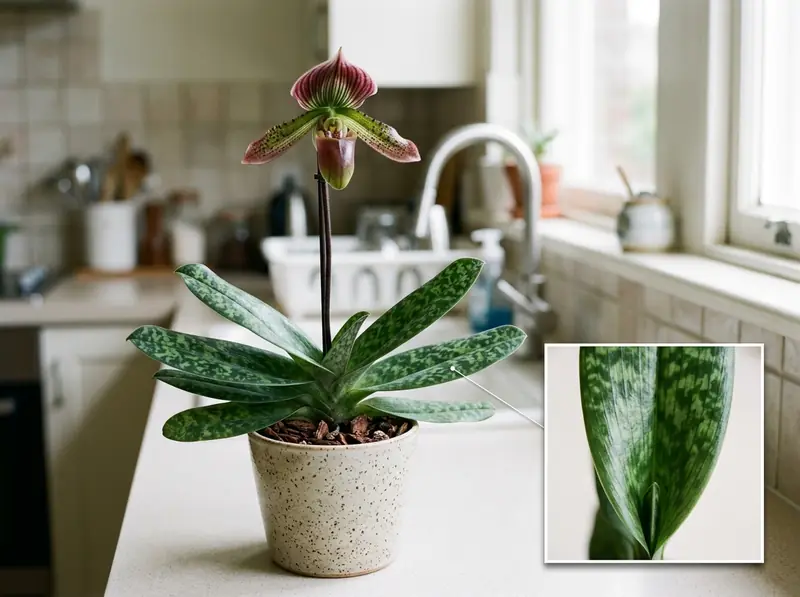
 AI-generated
Lady Slipper Orchid
Paphiopedilum hybrids
Lady slipper orchids (Paphiopedilum) are slow-growing, compact orchids with distinctive pouch-shaped flowers that can last for weeks or months. They prefer medium light and evenly damp, well-draining bark mix, and they do well in ordinary home temperatures. Avoid letting water collect in the crown, and they will bloom reliably once a year.
Saving is free with a KinClub account, and it works here and in the KinClub app. Sign up free
Care profile
- Light
- Medium lightLow → direct sun
- Water
- Keep moistAbout every 7 days
- Difficulty
- ModerateTricky → easy
- Coldest it tolerates
- 55°F
- Humidity
- Medium
- Mature size
- SmallSmall → tree-size
- Growth rate
- Slow
- How common
- CommonRare → everywhere
- Plant family
- Orchidaceae
Pets and toxicity
Cats and dogs: not yet checked
Not yet checked against ASPCA — don't assume it's safe for pets.
No toxicity source on record for this plant yet. If a pet eats any houseplant, call your vet or an animal poison helpline.
How to care for Lady Slipper Orchid
Light
Give bright shade to medium light, such as an east window or a spot a few feet back from a south or west window. Mottled-leaf types tolerate lower light than strap-leaf green types, and direct midday sun scorches the leaves.
Watering
Water thoroughly about once a week, so the mix stays lightly damp but never soggy, and let the top half-inch dry slightly. These orchids have no water-storing pseudobulbs, so don't let the mix dry out completely. Use rain, distilled or low-mineral water if your tap water is hard.
Soil
Use a fine-grade orchid bark mix, often blended with perlite, charcoal or a little sphagnum moss, to hold moisture while still draining freely. Choose a pot with drainage holes.
Feeding
Feed with a balanced fertilizer at quarter to half the label strength every second watering during active growth. Flush the pot with plain water monthly to prevent salt build-up.
Repotting
Repot every 1-2 years, after flowering, as the bark breaks down and turns sour. Move to a pot only slightly bigger, or the same size with fresh mix, and trim only dead roots.
Propagation
Mature plants can be divided after flowering when a clump has at least 3-4 fans, with each division keeping several roots. Growing from seed is a specialist laboratory process, so division is the practical option at home.
Common problems
- No flowers: usually too little light, so move it to a brighter spot and provide a cooler night drop of about 10°F in autumn.
- Crown rot: water sitting in the center of the fan; water carefully, keep air moving, and remove any water that pools.
- Brown leaf tips: mineral build-up or dry mix; flush the pot and use softer water.
- Wrinkled leaves: the roots are either dried out or rotted; check them and adjust watering or repot.
- Mealybugs or scale on leaf bases: dab with cotton swab dipped in rubbing alcohol, and repeat weekly until clear.
Similar plants
Same light needs and difficulty.
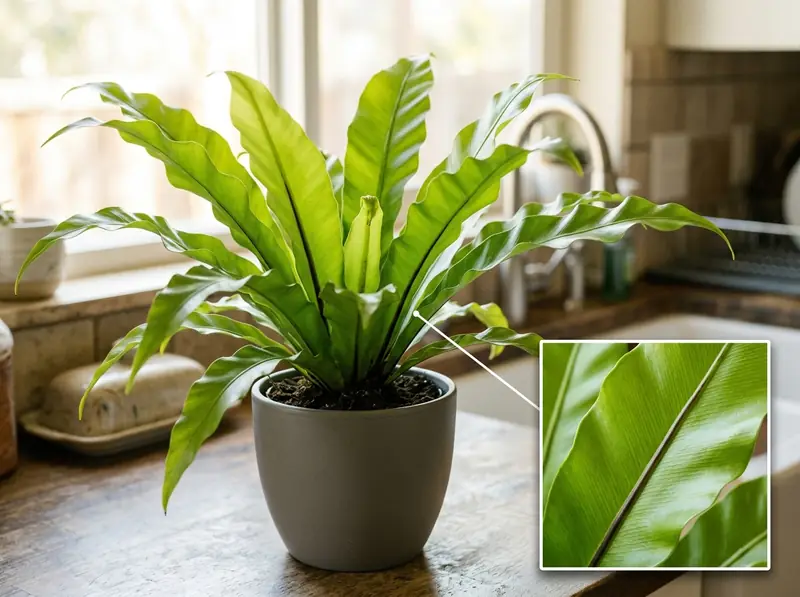 AI-generated
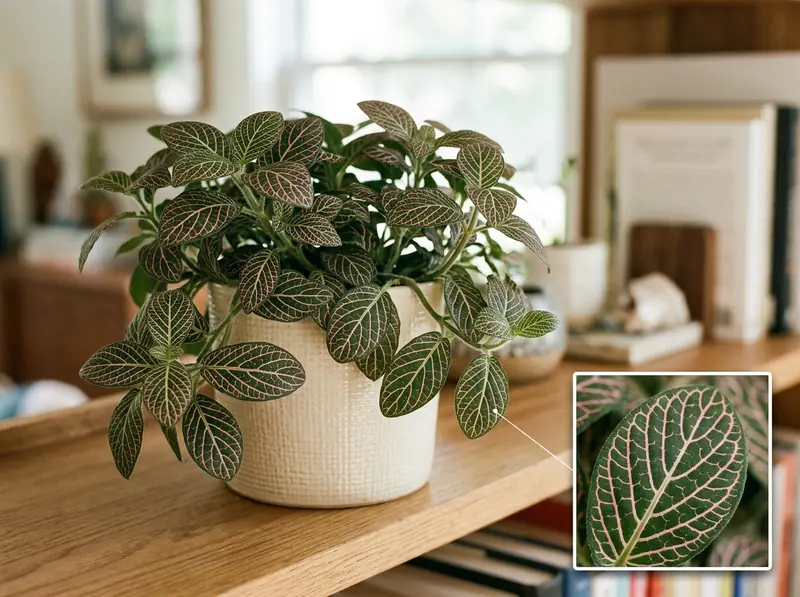 AI-generated
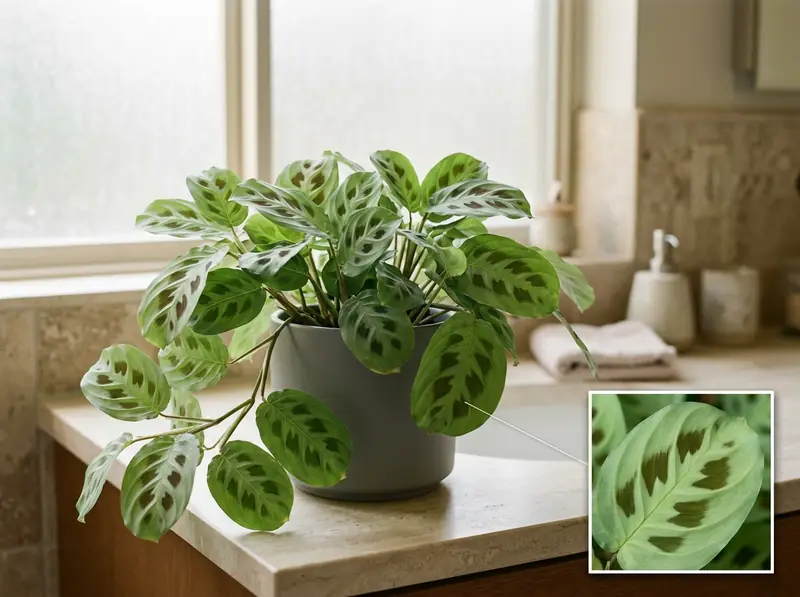 AI-generated
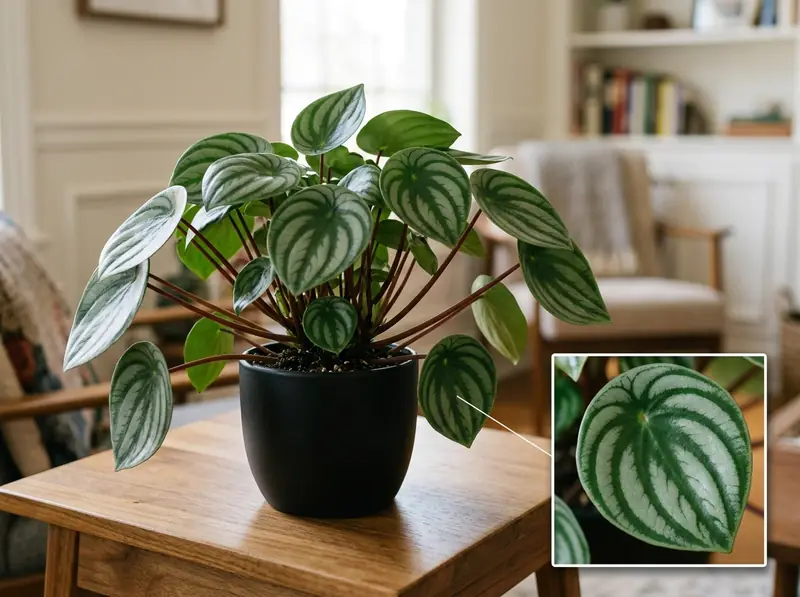 AI-generated
Watermelon Peperomia
Peperomia argyreia
- Medium to bright, indirect light
- Dry to moderate watering
Non-toxic to cats and dogs