
 AI-generated
Linearis Hoya
Hoya linearis
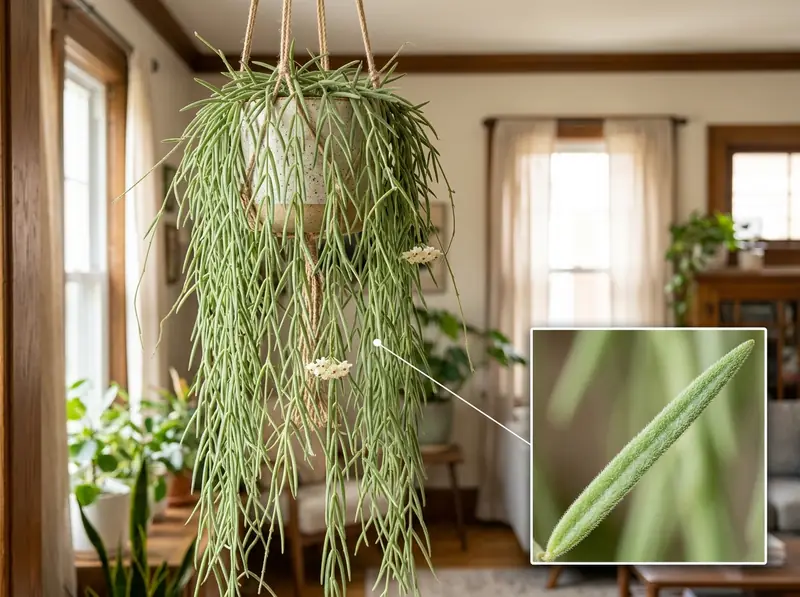
Linearis Hoya is a trailing vine from the Himalayan foothills. It has long, thin stems covered in narrow, fuzzy leaves, and in good light it bears fragrant white flowers. It grows best in a hanging basket with bright, indirect light and an airy mix, and it needs a little extra care to avoid overwatering.
Saving is free with a KinClub account, and it works here and in the KinClub app. Sign up free
Care profile
- Light
- Bright, indirect lightLow → direct sun
- Water
- Dry to moderate wateringAbout every 10 days
- Difficulty
- ModerateTricky → easy
- Coldest it tolerates
- 50°F
- Humidity
- Medium to high
- Mature size
- LargeSmall → tree-size
- Growth rate
- Moderate
- How common
- CommonRare → everywhere
- Plant family
- Apocynaceae
Pets and toxicity
Cats and dogs: not yet checked
Not yet checked against ASPCA — don't assume it's safe for pets.
No toxicity source on record for this plant yet. If a pet eats any houseplant, call your vet or an animal poison helpline.
How to care for Linearis Hoya
Light
Give it bright, indirect light, such as a spot near an east or lightly shaded south or west window. A little gentle morning sun is fine, but avoid hot midday sun.
Watering
Water thoroughly, then let the mix dry out mostly before watering again, usually every 7 to 14 days in summer. Water less often in winter. Empty the saucer after watering.
Soil
Use a very airy, fast-draining mix, for example orchid bark, perlite and a little regular potting soil in roughly equal parts. Pots must have drainage holes.
Feeding
During spring and summer, feed every 2 to 4 weeks with a balanced houseplant fertilizer diluted to half strength. Don't feed in winter.
Repotting
Hoyas like to be snug, so repot only every 2 to 3 years, when roots fill the pot. Go up just one pot size, to a container with drainage holes, in spring.
Propagation
Take stem cuttings of 4 to 6 inches with at least 2 nodes and strip the lowest leaves. Root them in water or in moist perlite, or in a bark mix, in a warm bright spot. Rooting usually takes 3 to 6 weeks.
Common problems
- Stem rot at the base from overwatering: let the mix dry out, and if the stems are mushy, cut off the healthy tips and re-root them.
- Leggy stems with sparse leaves from low light: move it to a brighter window and trim back the bare stems.
- Cottony white mealybugs in the leaf joints: dab them with rubbing alcohol on a cotton swab and repeat weekly until they are gone.
- No flowers: it needs bright light and a slightly root-bound pot. Keep the old flower spurs, as they bloom again.
- Leaf drop after a cold draft or sudden move: keep it above 50°F, away from drafts, and avoid moving it around.
Similar plants
Same light needs and difficulty.
 AI-generated
 AI-generated
 AI-generated
 AI-generated