
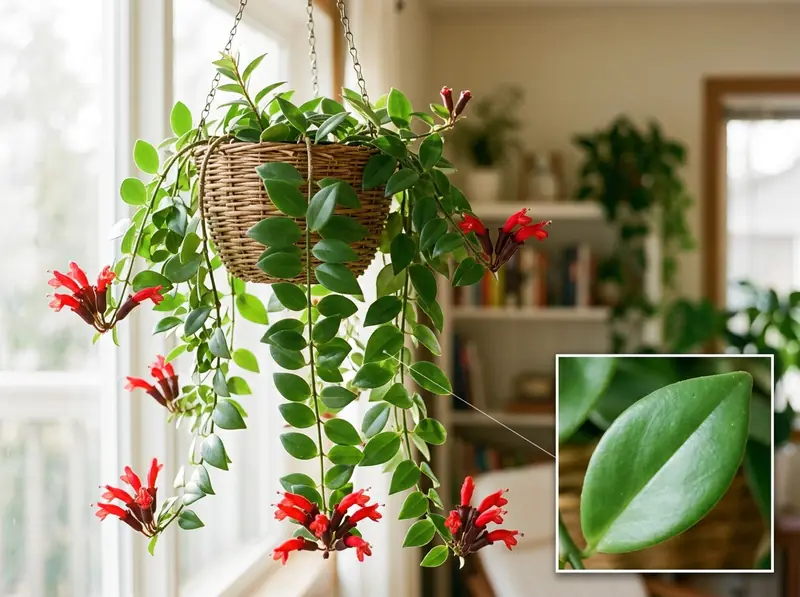
 AI-generated
Lipstick Plant
Aeschynanthus radicans
The lipstick plant is a trailing epiphyte with glossy, waxy leaves and tubular red flowers that emerge from dark calyxes like a lipstick tube. It looks best in a hanging basket in bright, indirect light with average home warmth and some humidity. Let it dry slightly between waterings and it will reward you with blooms, mainly in spring through fall.
Saving is free with a KinClub account, and it works here and in the KinClub app. Sign up free
Care profile
- Light
- Bright, indirect lightLow → direct sun
- Water
- Moderate wateringAbout every 7 days
- Difficulty
- ModerateTricky → easy
- Coldest it tolerates
- 50°F
- Humidity
- Medium to high
- Mature size
- MediumSmall → tree-size
- Growth rate
- Moderate
- How common
- CommonRare → everywhere
- Plant family
- Gesneriaceae
Pets and toxicity
Cats and dogs: not yet checked
Not yet checked against ASPCA — don't assume it's safe for pets.
No toxicity source on record for this plant yet. If a pet eats any houseplant, call your vet or an animal poison helpline.
How to care for Lipstick Plant
Light
Give it bright, indirect light, such as near an east window or a few feet back from a south or west window. Gentle morning sun is fine, but shield it from hot midday sun.
Watering
Water thoroughly when the top inch of soil is dry, then let excess drain away; in a typical home this is about once a week in summer. Water less in winter, and use lukewarm water since cold water can spot the leaves.
Soil
Use a light, airy, well-draining mix, such as standard potting mix blended with about one third perlite and some orchid bark. Soil that holds too much water leads to root rot.
Feeding
Feed every 2 to 4 weeks from spring through summer with a balanced liquid houseplant fertilizer at half the label strength. Stop or reduce feeding in winter.
Repotting
Repot only every 2 to 3 years, moving up just one pot size, as it flowers best when slightly root-bound. Spring is the best time, and the pot must have drainage holes.
Propagation
Take 4 to 6 inch stem cuttings with a few leaf pairs, remove the lowest leaves, and push them into moist perlite-rich mix. Keep warm and humid, and roots form in 3 to 6 weeks.
Common problems
- Leaf drop in winter or after moving: usually from cold drafts, dry soil or sudden change; keep it above 60°F and away from vents.
- No flowers: usually too little light or no cool rest; move to brighter indirect light and give a cooler, drier period in winter.
- Sticky residue and white cottony spots: mealybugs or aphids; wipe with rubbing-alcohol-dipped swabs or spray with insecticidal soap weekly.
- Brown crispy leaf edges: dry air or underwatering; water more regularly and raise humidity with a pebble tray or humidifier.
- Yellow leaves with mushy stems: overwatering or poor drainage; let soil dry more and repot into fresh airy mix if roots are rotting.
Similar plants
Same light needs and difficulty.
 AI-generated
 AI-generated
 AI-generated
 AI-generated