
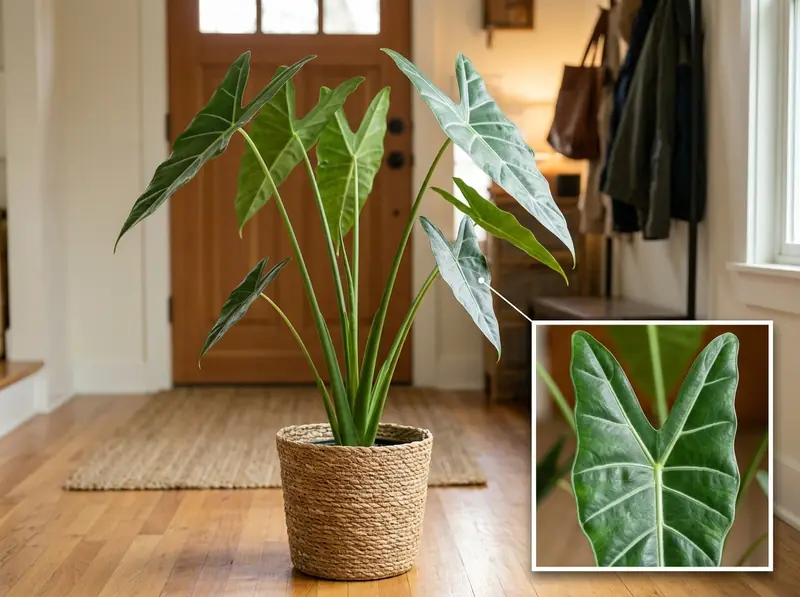
 AI-generated
Longiloba Alocasia
Alocasia longiloba
Also known as Alocasia amabilis, Alocasia argyrea, Alocasia cochinchensis, Alocasia curtisiae, Alocasia curtisii, Alocasia cuspidata, Alocasia denudata, Alocasia eminens, Alocasia gibba, Alocasia gigantea, Alocasia grandis, Alocasia intermedia
A tall Alocasia with glossy, arrow-shaped green leaves and pale veins on upright stems. It makes a bold floor plant in bright light and enjoys warmth and humidity.
Saving is free with a KinClub account, and it works here and in the KinClub app. Sign up free
Care profile
- Light
- Bright, indirect lightLow → direct sun
- Water
- Moderate wateringAbout every 7 days
- Difficulty
- ModerateTricky → easy
- Coldest it tolerates
- 60°F
- Humidity
- Medium to high
- Mature size
- Medium to largeSmall → tree-size
- Growth rate
- Moderate
- How common
- EnthusiastRare → everywhere
- Plant family
- Araceae
Pets and toxicity
Toxic to cats
Keep away from cats. Call your vet or a pet poison helpline if a cat chews it.
Toxic to dogs
Keep away from dogs. Call your vet or a pet poison helpline if a dog chews it.
Source: ASPCA toxic and non-toxic plants. If a pet eats any houseplant, call your vet or an animal poison helpline.
How to care for Longiloba Alocasia
Light
Grows well in bright indirect light, like a few feet from a south or east window. Direct sun scorches the large leaves; dim light causes weak, leaning stems.
Watering
Water when the top inch of soil is dry, about every 7 days in the growing season. Reduce in winter, when growth slows and some leaves may drop.
Soil
Use a rich but airy mix with potting soil, perlite, and orchid bark. Use a pot with drainage holes and enough weight to stay upright.
Feeding
Feed every 3-4 weeks in spring and summer with a half-strength balanced fertilizer. None in winter.
Repotting
Repot every year or two in spring into a pot 2 inches wider, dividing any crowded corms.
Propagation
Divide offsets or corms at repotting and root them in moist sphagnum or perlite in a warm spot.
Common problems
- Spider mites in dry air: look for stippled leaves and fine webs. Rinse leaves and use insecticidal soap weekly.
- Brown leaf edges: dry air or irregular watering. Raise humidity and water on a steady schedule.
- Winter leaf drop: normal in cool or dim conditions. Keep above 60F and water sparingly.
Similar plants
Same light needs and difficulty.
 AI-generated
 AI-generated
 AI-generated
 AI-generated