
 AI-generated
Macho Fern
Nephrolepis biserrata
Also known as Bold Sword Fern, Crisped Feather Fern, Bold-Sword Fern, Dallas Fern, Roosevelt Fern, Sword Fern, Tall Feather Fern, Verona Fern, Verona Lace Fern, Whitman Fern
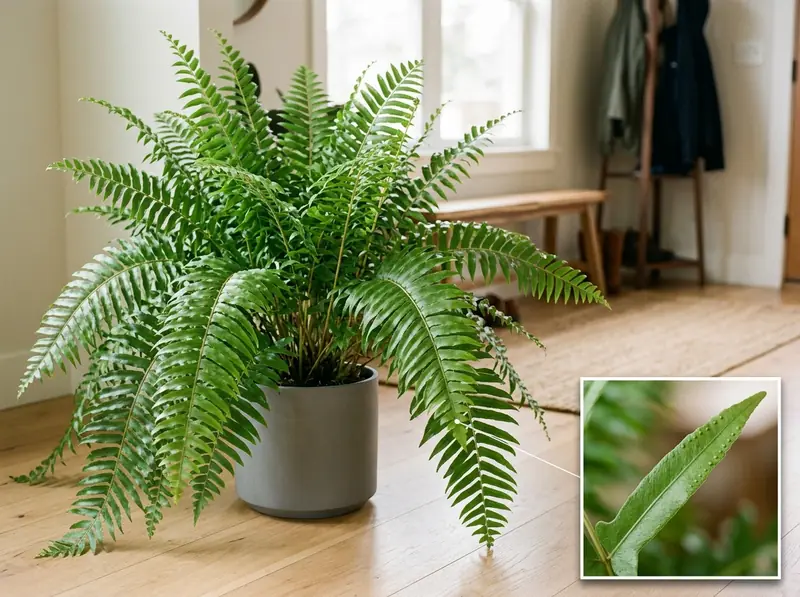
Macho fern is a large, fast-growing fern with long, arching, sword-shaped fronds that can reach 3 feet or more. It suits a bright spot out of direct sun with steady moisture and good humidity. It looks lush in a hanging basket or on a stand, but it dislikes dry air and dried-out soil.
Saving is free with a KinClub account, and it works here and in the KinClub app. Sign up free
Care profile
- Light
- Bright, indirect lightLow → direct sun
- Water
- Keep moistAbout every 5 days
- Difficulty
- ModerateTricky → easy
- Coldest it tolerates
- 50°F
- Humidity
- High
- Mature size
- LargeSmall → tree-size
- Growth rate
- Fast
- How common
- CommonRare → everywhere
- Plant family
- Nephrolepidaceae
Pets and toxicity
Non-toxic to cats
Listed as non-toxic to cats by the ASPCA.
Non-toxic to dogs
Listed as non-toxic to dogs by the ASPCA.
Source: ASPCA toxic and non-toxic plants. If a pet eats any houseplant, call your vet or an animal poison helpline.
How to care for Macho Fern
Light
Give bright, indirect light, such as a spot a few feet from an east or lightly shaded south window. Gentle morning sun is fine, but hot midday sun scorches the fronds.
Watering
Keep the soil evenly damp like a wrung-out sponge, usually watering every 4-6 days in the growing season. Never let the root ball dry out completely, and ease off a little in winter so the soil does not stay soggy.
Soil
Use a peat-free or peat-based, moisture-retentive potting mix with added perlite or bark for air. The pot must have drainage holes.
Feeding
Feed every 4 weeks in spring and summer with a balanced liquid fertilizer diluted to half strength. Skip feeding in winter, as ferns are sensitive to fertilizer burn.
Repotting
Repot every 1-2 years in spring when roots fill the pot or push up from the surface. Go up only one pot size, about 2 inches wider, or divide the plant instead.
Propagation
Divide a large clump in spring into sections, each with roots and several fronds, and pot them in fresh moist mix. Plantlets on runners can also be rooted, but they are slower.
Common problems
- Crispy brown leaflets: air is too dry or soil dried out, so water more consistently and group with other plants or use a humidifier.
- Heavy leaflet drop: often from a cold draft, a move, or drying out, so keep it away from vents and doors and keep the soil damp.
- Yellowing lower fronds: usually overwatering or poor drainage, so check the drainage holes and let the top inch of soil barely dry.
- Small bumps on stems or fronds, or sticky residue: scale or mealybugs, so wipe them off with alcohol-dampened cotton swabs and treat with insecticidal soap.
- Pale, stippled fronds with fine webbing: spider mites in dry air, so rinse the plant in the shower and increase humidity.
Similar plants
Same light needs and difficulty.
 AI-generated
 AI-generated
 AI-generated
 AI-generated