
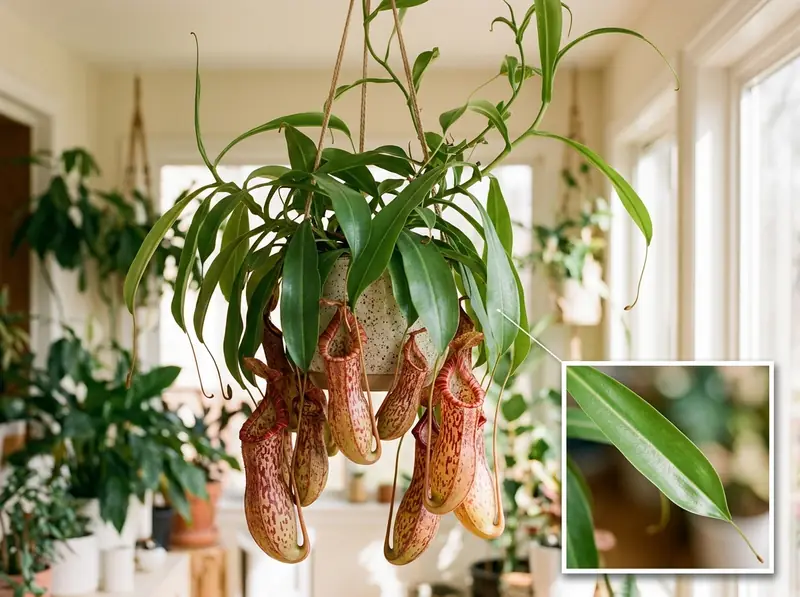
 AI-generated
Miranda Pitcher Plant
Nepenthes 'Miranda'
Miranda is a vigorous hybrid pitcher plant that produces large, speckled red-and-green pitchers on a vining plant. It is more tolerant than many Nepenthes and a good first tropical pitcher plant, provided you use pure water.
Saving is free with a KinClub account, and it works here and in the KinClub app. Sign up free
Care profile
- Light
- Bright, indirect lightLow → direct sun
- Water
- Keep moistAbout every 4 days
- Difficulty
- ModerateTricky → easy
- Coldest it tolerates
- 55°F
- Humidity
- High
- Mature size
- Medium to largeSmall → tree-size
- Growth rate
- Fast
- How common
- RareRare → everywhere
Pets and toxicity
Cats and dogs: not yet checked
Not yet checked against ASPCA — don't assume it's safe for pets.
No toxicity source on record for this plant yet. If a pet eats any houseplant, call your vet or an animal poison helpline.
How to care for Miranda Pitcher Plant
Light
Prefers bright, indirect light, such as an east window or a few hours of gentle sun, or a grow light for 12 hours. Strong light develops large, well-colored pitchers; avoid hot afternoon sun.
Watering
Keep the mix evenly damp, never soggy, using distilled, rain or reverse-osmosis water; water every 3 to 5 days as the surface dries. Tap water minerals build up in the roots.
Soil
Use a nutrient-poor, airy mix such as 1 part long-fibered sphagnum moss, 1 part perlite and 1 part orchid bark, in a pot with drainage holes. Avoid ordinary potting soil and fertilizer-laced mixes.
Feeding
Do not fertilize the soil. If it doesn't catch insects, add a pinch of a diluted orchid fertilizer to a few pitchers once a month, or just leave it.
Repotting
Repot every 1 to 2 years in spring when the mix decomposes, using a fresh sphagnum-based mix in a hanging basket or a pot with drainage.
Propagation
Take stem cuttings with 2 to 3 nodes in spring or summer and root them in damp sphagnum under high humidity in 2 to 3 months.
Common problems
- Small or no pitchers usually mean low humidity or low light; add a humidifier or grow light.
- Brown leaf tips come from tap water minerals; switch to distilled water.
- Root rot follows soggy, stagnant mix; use airy mix and don't let water stand for days.
- Aphids and scale on new growth; wipe off and treat with insecticidal soap.
Similar plants
Same light needs and difficulty.
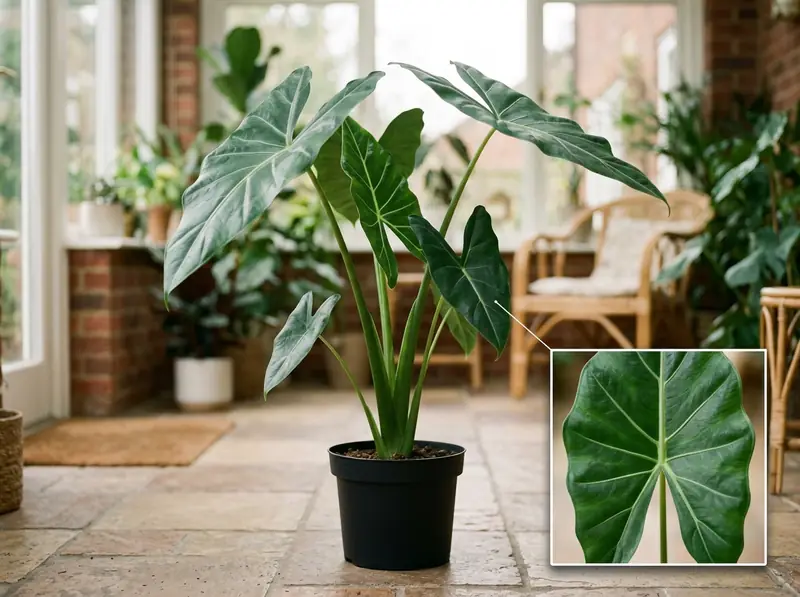 AI-generated
Sarawakensis Alocasia
Alocasia sarawakensis
- Bright, indirect light
- Moderate watering
Toxic to cats and dogs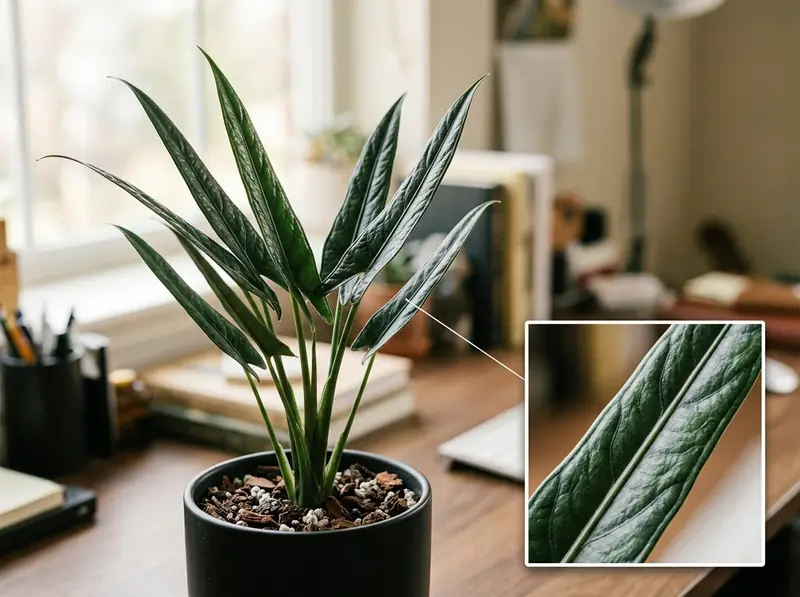 AI-generated
 AI-generated
 AI-generated