
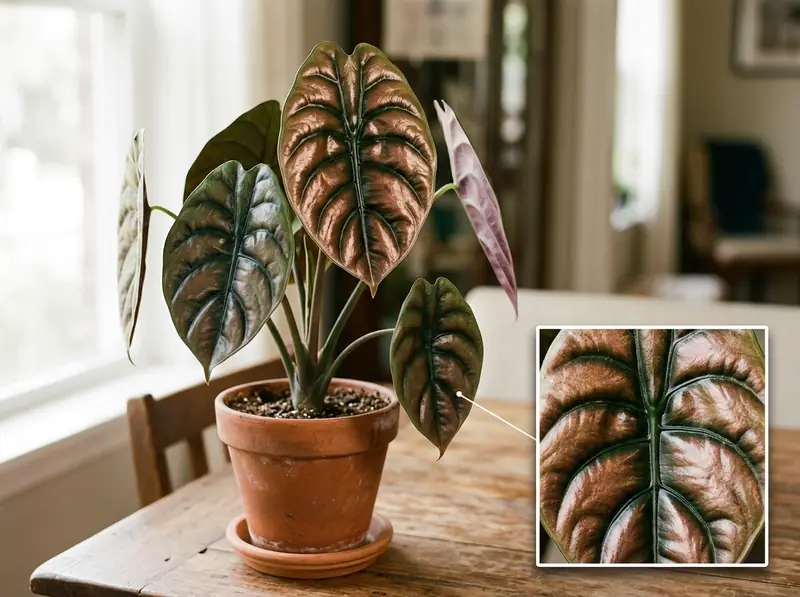
 AI-generated
Mirror Plant
Alocasia cuprea
Also known as Alocasia metallica
Mirror Plant (Alocasia cuprea) is grown for its glossy, puckered, metallic copper-green leaves with dark veins. It is a bit fussy, needing bright indirect light, high humidity, warmth, and an airy, well-drained mix. Water only when the top inch or two is dry to avoid root rot.
Saving is free with a KinClub account, and it works here and in the KinClub app. Sign up free
Care profile
- Light
- Bright, indirect lightLow → direct sun
- Water
- Moderate wateringAbout every 8 days
- Difficulty
- ModerateTricky → easy
- Coldest it tolerates
- 60°F
- Humidity
- High
- Mature size
- Small to mediumSmall → tree-size
- Growth rate
- Slow to moderate
- How common
- CommonRare → everywhere
- Plant family
- Araceae
Pets and toxicity
Toxic to cats
Keep away from cats. Call your vet or a pet poison helpline if a cat chews it.
Toxic to dogs
Keep away from dogs. Call your vet or a pet poison helpline if a dog chews it.
Source: ASPCA toxic and non-toxic plants. If a pet eats any houseplant, call your vet or an animal poison helpline.
How to care for Mirror Plant
Light
Give it bright, indirect light, such as a spot a few feet from an east or lightly shaded south window. Direct midday sun scorches the leaves, and dim rooms lead to weak, stretched growth.
Watering
Water when the top 1 to 2 inches of soil feel dry, usually every 7 to 10 days in the growing season. Water thoroughly until it drains, empty the saucer, and cut back in winter when growth slows.
Soil
Use a chunky, airy mix such as 2 parts potting soil, 1 part perlite, and 1 part orchid bark or coco chips. The pot must have drainage holes.
Feeding
Feed every 2 to 4 weeks in spring and summer with a balanced liquid fertilizer at half the labeled strength. Skip feeding in fall and winter.
Repotting
Repot every 1 to 2 years in spring when roots fill the pot, moving up only 1 to 2 inches in pot diameter. It likes being slightly snug, and a pot that is too big holds excess moisture.
Propagation
Divide offsets (small plants with their own roots) from the main clump when repotting. Pot each in a moist, airy mix and keep it warm and humid until it establishes.
Common problems
- Brown, crispy leaf edges usually mean dry air or missed waterings. Raise humidity with a humidifier or grouping plants, and water more consistently.
- Yellowing lower leaves are often from overwatering. Let the top inches dry before watering again, and check the roots for rot if stems feel soft.
- Fine webbing and speckled leaves point to spider mites. Wipe the leaf undersides, rinse the plant, and treat with insecticidal soap every 5 to 7 days.
- Plant goes dormant or drops leaves in cold or winter conditions. Keep it above 60°F, away from drafts, and water sparingly until new growth resumes.
Similar plants
Same light needs and difficulty.
 AI-generated
 AI-generated
 AI-generated
 AI-generated