
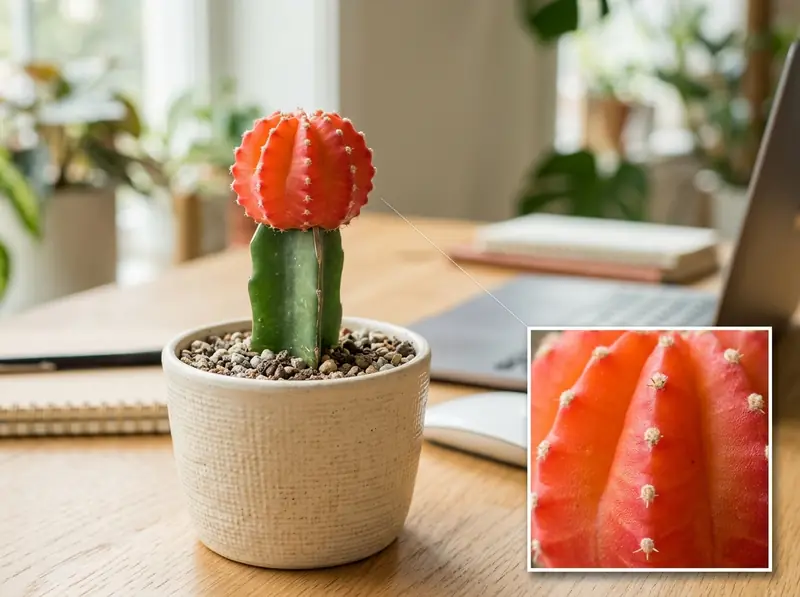
 AI-generated
Moon Cactus
Gymnocalycium mihanovichii
Moon cactus is a small, brightly colored ball (red, orange, yellow or pink) grafted on top of a green cactus stem. It needs bright light, a gritty mix and very little water. Because the colored top can't photosynthesize alone, the graft usually lasts a few years, so careful watering matters most.
Saving is free with a KinClub account, and it works here and in the KinClub app. Sign up free
Care profile
- Light
- Bright, indirect lightLow → direct sun
- Water
- Let it dry outAbout every 14 days
- Difficulty
- Easy to moderateTricky → easy
- Coldest it tolerates
- 50°F
- Humidity
- Low
- Mature size
- SmallSmall → tree-size
- Growth rate
- Slow
- How common
- Very commonRare → everywhere
- Plant family
- Cactaceae
Pets and toxicity
Cats and dogs: not yet checked
Not yet checked against ASPCA — don't assume it's safe for pets.
No toxicity source on record for this plant yet. If a pet eats any houseplant, call your vet or an animal poison helpline.
How to care for Moon Cactus
Light
Give it a bright spot with gentle morning sun or bright filtered light, such as an east window. Avoid hot midday or afternoon sun through glass, which scorches the colored top.
Watering
In spring and summer, water thoroughly about every 2 weeks, only when the soil is completely dry. In winter, water only about once a month or less, just enough to keep the ball from shriveling.
Soil
Use a gritty cactus and succulent mix, ideally with extra perlite or coarse sand (about one-third by volume). The pot must have a drainage hole.
Feeding
Feed once a month in spring and summer with a cactus fertilizer diluted to half strength. Do not feed in autumn and winter.
Repotting
Repot only every 2 to 3 years, in spring, into a pot just 1 inch wider. Wear thick gloves or use folded newspaper to handle it, and keep the soil dry for a week after repotting.
Propagation
The colorful top lacks chlorophyll and cannot live on its own roots, so new plants are made by grafting an offset onto a green rootstock. This needs a clean blade and steady hands, so most owners simply buy new plants.
Common problems
- Rot at the base or graft join from overwatering: stop watering, and if the rootstock is soft, cut off the healthy colored ball and try regrafting it onto a fresh rootstock.
- Sunburn scars on the ball: move it out of direct midday sun. Scars are permanent but new growth will be clean.
- Stretched, pale rootstock from low light: move to a brighter window gradually over a couple of weeks.
- Cottony white mealybugs near the graft or spines: dab with a cotton swab dipped in rubbing alcohol and repeat weekly until gone.
- Rootstock declining while the ball stays healthy: the graft is short-lived, often 2 to 5 years. Regraft onto a new rootstock if the ball is still firm.
Similar plants
Same light needs and difficulty.
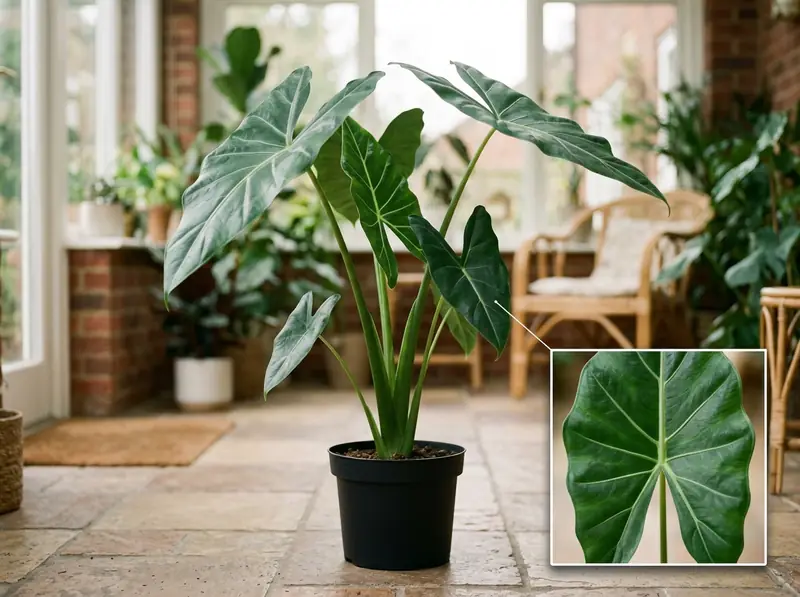 AI-generated
Sarawakensis Alocasia
Alocasia sarawakensis
- Bright, indirect light
- Moderate watering
Toxic to cats and dogs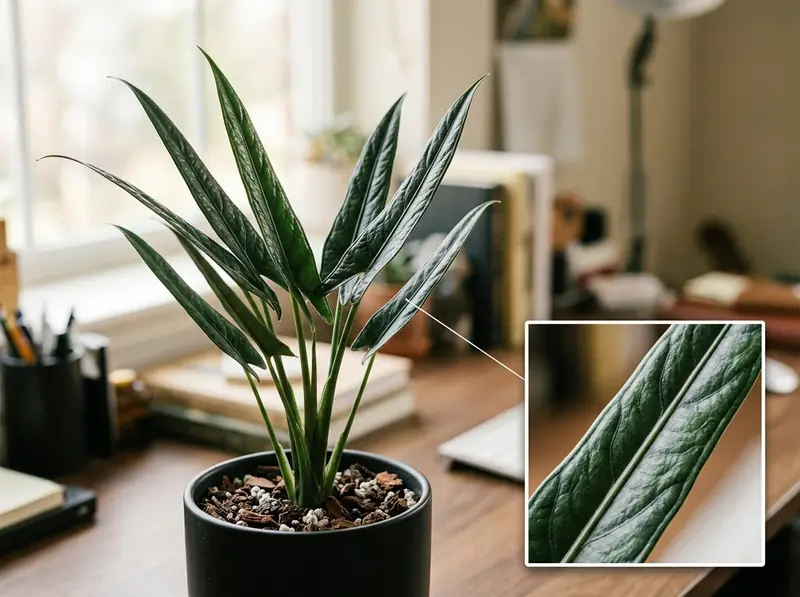 AI-generated
 AI-generated
 AI-generated