
 AI-generated
Moon Valley Pilea
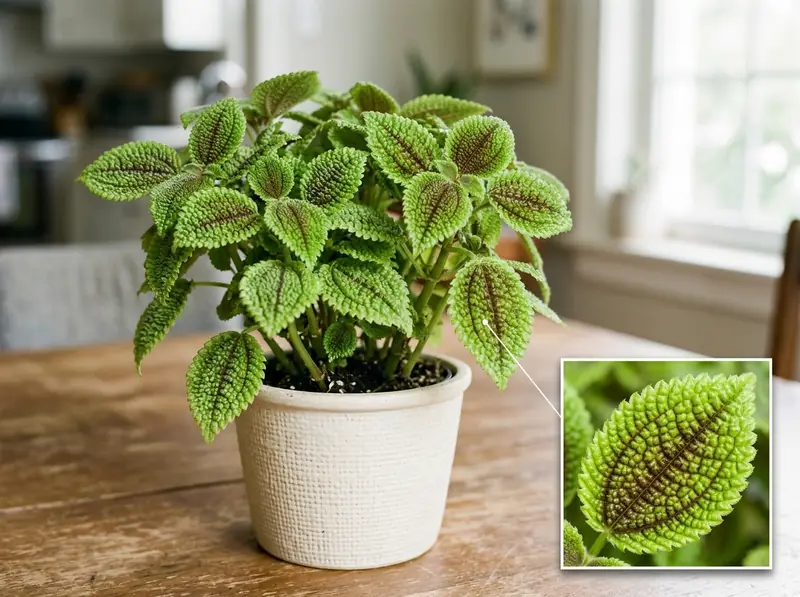
Pilea mollis 'Moon Valley'
Moon Valley Pilea is a compact, bushy plant with deeply quilted, lime-green leaves marked with bronze-brown veins. It stays under about a foot tall and suits a shelf, desk, or bright windowsill out of direct sun. Keep it evenly watered and rotate it often, and refresh it with cuttings when it gets leggy.
Saving is free with a KinClub account, and it works here and in the KinClub app. Sign up free
Care profile
- Light
- Bright, indirect lightLow → direct sun
- Water
- Moderate to moist wateringAbout every 7 days
- Difficulty
- ModerateTricky → easy
- Coldest it tolerates
- 55°F
- Humidity
- Medium to high
- Mature size
- SmallSmall → tree-size
- Growth rate
- Moderate to fast
- How common
- CommonRare → everywhere
- Plant family
- Urticaceae
Pets and toxicity
Cats and dogs: not yet checked
Not yet checked against ASPCA — don't assume it's safe for pets.
No toxicity source on record for this plant yet. If a pet eats any houseplant, call your vet or an animal poison helpline.
How to care for Moon Valley Pilea
Light
Give it bright, indirect light, such as a spot a few feet from an east or lightly curtained south window. Direct midday sun scorches the leaves.
Watering
Water when the top half inch to an inch of soil feels dry, about once a week in the growing season. Water thoroughly until it drains, then empty the saucer; use less often in winter.
Soil
Use a peat-based or coco-based potting mix with about a quarter perlite added for drainage. The pot must have drainage holes.
Feeding
Feed every 3 to 4 weeks from spring through summer with a balanced houseplant fertilizer at half the label strength. Stop or reduce in winter.
Repotting
Repot every year or two in spring into a pot only 1 to 2 inches wider. Plants become leggy with age, so refresh them with new cuttings.
Propagation
Take 3 to 4 inch stem tip cuttings in spring or summer and root them in water or moist mix. Roots form in a few weeks; plant several cuttings together for a fuller pot.
Common problems
- Leggy, sparse growth: move to brighter indirect light and pinch back the tips.
- Brown crispy leaf edges: raise humidity, water more consistently, and keep away from heaters and drafts.
- Yellow, dropping lower leaves: usually overwatering, so let the soil dry a bit more and check drainage.
- Fine webbing and stippled leaves: spider mites; rinse the plant and treat with insecticidal soap weekly.
Similar plants
Same light needs and difficulty.
 AI-generated
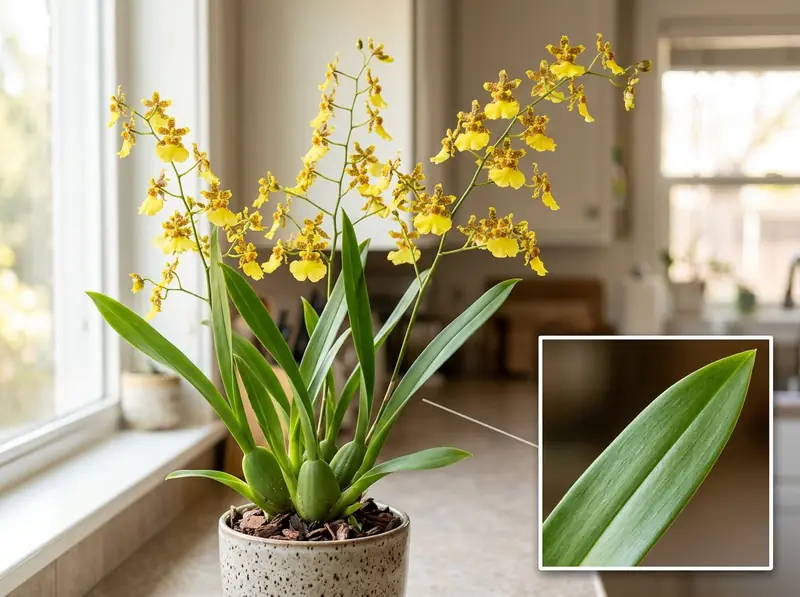
Dancing Lady Orchid
Oncidium hybrids
- Bright, indirect light
- Moderate watering
Non-toxic to cats and dogs AI-generated
 AI-generated
 AI-generated