
 AI-generated
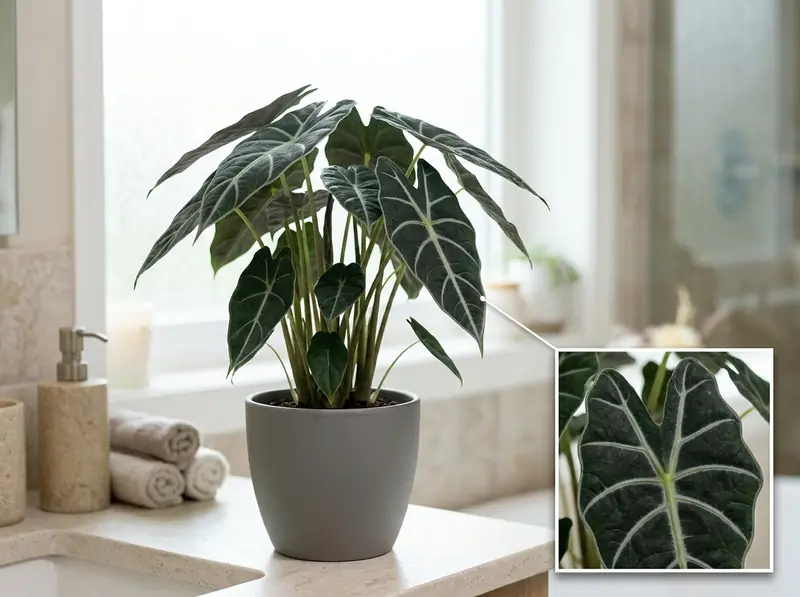
Ninja Alocasia
Alocasia 'Ninja'
Ninja is an upright Alocasia with dark, arrow-shaped leaves and light veining, bred to stay fairly compact. It wants bright indirect light, steady warmth, and humidity to keep its foliage crisp.
Saving is free with a KinClub account, and it works here and in the KinClub app. Sign up free
Care profile
- Light
- Bright, indirect lightLow → direct sun
- Water
- Moderate wateringAbout every 7 days
- Difficulty
- ModerateTricky → easy
- Coldest it tolerates
- 60°F
- Humidity
- High
- Mature size
- Small to mediumSmall → tree-size
- Growth rate
- Slow to moderate
- How common
- RareRare → everywhere
Pets and toxicity
Toxic to cats
Keep away from cats. Call your vet or a pet poison helpline if a cat chews it.
Toxic to dogs
Keep away from dogs. Call your vet or a pet poison helpline if a dog chews it.
Source: ASPCA toxic and non-toxic plants. If a pet eats any houseplant, call your vet or an animal poison helpline.
How to care for Ninja Alocasia
Light
Bright, indirect light is ideal, such as a spot near an east or filtered south window. Direct afternoon sun will bleach and scorch the leaves.
Watering
Water when the top inch or two of soil is dry, about every 7 days in the growing season and less in winter. Never let the pot sit in a full saucer of water.
Soil
Chunky, fast-draining aroid mix: about 2 parts potting soil, 1 part orchid bark, and 1 part perlite. Soil should never stay waterlogged.
Feeding
Feed every 2 to 3 weeks in spring and summer with a balanced fertilizer at half strength. Skip it in fall and winter.
Repotting
Repot in spring every 1 to 2 years when roots circle the pot, moving up one size. Handle the corms gently and replant at the same depth.
Propagation
Divide offsets with their own roots, or pot up the small corms found at the base. Keep warm and evenly damp until new growth appears.
Common problems
- Spider mites show up as speckled, dull leaves. Wipe leaf undersides and spray with insecticidal soap every 5 to 7 days until clear.
- Drooping with yellow lower leaves means soil stayed too wet. Cut back watering and check that roots are firm and white.
- In winter it may drop a leaf or go semi-dormant. Water less, keep it above 60 F, and resume normal care in spring.
Similar plants
Same light needs and difficulty.
 AI-generated
 AI-generated
 AI-generated
 AI-generated