
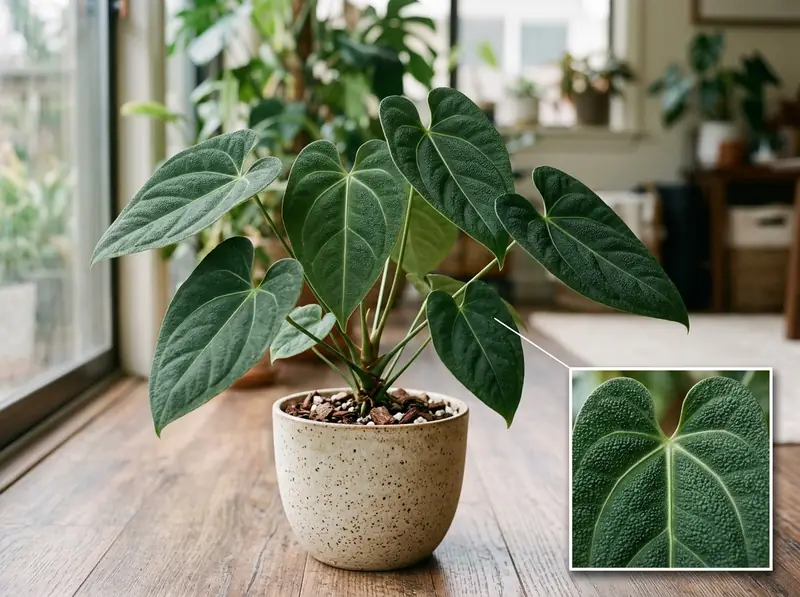
 AI-generated
Papillilaminum Anthurium
Anthurium papillilaminum
Papillilaminum anthurium has velvety, heart-shaped leaves with a distinctive pebbly surface. It is a collector plant that grows at a moderate pace in warm, humid conditions. Give it bright light and a chunky mix.
Saving is free with a KinClub account, and it works here and in the KinClub app. Sign up free
Care profile
- Light
- Bright, indirect lightLow → direct sun
- Water
- Moderate wateringAbout every 7 days
- Difficulty
- Moderate to challengingTricky → easy
- Coldest it tolerates
- 60°F
- Humidity
- High
- Mature size
- MediumSmall → tree-size
- Growth rate
- Slow to moderate
- How common
- EnthusiastRare → everywhere
- Plant family
- Araceae
Pets and toxicity
Cats and dogs: not yet checked
Not yet checked against ASPCA — don't assume it's safe for pets.
No toxicity source on record for this plant yet. If a pet eats any houseplant, call your vet or an animal poison helpline.
How to care for Papillilaminum Anthurium
Light
Bright indirect light helps maintain the pebbly, velvety texture. Direct sun burns the leaves and dim light flattens the look.
Watering
Water when the top 1 to 2 inches are dry, about weekly in summer and every 10 to 14 days in winter. Let the pot drain fully.
Soil
Use a very chunky, airy mix such as orchid bark, perlite, and coco coir with a little potting soil, in a pot with drainage.
Feeding
Feed every 3 to 4 weeks in spring and summer with balanced fertilizer at half strength; skip it in winter.
Repotting
Repot every 2 years in spring into a slightly larger pot.
Propagation
Take stem cuttings with nodes and aerial roots, or divide offsets in spring.
Common problems
- Dry air browns leaf edges; keep humidity above 50 percent.
- Mites and thrips damage the textured leaves; wipe and use insecticidal soap.
- Root rot follows soggy mix; keep the blend bark-heavy.
Similar plants
Same light needs and difficulty.
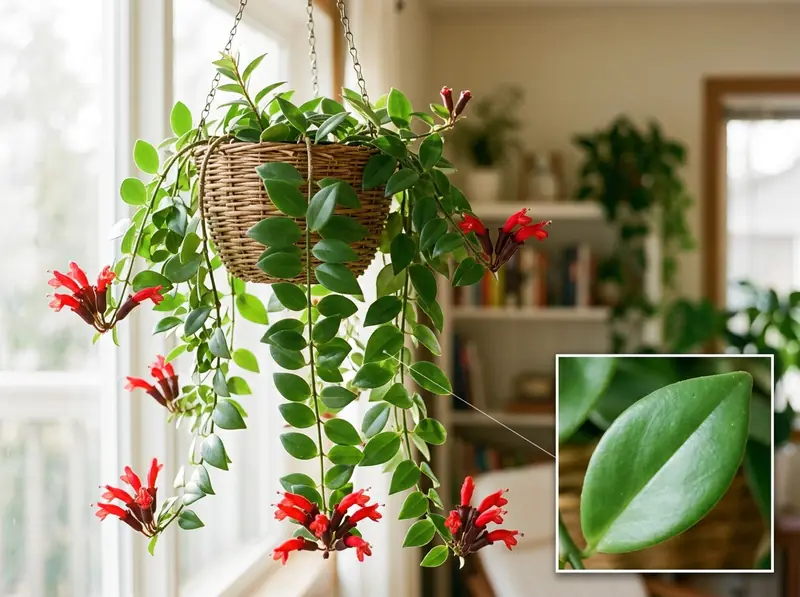 AI-generated
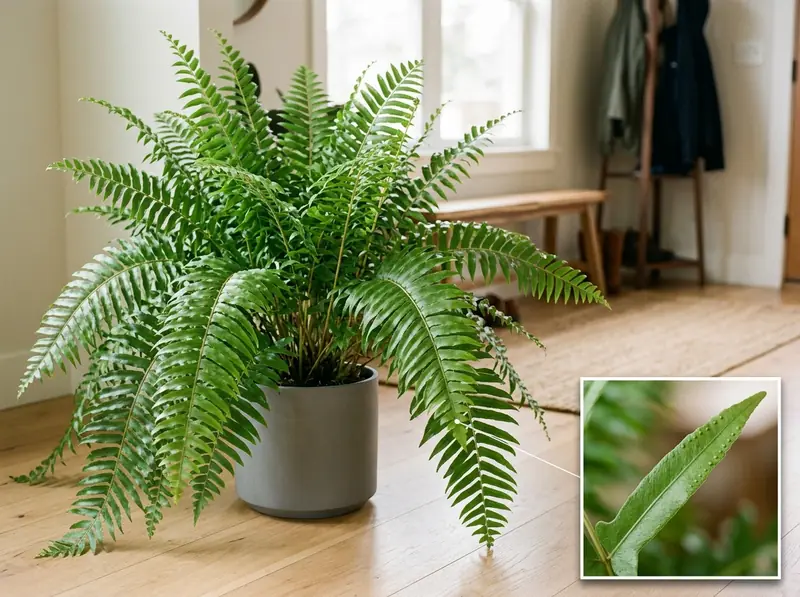 AI-generated
 AI-generated
 AI-generated