
 AI-generated
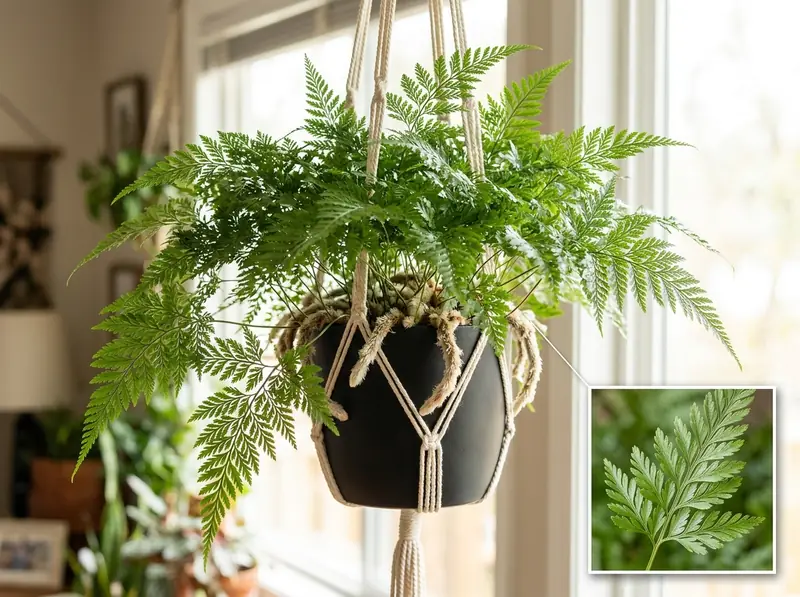
Rabbit's Foot Fern
Davallia fejeensis
Also known as Dainty Rabbits-Foot Fern, Lacy Paw, Lacy Hare's Foot
Rabbit's foot fern is a graceful, lacy-fronded fern named for its furry rhizomes that creep over the pot's edge. It grows best in a hanging basket or on a shelf in bright, indirect light with even moisture and good humidity. Keep the rhizomes on top of the soil and never let it dry out completely.
Saving is free with a KinClub account, and it works here and in the KinClub app. Sign up free
Care profile
- Light
- Bright, indirect lightLow → direct sun
- Water
- Moderate to moist wateringAbout every 7 days
- Difficulty
- ModerateTricky → easy
- Coldest it tolerates
- 55°F
- Humidity
- Medium to high
- Mature size
- Small to mediumSmall → tree-size
- Growth rate
- Moderate
- How common
- Very commonRare → everywhere
- Plant family
- Davalliaceae
Pets and toxicity
Non-toxic to cats
Listed as non-toxic to cats by the ASPCA.
Non-toxic to dogs
Listed as non-toxic to dogs by the ASPCA.
Source: ASPCA toxic and non-toxic plants. If a pet eats any houseplant, call your vet or an animal poison helpline.
How to care for Rabbit's Foot Fern
Light
Give it bright, indirect light, such as a spot near an east window or a few feet back from a south or west window. Avoid direct midday sun, which scorches the delicate fronds.
Watering
Keep the soil lightly and evenly moist, watering when the top half inch feels dry, which is about once a week in the growing season. Water less in winter, but never let the root ball dry out completely.
Soil
Use a light, airy, well-draining mix, for example 2 parts peat-free potting mix to 1 part orchid bark or perlite. A shallow pot or hanging basket suits its surface-creeping rhizomes.
Feeding
Feed every 4 to 6 weeks in spring and summer with a balanced liquid fertilizer diluted to half the label strength. Skip feeding in fall and winter.
Repotting
Repot every 2 to 3 years, or when the rhizomes cover the pot's surface, in spring. Choose a shallow pot only 1 to 2 inches wider, and keep the rhizomes on top of the soil.
Propagation
Cut a rhizome into 2 to 3 inch sections, each with at least one frond attached if possible. Pin them on top of moist mix and keep them humid and warm until they root in a few weeks. You can also divide the plant at repotting.
Common problems
- Brown, crispy frond tips: the air is too dry or the soil dried out. Raise humidity with a pebble tray or humidifier and water more regularly.
- Yellowing fronds and soft rhizomes: overwatering or buried rhizomes. Let the top of the soil dry slightly, and lift the rhizomes so they sit on the surface.
- Fronds dropping in winter: cold drafts or dry heated air. Move the plant away from vents and windows, and keep it above 60°F.
- Fine webbing and stippled fronds: spider mites. Rinse the plant, then spray it with insecticidal soap every week for 3 weeks, and increase humidity.
Similar plants
Same light needs and difficulty.
 AI-generated
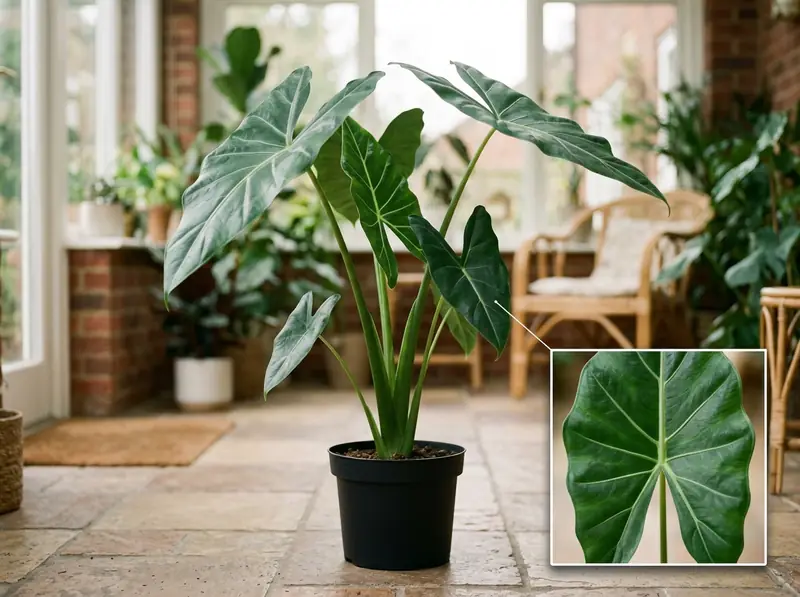
Sarawakensis Alocasia
Alocasia sarawakensis
- Bright, indirect light
- Moderate watering
Toxic to cats and dogs AI-generated
 AI-generated
 AI-generated