
 AI-generated
Sharoniae Philodendron
Philodendron sharoniae
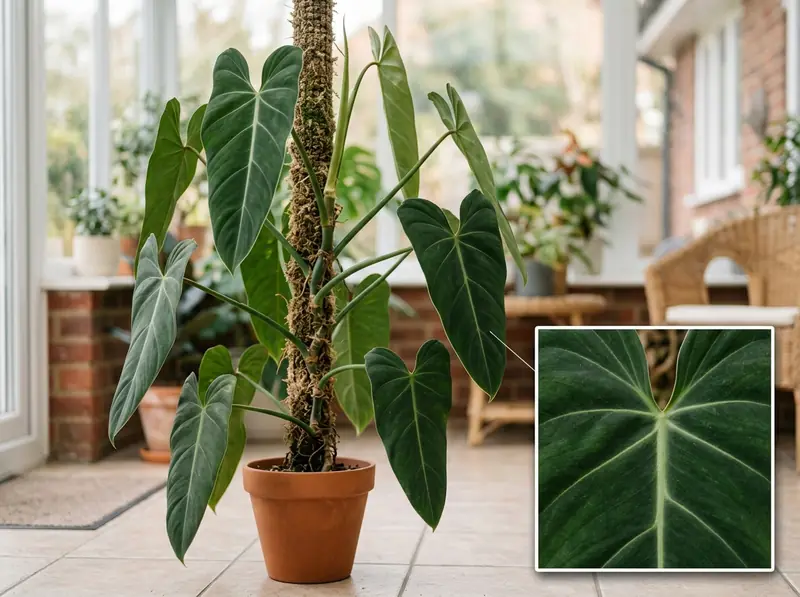
Sharoniae Philodendron is a large climbing aroid from Ecuador and Colombia, prized for its big, dark, velvety heart-shaped leaves. It does best with bright indirect light, good humidity, and a moss pole to climb. It is a bit fussier and pricier than common philodendrons, but rewarding with steady care.
Saving is free with a KinClub account, and it works here and in the KinClub app. Sign up free
Care profile
- Light
- Bright, indirect lightLow → direct sun
- Water
- Moderate wateringAbout every 8 days
- Difficulty
- ModerateTricky → easy
- Coldest it tolerates
- 60°F
- Humidity
- High
- Mature size
- LargeSmall → tree-size
- Growth rate
- Moderate
- How common
- EnthusiastRare → everywhere
- Plant family
- Araceae
Pets and toxicity
Toxic to cats
Keep away from cats. Call your vet or a pet poison helpline if a cat chews it.
Toxic to dogs
Keep away from dogs. Call your vet or a pet poison helpline if a dog chews it.
Source: ASPCA toxic and non-toxic plants. If a pet eats any houseplant, call your vet or an animal poison helpline.
How to care for Sharoniae Philodendron
Light
Bright indirect light suits it best, such as a spot a few feet from an east or lightly shaded south window. Avoid direct midday sun, which scorches the velvety leaves.
Watering
Water thoroughly when the top 1-2 inches of soil feel dry, usually every 7-10 days in the growing season, and let excess drain away. Water less often in winter, and never let the pot sit in standing water.
Soil
Use a chunky, airy aroid mix, for example 2 parts potting mix with 1 part orchid bark and 1 part perlite. The mix should stay lightly moist but never soggy.
Feeding
Feed every 4 weeks in spring and summer with a balanced liquid fertilizer at half the label strength. Skip feeding in fall and winter.
Repotting
Repot every 1-2 years in spring, when roots circle the pot or poke from the drainage holes. Move up only 1-2 inches in pot diameter.
Propagation
Take a stem cutting with at least one node and an aerial root, and root it in moist sphagnum moss or water in a warm spot. Roots usually form in 3-6 weeks.
Common problems
- Brown crispy leaf edges: air is too dry or soil dried out completely; raise humidity and water more consistently.
- Yellowing lower leaves: usually overwatering; let the top inch or two dry and check the drainage holes.
- Small, leggy growth: too little light; move closer to a bright window and give it a support pole.
- Fine webbing or stippled leaves: spider mites; wipe leaves, rinse the plant, and treat with insecticidal soap weekly.
- Distorted new leaves with silvery streaks: thrips; isolate the plant and treat with insecticidal soap or neem.
Similar plants
Same light needs and difficulty.
 AI-generated
 AI-generated
 AI-generated
 AI-generated