
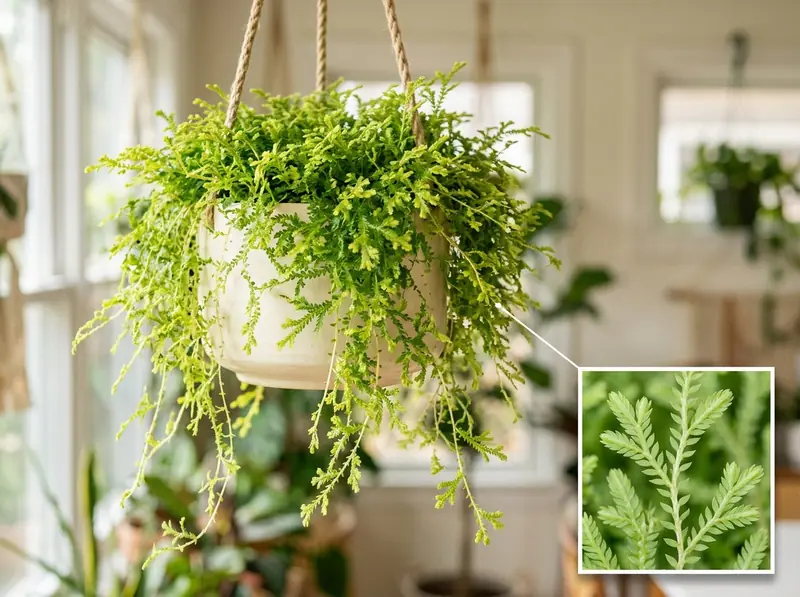
 AI-generated
Spikemoss
Selaginella kraussiana
Also known as Club Moss, Cushion Moss, Irish Moss, Krauss' Spikemoss, Spreading Club Moss, Trailing Irish Moss, Japanese Moss, Moss Fern, Tropical Moss
Spikemoss is a soft, feathery, mat-forming plant that spreads into a low green carpet. It needs constant moisture, high humidity and gentle light, so it does best in a terrarium, bottle garden or bathroom shelf. It is not hard to grow once you keep it from drying out, but it cannot tolerate dry air or drafts.
Saving is free with a KinClub account, and it works here and in the KinClub app. Sign up free
Care profile
- Light
- Medium lightLow → direct sun
- Water
- Keep moistAbout every 4 days
- Difficulty
- Moderate to challengingTricky → easy
- Coldest it tolerates
- 50°F
- Humidity
- High
- Mature size
- SmallSmall → tree-size
- Growth rate
- Fast
- How common
- CommonRare → everywhere
- Plant family
- Selaginellaceae
Pets and toxicity
Non-toxic to cats
Listed as non-toxic to cats by the ASPCA.
Non-toxic to dogs
Listed as non-toxic to dogs by the ASPCA.
Source: ASPCA toxic and non-toxic plants. If a pet eats any houseplant, call your vet or an animal poison helpline.
How to care for Spikemoss
Light
Give it bright shade to medium light, such as a spot a few feet from an east or north window. Avoid direct sun, which scorches the fine foliage.
Watering
Keep the soil evenly damp at all times and never let it dry out. Water when the surface just begins to feel less than wet, often every 3 to 5 days, using room-temperature or rainwater if your tap water is hard.
Soil
Use a light, peaty, moisture-retentive potting mix with added perlite, roughly 3 parts mix to 1 part perlite. The pot must have drainage holes so the roots are damp but not sitting in water.
Feeding
Feed lightly, about once a month in spring and summer, with a balanced liquid fertiliser diluted to quarter strength. Skip feeding in winter.
Repotting
Repot every year or two in spring when the mat fills the pot or roots crowd the holes. Choose a wide, shallow pot only 1 to 2 inches bigger, since the roots are shallow.
Propagation
Lay 2 to 3 inch stem pieces on moist potting mix and press them down lightly, or divide the mat into clumps. The stems root along the stem where they touch damp soil, usually within a few weeks.
Common problems
- Brown, crispy patches: air is too dry or the soil dried out; raise humidity, use a terrarium or pebble tray, and keep the soil damp.
- Mushy brown stems at the base: overwatering or poor drainage; trim rotted parts, repot into airy mix and ensure drainage holes.
- Leggy, sparse growth: light is too low; move to brighter indirect light and trim back to encourage a denser mat.
- Bleached or scorched foliage: too much direct sun; move it to bright shade.
- Small flying insects over the soil: fungus gnats thrive in constantly wet mix; let the very top dry slightly and use sticky traps.
Similar plants
Same light needs and difficulty.
 AI-generated
 AI-generated
 AI-generated
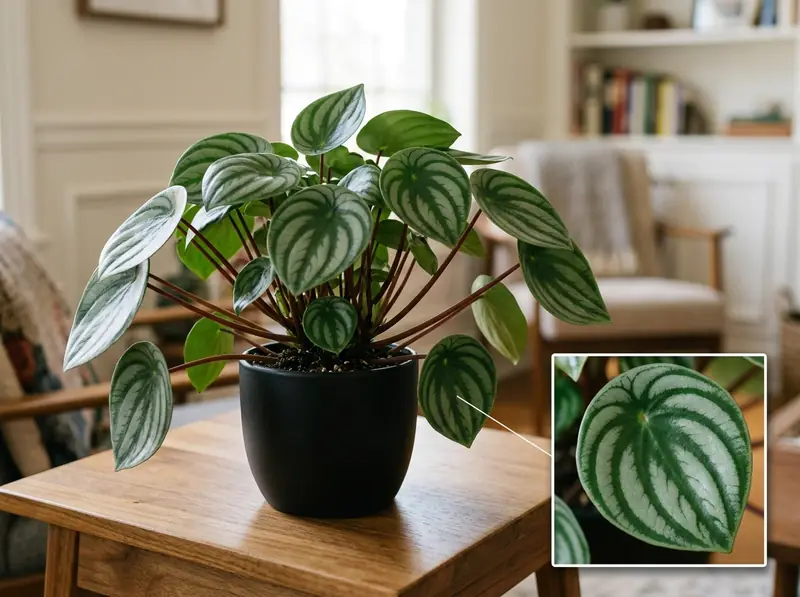 AI-generated
Watermelon Peperomia
Peperomia argyreia
- Medium to bright, indirect light
- Dry to moderate watering
Non-toxic to cats and dogs