
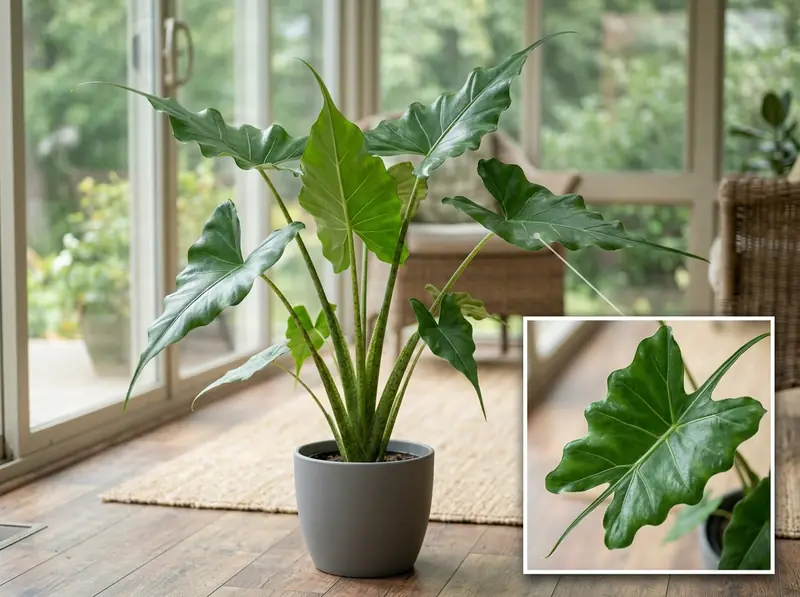
 AI-generated
Stingray Alocasia
Alocasia 'Stingray'
Stingray is an eye-catching Alocasia whose upright, glossy leaves end in a long pointed tail like a ray. It can reach about 3 feet indoors and does best in bright light with warmth and humidity.
Saving is free with a KinClub account, and it works here and in the KinClub app. Sign up free
Care profile
- Light
- Bright, indirect lightLow → direct sun
- Water
- Moderate wateringAbout every 7 days
- Difficulty
- ModerateTricky → easy
- Coldest it tolerates
- 60°F
- Humidity
- High
- Mature size
- LargeSmall → tree-size
- Growth rate
- Moderate to fast
- How common
- RareRare → everywhere
Pets and toxicity
Toxic to cats
Keep away from cats. Call your vet or a pet poison helpline if a cat chews it.
Toxic to dogs
Keep away from dogs. Call your vet or a pet poison helpline if a dog chews it.
Source: ASPCA toxic and non-toxic plants. If a pet eats any houseplant, call your vet or an animal poison helpline.
How to care for Stingray Alocasia
Light
Bright, indirect light for the best growth, near an east or lightly shaded south window. Direct midday sun burns the leaf edges and the tail-like tips.
Watering
Water when the top 1 to 2 inches of soil are dry, usually every 7 to 10 days in the growing season. Reduce in winter and never let it sit in water.
Soil
Chunky, fast-draining aroid mix: about 2 parts potting soil, 1 part orchid bark, and 1 part perlite. Soil should never stay waterlogged.
Feeding
Feed every 2 to 3 weeks in spring and summer with a balanced fertilizer at half strength. Skip it in fall and winter.
Repotting
Repot every 1 to 2 years in spring when roots fill the pot, going up one size. Divide offsets then if you want extra plants.
Propagation
Separate offsets and corms that have their own roots and pot them in moist, chunky mix. Keep warm and humid until they put out a leaf.
Common problems
- Spider mites cause stippling and webbing under leaves. Rinse the plant, then spray with insecticidal soap weekly for 3 weeks.
- Drooping with yellow leaves is usually overwatering. Let the top few inches dry out and check roots for rot.
- Brown leaf margins mean dry air or inconsistent watering. Add humidity and water on a steadier schedule.
Similar plants
Same light needs and difficulty.
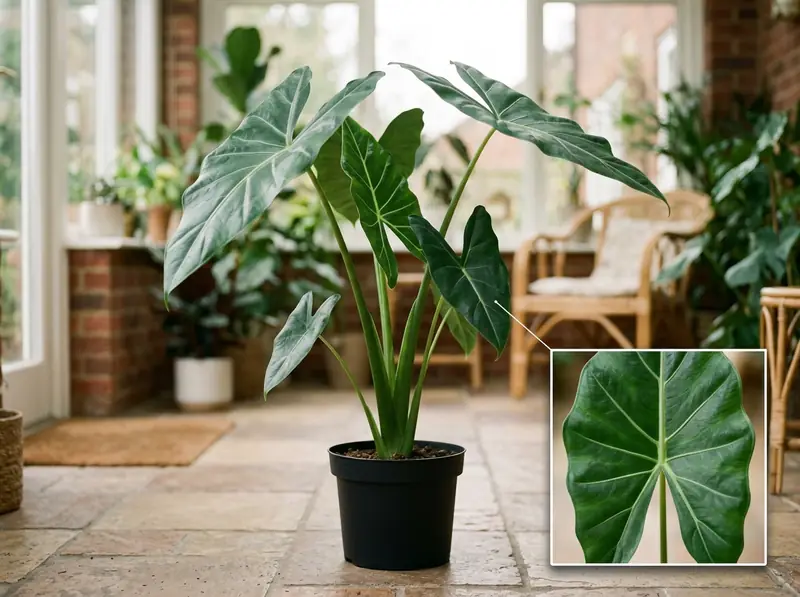 AI-generated
Sarawakensis Alocasia
Alocasia sarawakensis
- Bright, indirect light
- Moderate watering
Toxic to cats and dogs AI-generated
 AI-generated
 AI-generated