AI-generated image, not a photograph of this plant. Real plants look different depending on light, soil, temperature and age.
AraceaeRare in stores
Tuberculata Monstera
Monstera tuberculata
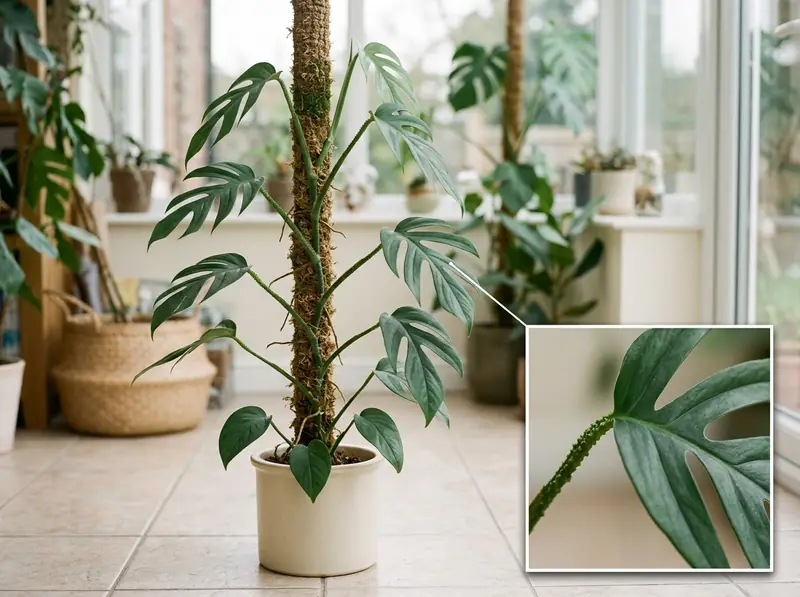
Tuberculata monstera is a rare climbing aroid from Central America. It starts with simple heart-shaped leaves and develops larger, cut leaves as it climbs. It enjoys warm, humid conditions and a moss pole.
Pets: not yet checked
💡
Saving is free with a KinClub account, and it works here and in the KinClub app. Sign up free
🪴 Care profile
Light
Bright, indirect lightLow → direct sun
Water
Moderate wateringAbout every 8 days
Difficulty
ModerateTricky → easy
Coldest it tolerates
55°F
Humidity
High
Mature size
LargeSmall → tree-size
Growth rate
Moderate
How common
RareRare → everywhere
Plant family
Araceae
🐾 Pets and toxicity
Cats and dogs: not yet checked
Not yet checked against ASPCA — don't assume it's safe for pets.
No toxicity source on record for this plant yet. If a pet eats any houseplant, call your vet or an animal poison helpline.
🌿 How to care for Tuberculata Monstera
Light
Prefers bright, indirect light, such as an east window or a few feet from a brighter window. It tolerates medium light but climbs and leafs out more slowly. Avoid hot direct sun.
Watering
Water when the top inch or two of soil is dry, about every 8 days in the growing season and every 2 weeks in winter. Keep it evenly lightly moist, never soggy.
Soil
Use a chunky aroid mix of 2 parts potting soil, 1 part orchid bark and 1 part perlite, in a pot with drainage holes.
Feeding
Feed every 4 weeks in spring and summer with a half-strength balanced houseplant fertilizer. Reduce or skip in winter.
Repotting
Repot every 2 years in spring into a pot one size up, with a moss pole installed at the same time.
Propagation
Root stem cuttings with a node and aerial root in water or damp sphagnum in 3 to 6 weeks, in a warm, humid spot.
Common problems
Stalled growth and small leaves usually mean low light or no support; add a pole.
Brown crisp edges come from dry air; run a humidifier or group plants.
Yellow leaves with wet soil show overwatering; let it dry between waterings.
Spider mites cause stippling; wipe leaves and spray with insecticidal soap.

 AI-generated
 AI-generated
 AI-generated
 AI-generated
 AI-generated