
 AI-generated
Vanda Orchid
Vanda hybrids
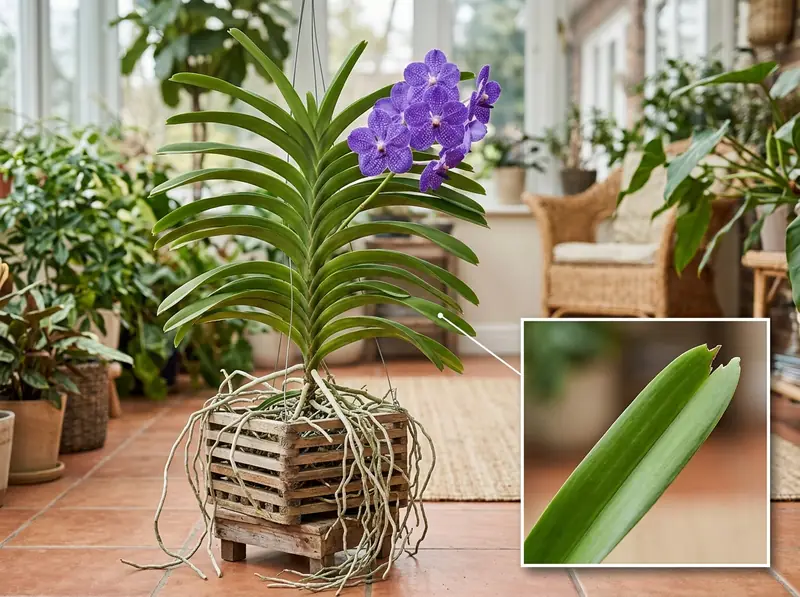
Vanda orchids are showy, fragrant, tall-growing orchids that are grown with bare, dangling roots in a basket rather than in a pot of soil. They need bright light, warmth and high humidity with frequent watering, so they suit a sunny, warm spot and a committed owner.
Saving is free with a KinClub account, and it works here and in the KinClub app. Sign up free
Care profile
- Light
- Direct sunLow → direct sun
- Water
- Dry to moderate wateringAbout every 2 days
- Difficulty
- ChallengingTricky → easy
- Coldest it tolerates
- 55°F
- Humidity
- High
- Mature size
- MediumSmall → tree-size
- Growth rate
- Slow to moderate
- How common
- CommonRare → everywhere
- Plant family
- Orchidaceae
Pets and toxicity
Cats and dogs: not yet checked
Not yet checked against ASPCA — don't assume it's safe for pets.
No toxicity source on record for this plant yet. If a pet eats any houseplant, call your vet or an animal poison helpline.
How to care for Vanda Orchid
Light
Give it the brightest spot you have: several hours of direct sun from a south or west window, softened a little by sheer curtains at midday in summer. Leaves should be light olive-green, not dark green.
Watering
In a bare-root basket, soak roots 5 to 10 minutes every 1 to 3 days in warm weather, less often when cool. Roots turn silvery when dry and green when wet, and the plant should dry within a few hours.
Soil
Use no soil. Grow bare-root in a slatted wooden or plastic basket, or in a clear pot with very coarse bark chunks or charcoal if you need some medium. Air around the roots is essential.
Feeding
Feed weekly in the growing season with an orchid fertilizer at quarter to half strength, applied on damp roots. Flush with plain water monthly to prevent salt buildup.
Repotting
Rarely needed. Move to a larger basket only when roots overflow badly or medium breaks down, ideally just after flowering. Handle the thick aerial roots gently, since they snap when dry.
Propagation
Hard at home. Plants are increased by keiki offshoots that sometimes form on the stem; remove them once they have roots 2 to 3 inches long. Seed is a laboratory process.
Common problems
- No flowers: usually too little light or no night temperature drop; move to a brighter spot and give nights that are 10°F cooler.
- Wrinkled, pleated leaves: the roots are dehydrated or rotted; soak more often or trim dead roots and improve airflow.
- Bud drop: caused by drafts, sudden temperature changes or dry air; keep it in a stable warm spot with moderate humidity.
- Lower leaves yellowing and dropping: normal for an occasional old leaf, but many at once suggest root rot or cold.
Similar plants
Same light needs and difficulty.
 AI-generated
 AI-generated
 AI-generated
 AI-generated