
 AI-generated
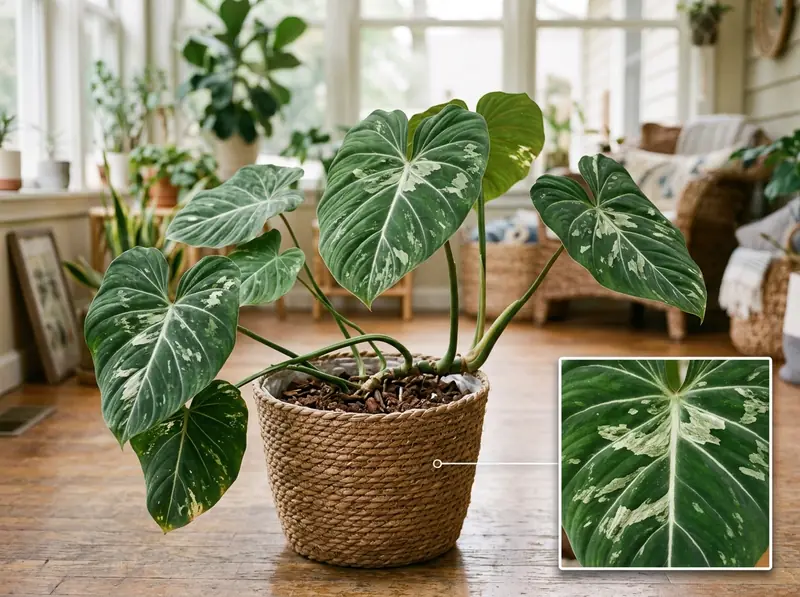
Variegated Gloriosum Philodendron
Philodendron gloriosum 'Variegata'
Variegated Philodendron gloriosum is a creeping, velvety-leaved rarity with cream and white marbled patches on large heart-shaped leaves. It grows slowly and wants bright light, chunky soil, and a stem that stays on the surface.
Saving is free with a KinClub account, and it works here and in the KinClub app. Sign up free
Care profile
- Light
- Bright, indirect lightLow → direct sun
- Water
- Moderate wateringAbout every 9 days
- Difficulty
- ModerateTricky → easy
- Coldest it tolerates
- 55°F
- Humidity
- Medium to high
- Mature size
- MediumSmall → tree-size
- Growth rate
- Slow
- How common
- RareRare → everywhere
- Plant family
- Araceae
Pets and toxicity
Toxic to cats
Keep away from cats. Call your vet or a pet poison helpline if a cat chews it.
Toxic to dogs
Keep away from dogs. Call your vet or a pet poison helpline if a dog chews it.
Source: ASPCA toxic and non-toxic plants. If a pet eats any houseplant, call your vet or an animal poison helpline.
How to care for Variegated Gloriosum Philodendron
Light
Bright indirect light keeps the variegation strong. Direct sun scorches the pale areas on the velvety leaves.
Watering
Water when the top 2 inches of soil are dry, about every 8 to 10 days in summer and less in winter. Avoid soggy soil around the creeping stem.
Soil
Use a chunky, airy mix such as potting soil with orchid bark and perlite in equal parts. The creeping stem should sit on top of the soil.
Feeding
Feed monthly in spring and summer with a balanced liquid houseplant fertilizer at half strength. Skip it in fall and winter.
Repotting
Repot every 1 to 2 years in spring when roots circle the pot, moving up 1 to 2 inches in pot diameter.
Propagation
Cut a section of the creeping stem with at least one node and a leaf, and root it in damp sphagnum or perlite. It roots slowly, often taking 4 to 6 weeks.
Common problems
- Variegation fading to green means low light; move it to a brighter spot.
- Rot at the creeping stem from wet soil; keep the stem above the soil surface and let it dry between waterings.
- Brown leaf edges from dry air; aim for humidity above 50 percent.
Similar plants
Same light needs and difficulty.
 AI-generated
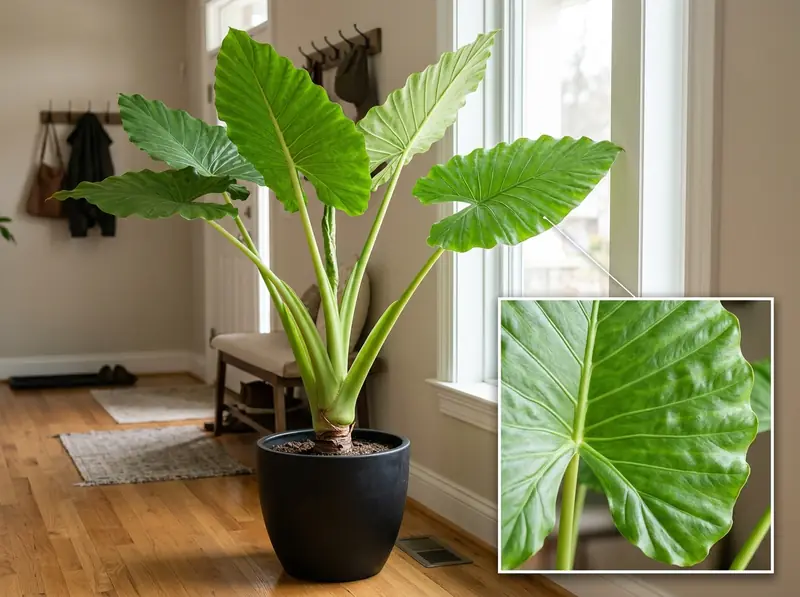
Giant Taro
Alocasia macrorrhizos
- Bright, indirect light
- Moderate to moist watering
Toxic to cats and dogs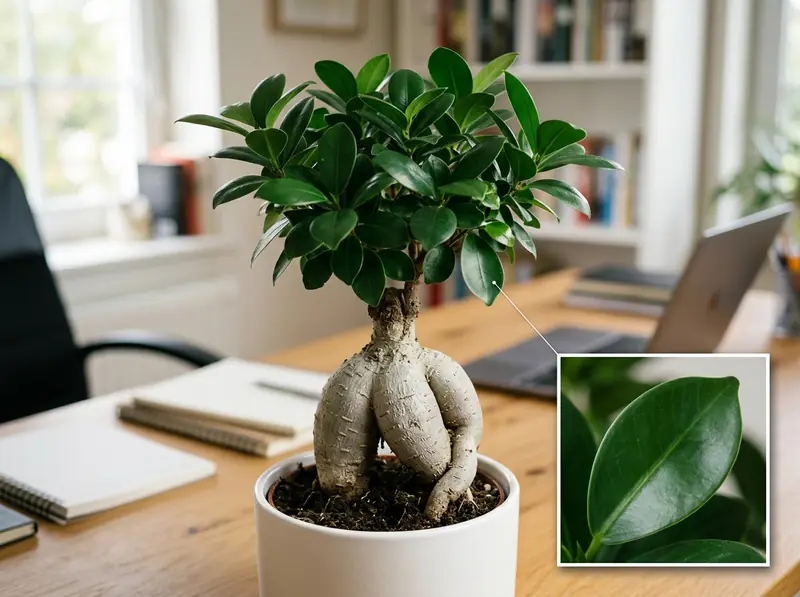 AI-generated
Ginseng Ficus
Ficus microcarpa 'Ginseng'
- Bright, indirect light
- Moderate watering
Toxic to cats and dogs AI-generated
 AI-generated