
 AI-generated
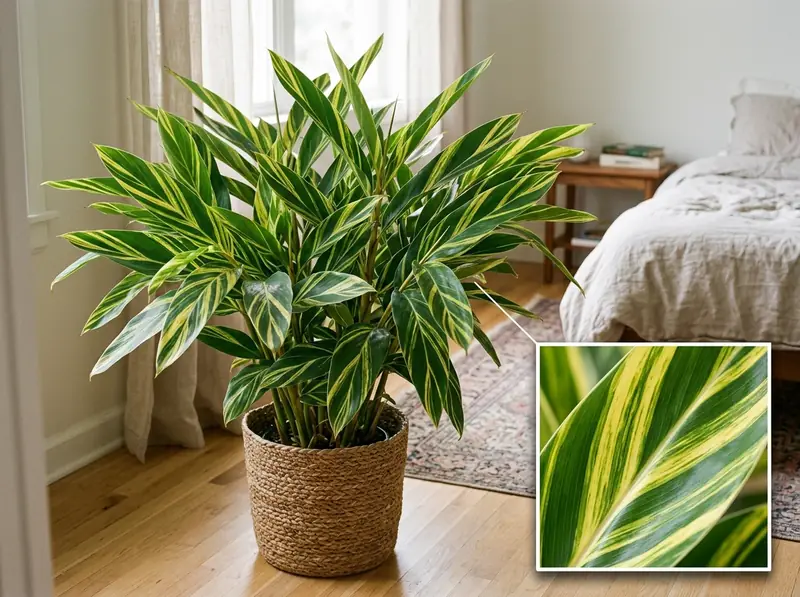
Variegated Shell Ginger
Alpinia zerumbet 'Variegata'
Variegated Shell Ginger is a tropical, clumping plant with arching canes and glossy green leaves striped boldly with yellow. It grows more slowly and stays a bit smaller than the plain species, but needs bright light to keep its coloring. Give it steady moisture, warmth and room to arch, and it may reward you with shell-pink flower clusters.
Saving is free with a KinClub account, and it works here and in the KinClub app. Sign up free
Care profile
- Light
- Bright, indirect lightLow → direct sun
- Water
- Keep moistAbout every 7 days
- Difficulty
- ModerateTricky → easy
- Coldest it tolerates
- 40°F
- Humidity
- Medium to high
- Mature size
- LargeSmall → tree-size
- Growth rate
- Moderate to fast
- How common
- CommonRare → everywhere
- Plant family
- Zingiberaceae
Pets and toxicity
Cats and dogs: not yet checked
Not yet checked against ASPCA — don't assume it's safe for pets.
No toxicity source on record for this plant yet. If a pet eats any houseplant, call your vet or an animal poison helpline.
How to care for Variegated Shell Ginger
Light
Give it a bright spot with several hours of gentle direct morning sun or strong filtered light, such as a south or east window. Low light makes the yellow striping fade to green and gives floppy growth with few flowers, while hot afternoon sun can scorch the pale areas of the leaves.
Watering
Water thoroughly when the top inch of soil feels dry, about once a week in summer, keeping it evenly damp but never soggy. Reduce to every 2-3 weeks in winter and empty the saucer after watering.
Soil
Use a rich, well-draining potting mix with plenty of organic matter, such as standard mix with about 20% perlite or bark added. Choose a pot with drainage holes.
Feeding
Feed every 2-4 weeks from spring through summer with a balanced liquid fertilizer at half strength. Stop feeding in fall and winter.
Repotting
Repot every 1-2 years in spring when roots fill the pot or push out of the drainage holes, going up 2 inches in pot diameter. Large plants can be divided instead of potted up.
Propagation
Divide the rhizomes in spring, making sure each piece has at least one growing shoot and some roots. Pot each piece in fresh mix and keep it warm and lightly moist until new leaves appear.
Common problems
- Brown leaf tips and edges: usually dry air or irregular watering, so water evenly and mist or group it with other plants.
- No flowers: usually too little light or no cool, dry winter rest, so move it to a brighter spot and ease off water in winter.
- Yellowing lower leaves: often overwatering or poor drainage, so let the top inch dry and check the drainage holes.
- Fine webbing and speckled leaves: spider mites, so wipe leaves, rinse the plant, and treat with insecticidal soap weekly.
- Leaf drop in winter: a response to cold or low light, so keep it above 50°F and away from drafts.
- Fading variegation: usually too little light, so move it to a brighter spot and trim back any plain green shoots.
Similar plants
Same light needs and difficulty.
 AI-generated
 AI-generated
 AI-generated
 AI-generated