
 AI-generated
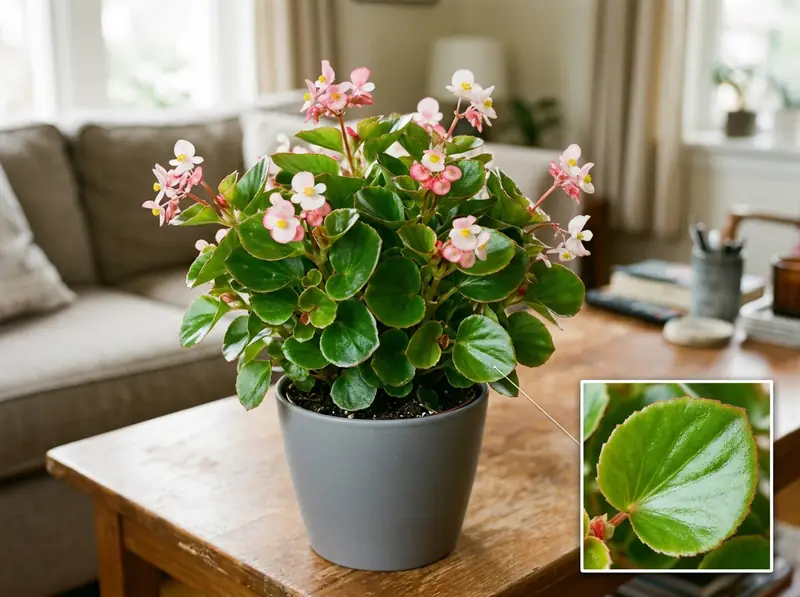
Wax Begonia
Begonia × semperflorens-cultorum
Also known as Begonia semperfloreus-cultorum
Wax begonia is a compact, bushy plant with glossy green or bronze leaves and nearly constant clusters of pink, red or white flowers. It does best in bright light with evenly moderate watering and good airflow. It is often grown as a short-lived plant and is easily renewed from cuttings.
Saving is free with a KinClub account, and it works here and in the KinClub app. Sign up free
Care profile
- Light
- Bright, indirect lightLow → direct sun
- Water
- Moderate wateringAbout every 7 days
- Difficulty
- Easy to moderateTricky → easy
- Coldest it tolerates
- 45°F
- Humidity
- Medium
- Mature size
- SmallSmall → tree-size
- Growth rate
- Moderate
- How common
- Very commonRare → everywhere
- Plant family
- Begoniaceae
Pets and toxicity
Toxic to cats
Keep away from cats. Call your vet or a pet poison helpline if a cat chews it.
Toxic to dogs
Keep away from dogs. Call your vet or a pet poison helpline if a dog chews it.
Source: ASPCA toxic and non-toxic plants. If a pet eats any houseplant, call your vet or an animal poison helpline.
How to care for Wax Begonia
Light
Give it a bright spot with a few hours of gentle morning or late-afternoon sun, such as an east or south window with a sheer curtain. Green-leaved types tolerate more sun than bronze-leaved ones, and flowering is best in strong light.
Watering
Water when the top half inch to an inch of soil feels dry, roughly every 5 to 9 days in the growing season, until water drains from the pot. Empty the saucer and water less often in winter.
Soil
Use a light, well-draining potting mix with added perlite, about one part perlite to three parts mix. Make sure the pot has drainage holes.
Feeding
Feed every 2 to 3 weeks in spring and summer with a balanced liquid fertilizer at half the label strength. Stop or reduce feeding in winter.
Repotting
Repot only when roots fill the pot, usually every year or two, moving up one pot size (1 to 2 inches wider) in spring. Wax begonias are often short-lived, so many growers replace them with fresh cuttings.
Propagation
Take 3 to 4 inch stem tip cuttings, remove the lower leaves, and root them in water or moist perlite-rich mix. Roots usually form in 2 to 4 weeks.
Common problems
- Powdery mildew (white dusty coating on leaves): improve air circulation, avoid wetting leaves, and remove badly affected foliage.
- Stem rot or collapse at the base: caused by soggy soil, so let the soil dry more between waterings and take cuttings from healthy tips.
- Leggy growth: move to brighter light and pinch back stem tips to encourage bushier growth.
- Bud and leaf drop: usually from drafts, sudden changes, or dry soil, so keep conditions steady and water consistently.
- Mealybugs or mites: wipe off pests with alcohol-dipped cotton swabs or spray with insecticidal soap, repeating weekly.
Similar plants
Same light needs and difficulty.
 AI-generated
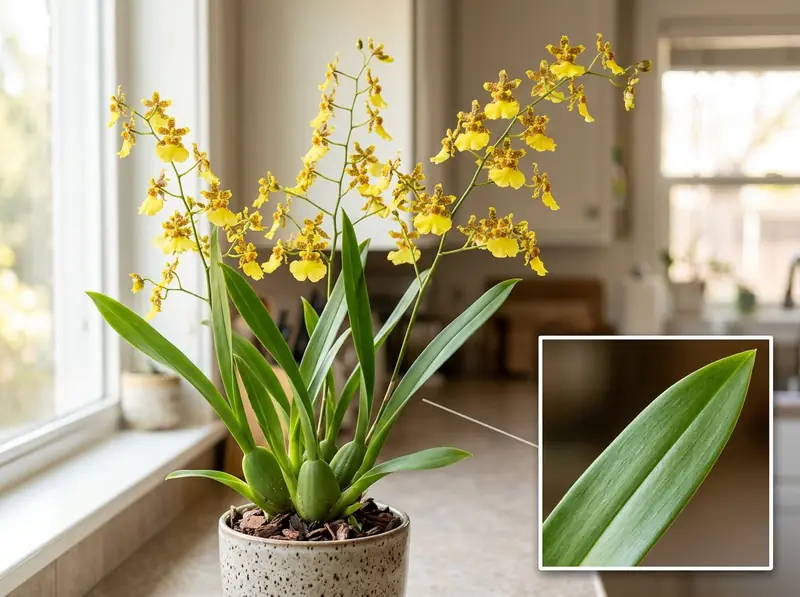
Dancing Lady Orchid
Oncidium hybrids
- Bright, indirect light
- Moderate watering
Non-toxic to cats and dogs AI-generated
 AI-generated
 AI-generated