AI-generated image, not a photograph of this plant. Real plants look different depending on light, soil, temperature and age.
AmaryllidaceaeCommon in stores
White Paintbrush
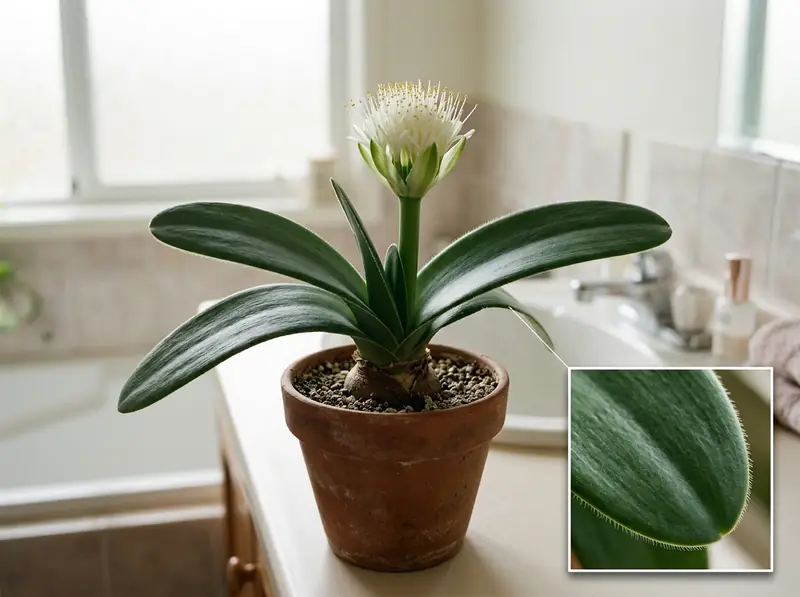
Haemanthus albiflos
White paintbrush is a small evergreen bulb with broad, dark green leaves that produces fluffy white, brush-like flower heads, typically in autumn. It prefers bright indirect light, gritty soil and dry spells between waterings. A cool, drier rest in winter helps it bloom again.
Pets: not yet checked
💡
Saving is free with a KinClub account, and it works here and in the KinClub app. Sign up free
🪴 Care profile
Light
Bright, indirect lightLow → direct sun
Water
Let it dry outAbout every 14 days
Difficulty
Easy to moderateTricky → easy
Coldest it tolerates
50°F
Humidity
Low
Mature size
SmallSmall → tree-size
Growth rate
Slow
How common
CommonRare → everywhere
Plant family
Amaryllidaceae
🐾 Pets and toxicity
Cats and dogs: not yet checked
Not yet checked against ASPCA — don't assume it's safe for pets.
No toxicity source on record for this plant yet. If a pet eats any houseplant, call your vet or an animal poison helpline.
🌿 How to care for White Paintbrush
Light
Give bright, indirect light, such as an east or lightly shaded south window. Gentle morning sun is fine, but shade it from hot midday sun, which can scorch the leaves.
Watering
In the growing season, water thoroughly when the top inch or two of soil is dry, usually every 2 weeks. Empty the saucer. Cut back in autumn and water only sparingly through winter rest.
Soil
Use a gritty, fast-draining mix, for example 2 parts cactus mix to 1 part perlite or coarse sand. Plant with the top half of the bulb above the soil surface.
Feeding
Feed with a half-strength balanced liquid fertilizer once a month from spring through summer while it is in active growth. Don't feed during winter rest.
Repotting
It flowers best when slightly root-bound, so repot only every 3-4 years in spring. Choose a pot only 1 inch wider than the bulb clump and handle the fleshy roots gently.
Propagation
Separate offset bulbs from the parent in spring when repotting and pot them individually in gritty mix. Seed is possible but slow, and plants take several years to flower.
Common problems
Yellowing leaves with a soft bulb: caused by overwatering. Let the soil dry, and cut away any rotted tissue if the bulb is mushy.
No flowers: usually caused by too little light, repotting too often, or skipping the winter rest. Give brighter light and a cool, drier rest.
White cottony clusters between leaf bases: mealybugs. Dab with cotton swabs dipped in rubbing alcohol and repeat weekly.
Brown leaf tips: usually from irregular watering or dry soil for too long. Water deeply and more evenly while it is growing.

 AI-generated
 AI-generated
 AI-generated
 AI-generated
 AI-generated