
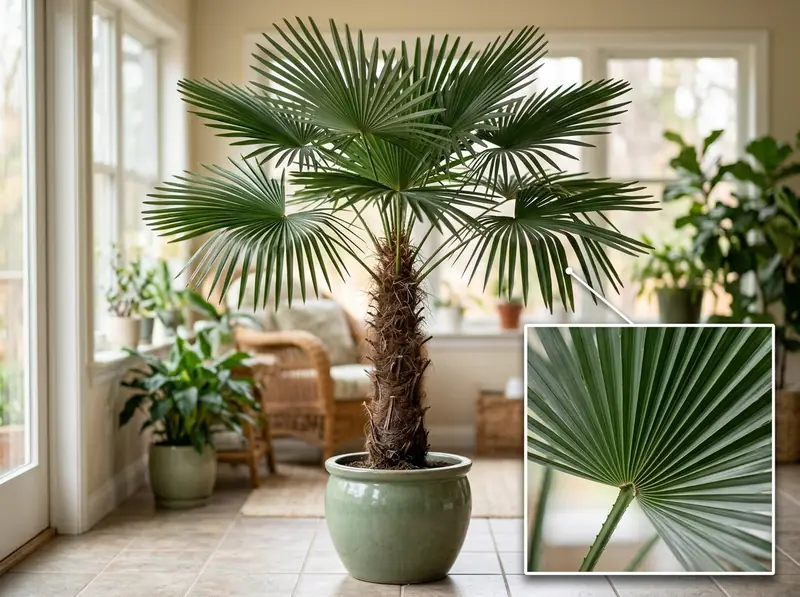
 AI-generated
Windmill Palm
Trachycarpus fortunei
Also known as Fortunes Palm, Chusan Palm
Windmill palm is a slow-growing, cold-hardy palm with fan-shaped fronds on a fibrous, hairy trunk. Indoors it wants bright light, a cool room in winter and evenly moderate watering. It suits a large floor pot and can eventually grow taller than 6 feet.
Saving is free with a KinClub account, and it works here and in the KinClub app. Sign up free
Care profile
- Light
- Bright, indirect lightLow → direct sun
- Water
- Moderate wateringAbout every 7 days
- Difficulty
- Easy to moderateTricky → easy
- Coldest it tolerates
- 30°F
- Humidity
- Medium
- Mature size
- Tree-sizeSmall → tree-size
- Growth rate
- Slow
- How common
- CommonRare → everywhere
- Plant family
- Arecaceae
Pets and toxicity
Non-toxic to cats
Listed as non-toxic to cats by the ASPCA.
Non-toxic to dogs
Listed as non-toxic to dogs by the ASPCA.
Source: ASPCA toxic and non-toxic plants. If a pet eats any houseplant, call your vet or an animal poison helpline.
How to care for Windmill Palm
Light
Give it a bright spot such as a south- or west-facing window, where it can get a few hours of gentle direct sun. Turn the pot a quarter turn every week or two so it grows evenly.
Watering
Water thoroughly when the top 1-2 inches of soil are dry, usually about every 7 days in summer, until water runs from the drainage holes. In winter, let the soil dry a little more and water every 2-3 weeks.
Soil
Use a well-draining potting mix, such as regular mix with about a quarter part perlite or coarse sand added. Choose a heavy pot with drainage holes, since this palm gets top-heavy.
Feeding
Feed with a palm or balanced slow-release fertilizer in spring and summer, following the label rate, about every 4-6 weeks if using liquid. Do not feed in winter.
Repotting
Repot every 2-3 years in spring, only moving up 2 inches in pot diameter, as it dislikes root disturbance. Handle the roots gently and never bury the trunk deeper than before.
Propagation
It is grown from seed, which is slow and can take weeks to months to sprout. It makes no pups, and dividing it is not practical, so most people buy a young plant.
Common problems
- Brown leaf tips: caused by dry air, fluoride in tap water or irregular watering. Water evenly, use filtered or rainwater if possible, and trim only the brown part.
- Yellowing lower fronds: often overwatering or old fronds aging naturally. Let the soil dry more between waterings, and only remove fronds once fully brown.
- Fine webbing and speckled leaves: spider mites. Rinse the fronds in the shower and wipe them, then repeat weekly or treat with insecticidal soap.
- Brown, bumpy spots on the fronds: scale insects. Scrape them off or dab with rubbing alcohol on a cotton swab, then treat with horticultural oil.
Similar plants
Same light needs and difficulty.
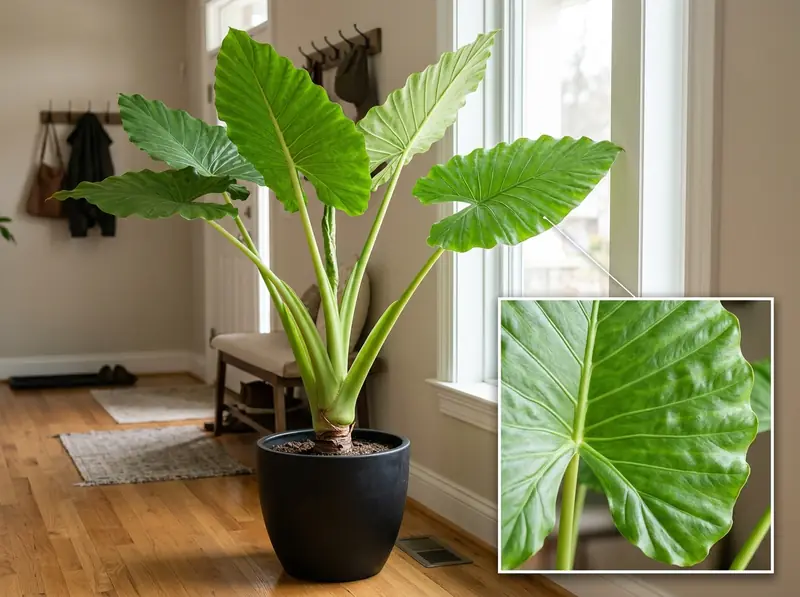 AI-generated
Giant Taro
Alocasia macrorrhizos
- Bright, indirect light
- Moderate to moist watering
Toxic to cats and dogs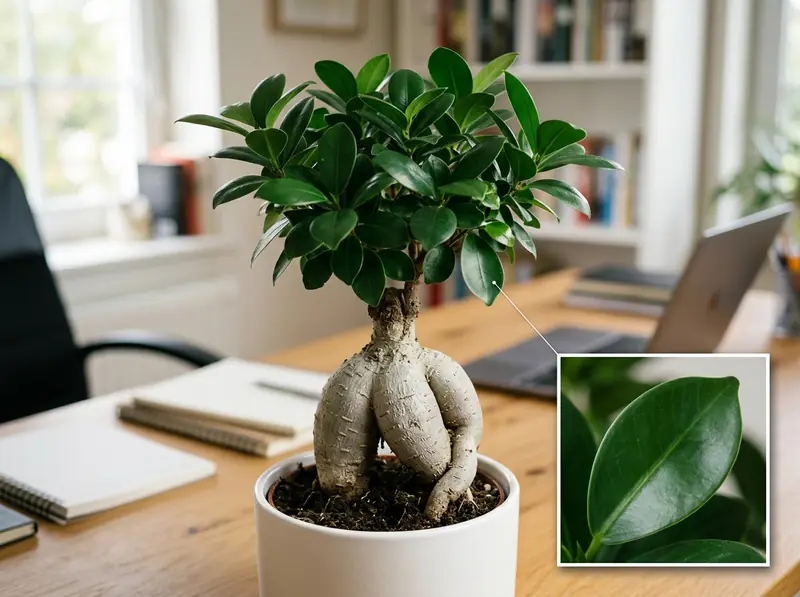 AI-generated
Ginseng Ficus
Ficus microcarpa 'Ginseng'
- Bright, indirect light
- Moderate watering
Toxic to cats and dogs AI-generated
 AI-generated